On May 25 Beijing time (CEST), McLaren stated on the "High Performance" podcast that Ferguson allowed flexibility on off-field matters as long as players gave their all in training and matches. Ten Hag, upon taking charge, also introduced strict discipline, making no compromises with Cristiano Ronaldo, Marcus Rashford, Jadon Sancho, and others. However, given that he was being judged after just a few games, he simply didn't have the opportunity to truly get to know his players.
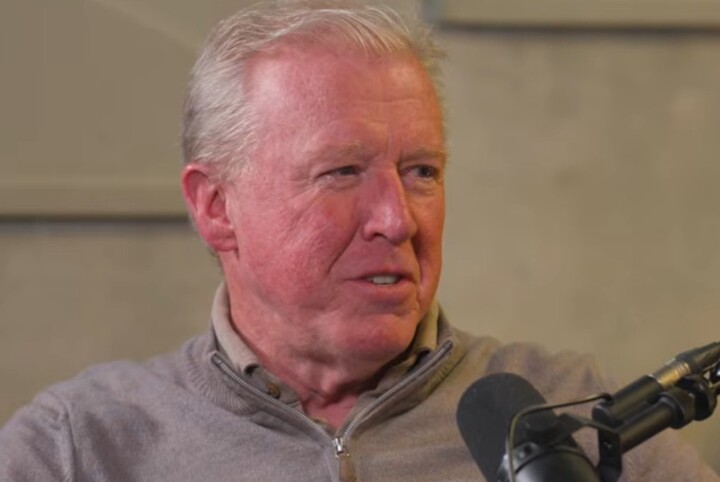
"Performance" is one thing; performing under pressure is quite another. Was there a moment in your career when you thought: "Okay, I thought that was pressure, but this is real pressure"?
Managing England—that was definitely the peak. I'll always remember the first press conference. Microphones in front of you, 200 journalists, flashes, cameras, and then the first question hit me: "Steve, what's it like being the second choice for England's next manager?" I thought: "Wow, welcome to the England manager job."
Nothing can prepare you for that noise and media attention. It took me about six months to even begin to cope with it, and those six months were genuinely tough. They were even reading our lips at the team bus.
How did your approach to coaching change after you decided to "burn your bridges" and be yourself?
I always tell many coaches later: football is theatre. You're part of it, but it's not just about you and your team; there's a whole accompanying show.
How should we, as outside observers, understand the difference between being number two and being the head boss?
As number two, you feel like you're contributing, offering advice. But on day one as head coach, you're actually making decisions. What socks to wear? What shirt to wear on the trip? What jackets do we need? You're completely overwhelmed by decisions.
I'll always remember the advice Sir Alex Ferguson gave me when I was leaving. He said: "Don't actively seek out conflicts. You'll encounter plenty of them. They'll come to you automatically." He also stressed the importance of sleep and decision-making.
He said: "If you get seven out of ten decisions right, you're doing very well." He usually got nine right. "But seven out of ten, you're doing great, son." I've always kept that in mind. So when I make a decision, I think: don't worry, you'll be wrong 30% of the time, but you're still doing well.
The pressure on England's head coach is enormous, but it's equally important to relieve pressure from the players, because the pressure of wearing an England shirt far exceeds that of club football. How did you find the strength to help them ease that pressure?
I don't think we really did, otherwise we would have performed better in tournaments. We communicated a lot, but it's very individual; you need charisma. That's why Southgate is so successful; he has that calmness. Eriksson had it too.
From my experience at three major tournaments, there are three key factors. First, you need energy. Players are always tired at the end of a grueling season. Second, you must keep your key players healthy. In all three tournaments, we had key players injured: Beckham, Rooney... Third, and most importantly, everything has to fall your way. Red cards, penalties, the bounce of the ball—no one can control that. So England always has a chance, but you can't say they're guaranteed to win.
Those two games that cost you qualification for Euro 2008—were they simply bad luck?
They were Russia and Croatia. We only needed a draw to qualify. Going to Russia to play on an artificial pitch was a very difficult situation. We trained on a dry pitch, but before the match they watered it, and the ball moved like lightning. Against Croatia, we were down 2-0, equalized to 2-2, and the momentum was with us, but in the last 15 minutes someone struck from 30 yards... Things happened that you couldn't control. That's why you must control what you can.
When you were standing on the sideline at that moment, did you think: "It's over, my England career is finished"?
Without question. That's the job. You're responsible for qualifying for the tournament, and if you don't win, you're sacked. I remember afterward, Terry said to me: "We'll put in a good word for you, boss." But I refused. I felt it had to be my personal responsibility; I had to go out and face it myself, rather than let the players do it, because they still had to play for England.
I remember driving home, and the mile from the main road to my house was lined with cars. People from Sky Sports told me to come out, make them tea, answer a few questions, and they'd leave. So my wife and I actually came out with a tea tray, handed cups through the gate, and answered a question or two. Within 10 minutes, they all left.
When you lose a job like that, there's a sense of relief, which is quite sad, isn't it?
I think that feeling underlies every coaching job. No one can explain that kind of pressure.
While you were with England, was there a decision you later felt was too emotional?
That last game against Croatia. We came back to 2-2, and the momentum was completely with us, and then we seemed to suddenly lose our drive. At the time, I thought about whether I should substitute Gerrard to inject some energy into midfield. But then I thought, he's our best player—what if I mess up by taking him off?
I started thinking about the consequences, looking too far ahead. I hesitated for a minute or two, and just as I was about to say "substitution," they scored. I should have made that decision a minute earlier. It was a huge lesson. Sir Alex Ferguson got seven out of ten decisions right, but you have to get those critical decisions right.
Where do you think Sir Alex Ferguson's conviction came from?
I think it's because he was an adventurer. His decision-making was: "If this doesn't work, we'll take the risk." I saw him do it many times. He had meticulous preparation, and because of that, he had great conviction. And he never blamed anyone, including himself, for failures.
You said you'd take responsibility when you came in, which seems a bit different from him?
Yes. I'd say: "Maybe we need to work a bit more on our defence." He'd say: "Shut up, Steve. It's the referee—the ref didn't add enough injury time."
I thought maybe we needed to analyze why we lost, but he'd always say: "It's the referee's fault, the linesman's decision. Move on."
Can you tell me how Sir Alex Ferguson hired you?
I was enjoying working with Jim Smith at Derby County. I was a coach and assistant, aspiring to become the best coach in England. I was always absorbing knowledge like a sponge, like climbing Everest. Then one day, a journalist who knew Sir Alex well told me over dinner that I might get a call in a few weeks. I didn't take it seriously at all, thinking it was just another rumor about David Moyes or someone else.
Then on Saturday evening, the phone rang. It was his voice. I thought it was a prank. He said: "Do you want to come to Manchester United?" I said "yes." He said: "Right, that's settled." The call was very short, clear, and direct. He just picked me like that.
What was it like walking into that legendary dressing room?
The first time I arrived at the hotel to meet the players, the Manchester United chairman introduced me to them and mispronounced my name, calling me "Steve McLag."
I thought: "Oh, I'm doomed." The players must have thought: "Who is this guy?" But the first thing Sir Alex said to me was: "That's why you're here. Because of everything you did at Derby County. Now go and coach the way you coached at Derby County."
That was so important to me. He gave me strength in that moment, gave me a clean slate. During the three years we worked together, he almost completely let me do what I wanted. He was like that with all the staff and all the players.
What was his secret to setting such high standards?
One look was enough. Giggs once said we'd hear that cough on the stairs, and everyone would panic. Like the headmaster coming—quick, hide.
His dressing room talks were full of emotion, straight to the heart. He knew every player, knew your grandparents, and would say: "Your grandfather will be watching you from heaven." Every time there was this "hook"—for example, in the 1999 FA Cup he'd say: "This is your chance, lads, a chance to reach for the moon." You'd sit there with goosebumps, and you still get them thinking about it now.
What was it like dealing with players like Keane?
Roy always walked a tightrope. He was someone I admired most. What a leader, what a captain. Never lost the ball in training. We'd play small-sided games, and I'd hope he'd drop that tough persona, but he never lost the ball. He was the embodiment of standards.
Why could the boss set such standards? Because he had a captain exactly like him, demanding the same standards. I remember after one game we won 1-0, I said: "Well done, lads," and then Roy said: "Steve, shut up. We played terribly."
Did this job affect your mental health?
My family would definitely say it did. I'd say yes, absolutely. But it's fear, I think—perhaps fear of failure. It's like taking an exam every three days, and I have to pass that exam or I'll be in serious trouble.
So I had to work hard on it. All great coaches are the same—Sir Alex Ferguson, Ten Hag, Jim Smith. You'd compete with them to see who could start work earlier, who could finish later.
What changed when you returned to Manchester United years later and started working under Ten Hag?
It's just different. I was fortunate to be at Manchester United under Sir Alex Ferguson, when he placed special emphasis on recruiting people of good character. His key points were: you must train well and play well in matches. That's it. Anything that affects that, you stop doing.
So if you gave your all in training and matches, even if you occasionally went out for a drink, he needed you. That's what I learned: recruitment is key, it's about people. It took Ferguson three or four years to get recruitment right, to get rid of the deadwood.
When Ten Hag arrived, he also set standards. But the players had changed. Some players wanted to change training times because they needed to drop their kids at school. Erik said no. He clashed with Cristiano Ronaldo, Marcus Rashford was 90 seconds late to a meeting and he simply closed the door and excluded him from the squad. Jadon Sancho was also sent away by him.
That's absolutely right, just as Ferguson fought hard battles and got rid of deadwood back then. But the problem is that Sir Alex Ferguson did this in an era when you could play 40 games, whereas Erik is trying to do it in an era when you're judged much faster, after just 4 games. You don't have time to get to know your players.
Переведено ИИ.
 Manchester United
 Aston Villa
 Derby County
 FC Twente
 Barcelona
 Al Nassr
 John Terry
 Cristiano Ronaldo
 Ryan Giggs
 Gareth Southgate
 Sir Alex Ferguson
 Steve McClaren
 S. Eriksson
 Erik ten Hag
 Marcus Rashford
 Jadon Sancho
 Jim Smith
Todos los comentarios (107)
5-26 07:41
5-25 19:22
5-25 15:10
5-25 15:24
5-25 15:26