Sweden finished 3rd in Group F after drawing with Japan in the final group stage match, and will face France in the round of 16.
L'Équipe reported that Sweden qualified "unexpectedly" for this World Cup. The team failed to win a single match during a disastrous qualifying campaign, with a record of 2 draws and 4 defeats, and Danish manager Jon Dahl Tomasson was sacked in mid-autumn. The situation did not improve significantly after Potter took charge in October, but Sweden made the most of their second chance: based on their performance in the UEFA Nations League C in 2024, Sweden defeated Ukraine and Poland in the playoff in March to return to the world stage.
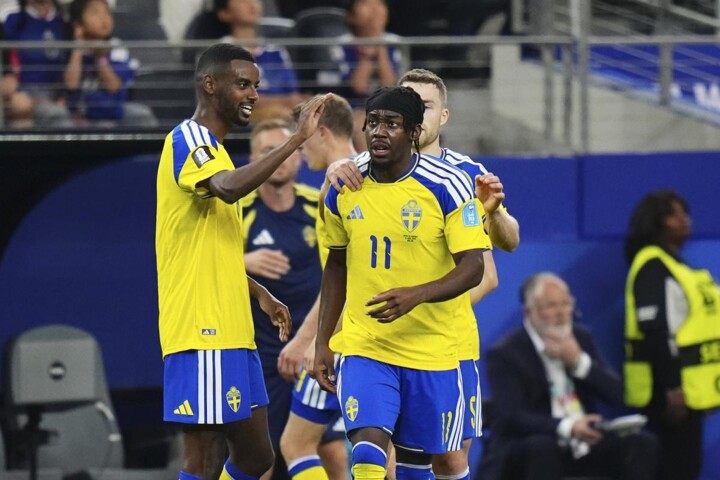
Sweden's attack poses a threat, with Isak, Gyökeres and Elanga all capable of changing the game, but overall ball control and pace management are unstable, and they sometimes lack balance. If an opponent's intensity increases, Sweden can easily become disorganized.
Potter used a 5-3-2 formation in the first two matches, but switched to a 5-2-3 against Japan, deploying one more attacker and one fewer midfielder. Defensively, Sweden had major problems against the Netherlands, with slow recovery and insufficient aggression; against Japan, they conceded fewer chances, but the defense remained unstable. Potter also adjusted the center-back pairing against Japan, deploying former Lille player Gudmundsson as left center-back and moving Lindelöf to the middle. However, Sema left the field in the 37th minute due to a serious hamstring injury, and Lindelöf dropped back to cover the position. Sema's previous performances had been inconsistent, but he remained one of the team's key players, and his absence is a loss for Sweden.
There were also changes in the goalkeeper position. After a 5-1 defeat to the Netherlands, Potter changed the starting goalkeeper for the Japan match. The 37-year-old Nordfeldt gave way, and 27-year-old Wedel-Sätherström, who stands 1.97 meters tall, will likely become the regular starter because he is more reliable, though this Derby County goalkeeper has limited international experience with only 4 appearances.
Potter did not call up the 34-year-old Forsberg and could not use the injured Kulusevski. The team also lacks a creative midfielder. Nygren could assume this role, but he lacks consistency; more often, attention falls on 22-year-old Yasin Ayari, who scored twice against Tunisia and has a powerful shot. Against Japan, he was benched due to Elanga's starting role, and had less involvement than in the previous match, but his fitness and technique are good. Interestingly, Sweden played more openly against Tunisia and the Netherlands than against Japan, with frequent long passes from defense. But when trailing 0-1, Sweden's reaction was still positive. Sweden's attackers—Isak, Gyökeres and Elanga—often only pose a threat during certain periods.
Potter deployed Isak, Gyökeres and Elanga as a three-man attack against Japan, and Elanga continued his good form after coming off the bench against the Netherlands. The Newcastle United forward once cut the deficit against Van Dijk and others, and on Thursday night, he was the one who equalized by capitalizing on the space created by the Arsenal forward and an incoming ball. This trio has not really clicked over an extended period, and also lacked support, but during the group stage, they took turns being Sweden's key players. The question now is whether Potter will revert to a three-man midfield against a strong opponent like France, sacrificing Elanga or Gyökeres, and rely on a compact formation to play on the counterattack.
Traducido por IA.
¡El sitio web de AF ya está disponible! Consulta noticias, comentarios, detalles de partidos y estadísticas en tu ordenador. Visita: www.allfootballapp.com
 Newcastle United
 Francia
 Suecia
 Graham Potter
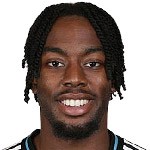 Anthony Elanga
Todos los comentarios