According to reports, the 41-year-old Ronaldo started every group stage match at the World Cup. To many observers, it's hard to tell whether Martínez is the team's manager or simply one of millions of Ronaldo fanatics. The reality is that Portugal genuinely lacks a quality backup center forward.
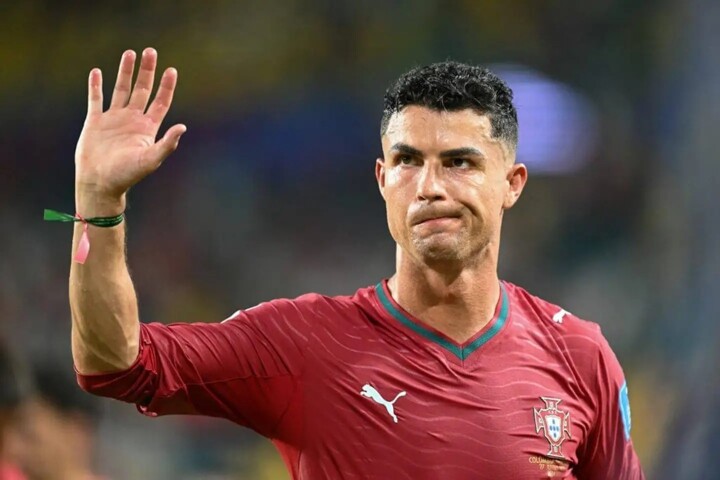
According to reports: Is this Miami Gardens or Barranquilla, Colombia? It's honestly hard to tell. A sea of yellow-clad supporters has filled Hard Rock Stadium, with shirts bearing the names of Carlos Valderrama, Andrés Escobar, and James Rodríguez creating this yellow wave.
The flight time from Bogotá to Miami is comparable to that from New York—a short trip of under four hours. The short distance from home, combined with the large Colombian expatriate community settled in Florida, made tickets for this decisive Group K match the most sought-after during the group stage.
Ronaldo is another major focal point, not only as the Portuguese team's star player but also as someone who attracts the attention of tens of millions of followers worldwide. But when Ronaldo emerged for warmups and his face appeared on the stadium's giant screen, boos filled the entire venue.
This match had clearly become a home game for Colombia, which further increased the difficulty of Portugal's attacking efforts.
Martínez had the team stay in nearby Palm Beach for preparation, allowing players to adapt to Florida's hot, humid climate beforehand. Two years earlier, Colombia had competed in the Copa América final at this stadium; as runners-up in that tournament, they have a solid track record and are already familiar with the atmosphere here.
While the U.S. East Coast was cold and gloomy that day, with England facing Panama in rainy New Jersey, Miami was scorching. Although Portugal's squad looked strong on paper, this match was destined to be difficult from the start.
However, Portugal's difficulties on the field exceeded expectations.
Colombia did not field its full starting lineup in this match.
Coach Néstor Lorenzo made three changes: Luis Díaz, who scored 38 goals across all competitions for Sporting CP last season, was not selected for the starting eleven; fullback Daniel Muñoz was benched after scoring in the first two matches against the Democratic Republic of Congo and Uzbekistan; Jhon Mojica was one yellow card away from suspension, and the coaching staff did not risk fielding him. João Lukumí and Jefferson Lerma also faced yellow card risks but played anyway. The players knew that every move at Hard Rock Stadium was like walking a tightrope, and a suspension from a yellow card would mean missing the knockout round match against Ghana.
In theory, this should have favored Portugal, but the reality was the opposite.
Martínez has one of the best midfields in this tournament. In this match, he did not start João Neves, opting instead for Rúben Neves to partner with Vitinha. Vitinha achieved 100% pass accuracy throughout the match. Still, Martínez admitted: "We couldn't control the rhythm of the game, nor could we unlock our players' individual abilities."
Portugal's best player that night and man of the match was goalkeeper Diogo Costa. Colombia recorded 24 shots during the match, setting a new team record for most shots in a single World Cup match, surpassing the 23 shots against the United States in 1994—a tragic classic match in which Andrés Escobar scored an own goal.
Had it not been for goalkeeper Costa and assistant referee Andrew Lindsay making possibly the tournament's most crucial decision in stoppage time—correctly disallowing Davinson Sánchez's goal for offside by the narrowest of margins—Portugal would have lost this match.
According to Martínez, Colombia securing first place in the group is not a major concern, even if it means Portugal's Round of 16 opponent changes from the original Ghana to Croatia, and potential later opponents shift from Switzerland and Algeria to Spain. "Winning, losing, or drawing today doesn't matter," he said. "Our goal is to play eight matches, and the opponent doesn't matter."
Martínez stated that he views the group stage as a preparation and adjustment phase for the knockout rounds. He made substitutions at halftime in each group stage match, and 22 players in the squad received playing time, with one exception who played the full duration. Ronaldo played every minute. Against Colombia, he fell offside on several promising opportunities; he rarely dropped back defensively, often just jogging to participate in defending set pieces; after a water break, his first touch resulted in a mispass and loss of possession.
Before the match, a Ronaldo impersonator in full kit waited for him in the players' tunnel; after the final whistle, an influencer offered him a fist bump in the mixed zone. After Ronaldo reciprocated, the influencer immediately fell to the ground, overwhelmed with joy and tears.
To many observers, it's hard to tell whether Martínez is the team's manager or simply one of millions of Ronaldo fanatics. He has steadfastly supported Ronaldo, not only because the veteran scored a brace against Uzbekistan in the group stage's second match; memories from last summer remain fresh: the 41-year-old scored against Germany and Spain in consecutive UEFA Nations League semifinals and finals.
When asked whether he would follow Scaloni's example of resting Messi or Norway's rotation approach by giving Ronaldo rest in the group stage's third match, Martínez was emphatic: "We don't make lineup decisions by comparing our players to those of other teams; that is both childish and unprofessional. We observe the on-field dynamics in real time and organize the lineup based on daily training condition; there is always room for adjustment. In this match, we gave João Neves and Rúben Neves 45 minutes each, and we also rotated Diogo Dalot and João Cancelo.
The key is for players to maintain mental stability, adhere to positional discipline on the field, and create space for the team's attack. In this match, Ronaldo was physically and mentally capable of playing the full 90 minutes. Adjustments could be made in the next match, and the same standards apply to him as to other players; everything is based on performance data."
But fans at Hard Rock Stadium disagreed with this narrative; no one called for Gonçalo Ramos, the only other striker on the bench, to replace Ronaldo.
Four years ago at the Qatar World Cup, Ramos appeared to have ended Ronaldo's career as a regular starter for the national team: in the Round of 16 match at Lusail Stadium, Ramos replaced him in the starting lineup and scored a hat-trick as Portugal decisively beat Switzerland 6-1. At 21, he shone brilliantly and was seen as the future of the attack.
The following summer, he left Benfica to join PSG for a transfer fee of €65 million (equivalent to £56 million or $74 million at the time). This week, AC Milan shattered their club transfer record to sign him for an even larger fee.
Now with two Champions League trophies to his name, Ramos is not a key starter for the team, despite scoring the first penalty for PSG in the penalty shootout of the Champions League final in May; he scored only six goals in Ligue 1 last season. In the match against the Democratic Republic of Congo, Martínez gave Ramos only eight minutes, pairing him with Ronaldo rather than replacing him, making it difficult for him to have an impact in such a brief appearance.
Apart from Ronaldo, does Portugal have other center forward options? Essentially none, unless they deploy wingers like Leão as a false nine.
At this World Cup, Ronaldo has been oscillating between legend and liability. Martínez has no strong competitors to choose from and has not seriously considered rotation options.
The Spanish coach promised to review group stage performance and make necessary adjustments when the knockout phase begins.
For now, if you want to bet on which of these two teams will go further in the tournament, just listen to the roar of the fans at Hard Rock Stadium for your answer.
Traducido por IA.
¡El sitio web de AF ya está disponible! Consulta noticias, comentarios, detalles de partidos y estadísticas en tu ordenador. Visita: www.allfootballapp.com
 PSG
PSG
 Milan
Milan
 Portugal
 Al Nassr
 Cristiano Ronaldo
 Roberto Martínez
 Rafael Leão
 Gonçalo Ramos
 El Mundial
Todos los comentarios (31)
Hoy 08:51
Hoy 08:50
Hoy 10:01
Hoy 10:01
Hoy 10:00
Hoy 10:00
Hoy 10:00
Hoy 09:59
Hoy 09:59
Hoy 09:59
Hoy 09:58
Hoy 09:58
Hoy 09:58
Hoy 09:57
Hoy 09:57
Hoy 09:57
Hoy 09:57
Hoy 09:56
Hoy 09:56
Hoy 09:56
Hoy 08:51
Hoy 08:51