On August 19, local time, in an interview with L'Équipe, several medical experts discussed the condition of Bayern Munich star Jamal Musiala.

Last Saturday, during a warm-up match against RB Leipzig, Musiala suffered a brief loss of consciousness and was substituted after 17 minutes of play. Three days later, the same situation occurred against Heidenheim, and this time, Bayern Munich's attacking midfielder only played 8 minutes before losing his balance again.
The 23-year-old German player later stated on social media that he has a "neurological dysfunction." He explained that he experiences "brief periods of altered consciousness," a condition that is "temporary and highly treatable." Musiala also said this condition "poses no risk to his health" and that he is currently receiving treatment and medical monitoring. Bayern's sporting director Max Eberl told Bild that the club "was aware of this situation" beforehand.
This means Musiala was given clearance to play with the club's knowledge. So was allowing him to continue playing the right decision?
"It's not entirely incompatible, nor is it absolutely impossible to play, but it is complicated," said Fabrice Bryand, who was a physician for the French national team from 2010 to 2012. "This is a genuine ethical issue that must be discussed with the player himself, because it concerns his health. It is by no means a minor matter. For example, certain neurological disorders prevent patients from obtaining a driver's license. We would similarly explicitly prohibit such patients from activities like climbing or diving."
Bryand emphasized that he was discussing the matter "from a general perspective" and "not specifically about Musiala's case." He said: "We cannot make a diagnosis over the phone."
In the doctor's opinion, the symptoms experienced by Musiala could be similar to what was formerly known as "petit mal epilepsy." This is not a grand mal seizure with "severe bodily convulsions or tongue biting," but rather a much shorter type of seizure.
"Sometimes patients don't even fall down, but they temporarily lose connection with the real world. You talk to them and they don't respond," Bryand explained.
Éric Azabou, professor of neurology at Raymond Poincaré Hospital and head of the relevant medical department at Garches Hospital, believes Musiala's symptoms could fit the characteristics of "absence seizures." However, without the results of a neurological examination, he can only offer "hypotheses and conditional statements" and cannot make a diagnosis about Musiala's specific situation.
He noted that unlike "more intense syncope often associated with heart problems or vasovagal reactions," during an absence seizure, "the patient is initially completely normal, then suddenly feels abnormal for a few seconds, and then returns to normal, often forgetting what just happened."
"This disorder is related to the etiology of epilepsy in a broad sense," Professor Azabou continued. "The brain is like a generator of electrical currents. Sometimes, this current can suddenly go out of control, producing abnormal electrical activity that interferes with the affected brain regions. If the affected area is responsible for memory, then the patient will be temporarily in an absent state. Epilepsy is like an electrical storm: it appears suddenly and then disappears just as quickly."
The head of Garches Hospital's medical department stated that many children experience these absence seizures, which have diverse causes, but in many cases are linked to genetic factors, requiring early screening and diagnosis.
This condition requires continuous neurological monitoring, including medication and regular EEG examinations.
"If untreated, the main risk is that seizures could evolve into generalized seizures," Professor Éric Azabou explained in detail. "In the long term, neurological functions such as memory can also be affected, as neurons that have gone untreated for extended periods can suffer damage."
He believes that if German international Musiala truly has absence seizures, with appropriate treatment, this condition would not "prevent him from continuing his professional career."
On the other hand, Fabrice Bryand stated that in his "40 years as a doctor," he has encountered only "one case" of a similar situation in a footballer.
"Although we now have very good treatment methods to control the disease, we remain very cautious due to its unpredictable nature. Football is, after all, a physically demanding sport. When someone has a central nervous system disorder, there is a risk of head impact, including being struck by a football. Repeated heading does not directly trigger neurological seizures, but given that the player is in such an environment for extended periods, we still find it difficult to confidently approve him for professional football."
Traducido por IA.
¡El sitio web de AF ya está disponible! Consulta noticias, comentarios, detalles de partidos y estadísticas en tu ordenador. Visita: www.allfootballapp.com
 Bayern München
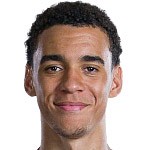 Jamal Musiala
Todos los comentarios