On August 22, the Premier League's opening weekend delivered an upset as Hull City beat Man United 2-0 at home. The Athletic reporter Liam Tharme subsequently published an in-depth tactical analysis explaining why Hull City dominated the match.
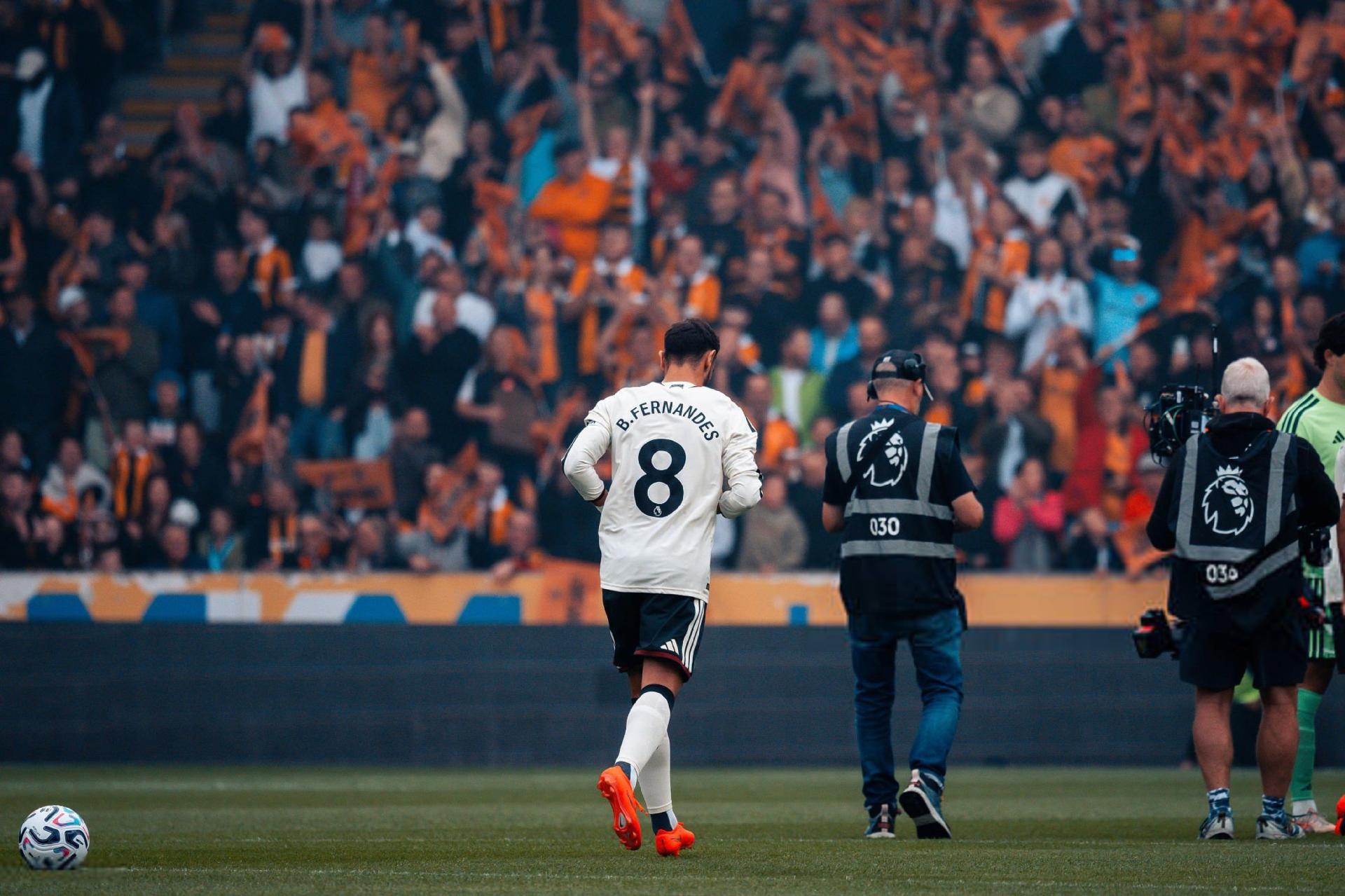
Hull City's home victory over 20-time Premier League champions Man United was a striking opening-weekend upset, and a thoroughly convincing one at that.
By the 38th minute, Hull City had already established a 2-0 lead. In the second half, they controlled the game with composure and sealed a decisive victory. For a Championship play-off winner returning to the top flight, this performance against Man United—third-place finishers last season—was particularly impressive. Remarkably, according to Transfermarkt's player valuations, Hull City fielded the lowest-value squad in the entire Premier League.
While "tactical masterclass" is often overused, Serge Jakirovic's game plan and his team's execution on the pitch achieved precisely the desired effect.
Consider the formation. Despite possessing only 29% of the ball, Hull City maintained a disciplined 5-4-1 shape out of possession. The three-center-back unit of Semi Ajayi, Egan, and Jaden Philogene proved extremely effective in aerial duels and set-piece defense, forcing Man United to funnel play toward the flanks.
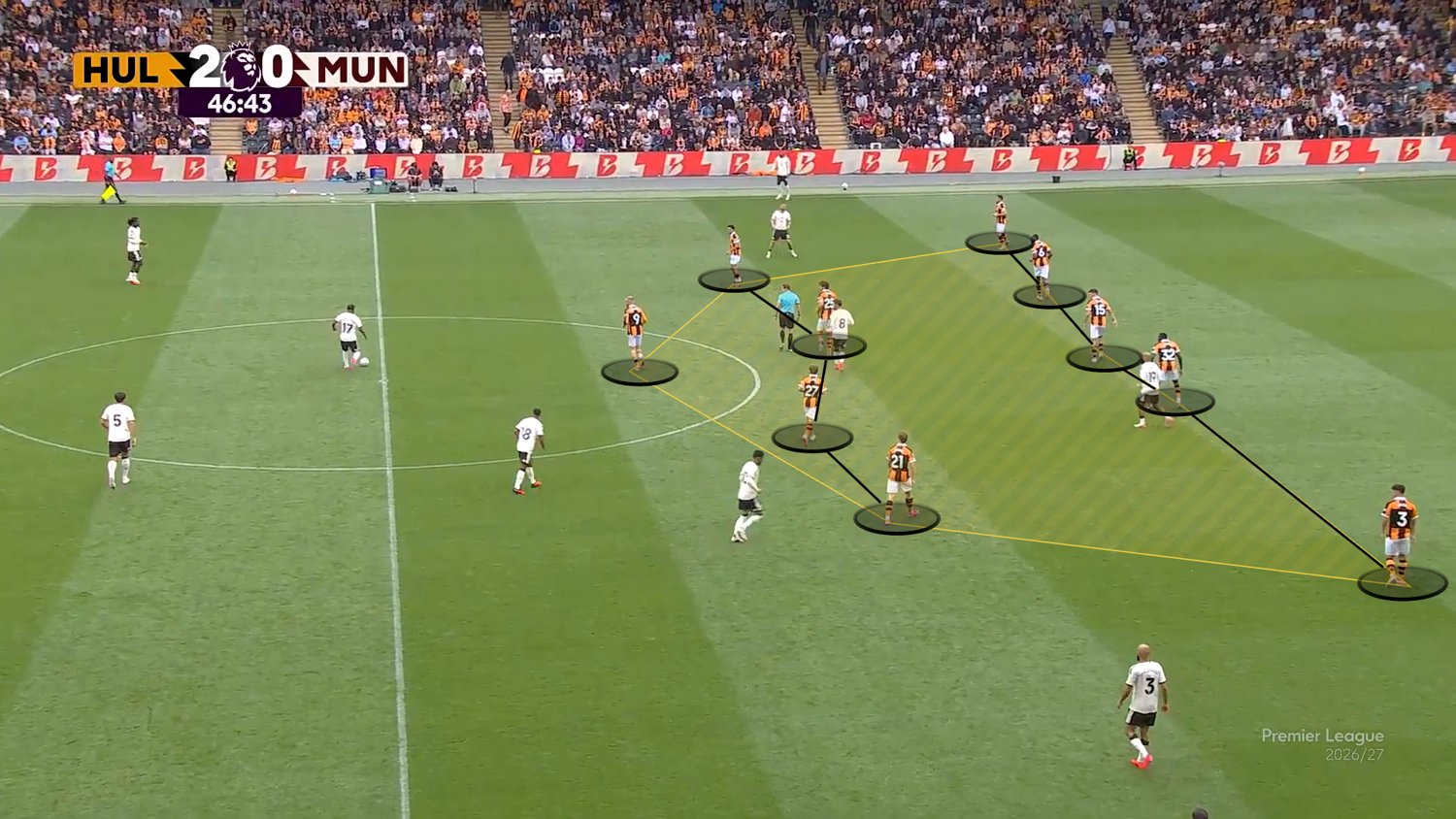
Why deploy five at the back? Jakirovic explained in his post-match press conference: "Because Man United pressed very high, particularly with Luke Shaw. They also attempted to create superiority in midfield. Our primary task was to block the space between the lines."
Hull City primarily used a 4-2-3-1 formation last season, finishing sixth—11 points short of automatic promotion. They occasionally switched to a 3-4-3 or 3-5-2, notably in the Championship play-off final at Wembley against Middlesbrough, which they won. That victory secured their return to the Premier League after a 10-year absence.
In this match, Hull City made life difficult for Matheus Cunha on the ball, causing significant problems for Man United. As Man United's "false nine" in their 4-2-3-1 formation, Cunha is essential for linking play and feeding the wingers. In the first half, Man United's most dangerous attacks came through long passes to wing-backs Patrick Dorgu and Bryan Mbeumo. However, Hull City had both numerical superiority and a height advantage in those areas, completely neutralizing this approach.
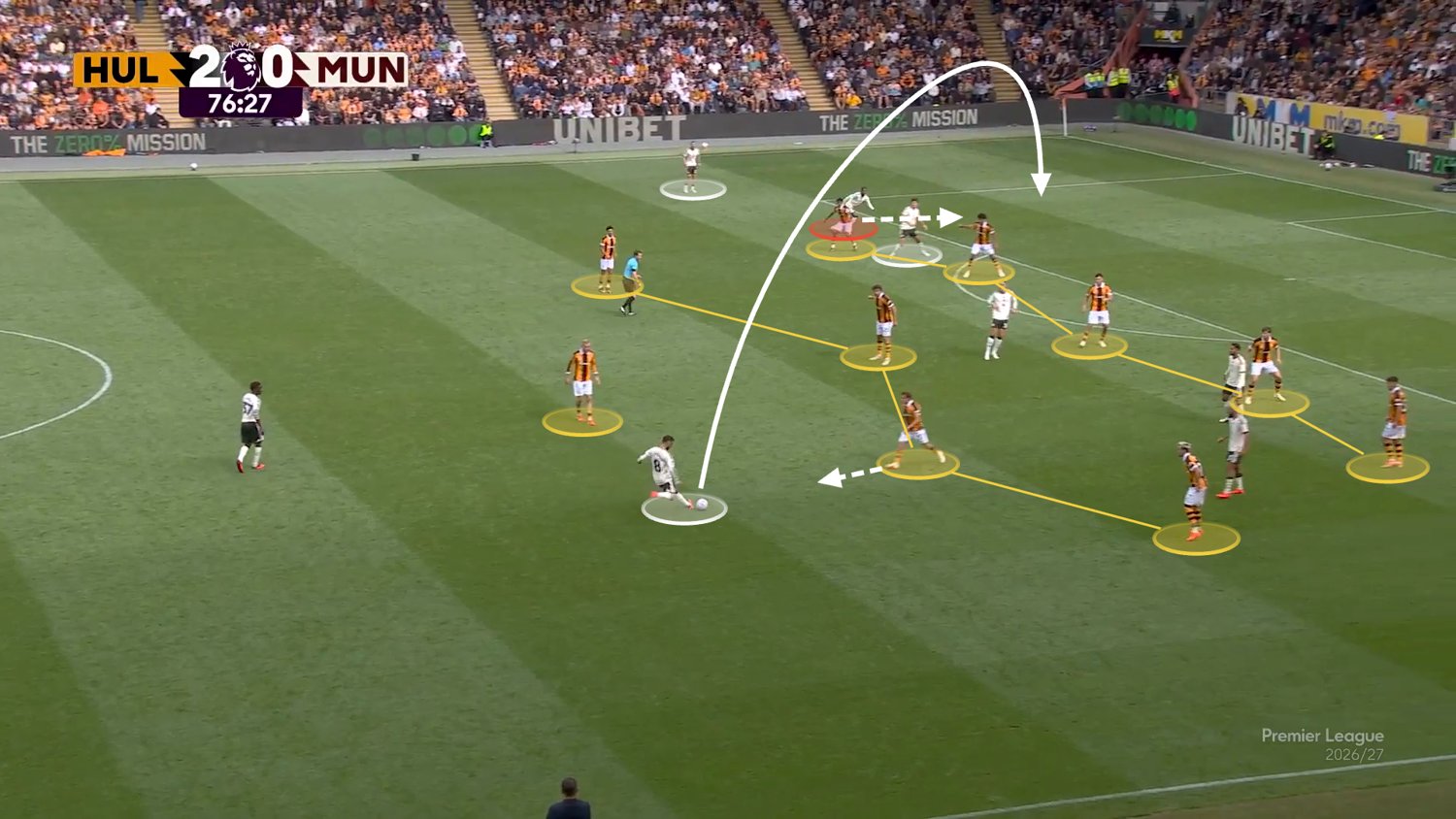
A crucial detail emerged in the second half: when Marcus Rashford replaced Dorgu on the left wing, Hull City's defensive line remained high. Rather than dropping deep, they refused to be pinned back near their penalty area. Rashford made several forward runs but was repeatedly let down by poor timing or positioning on the passes, never creating a genuine chance.
When Cody Drameh later replaced Lewie Coyle at right wing-back, Hull City maintained their high defensive line and caught Rashford in an offside trap.
Coyle told TNT Sports after the match: "We knew exactly what to do when defending deep, and our preparation in training showed. You have to be that disciplined against top teams." He also praised striker Ozan McBurnie's defensive work, with the Scottish forward closely marking Man United midfielder Santos throughout and denying him possession.
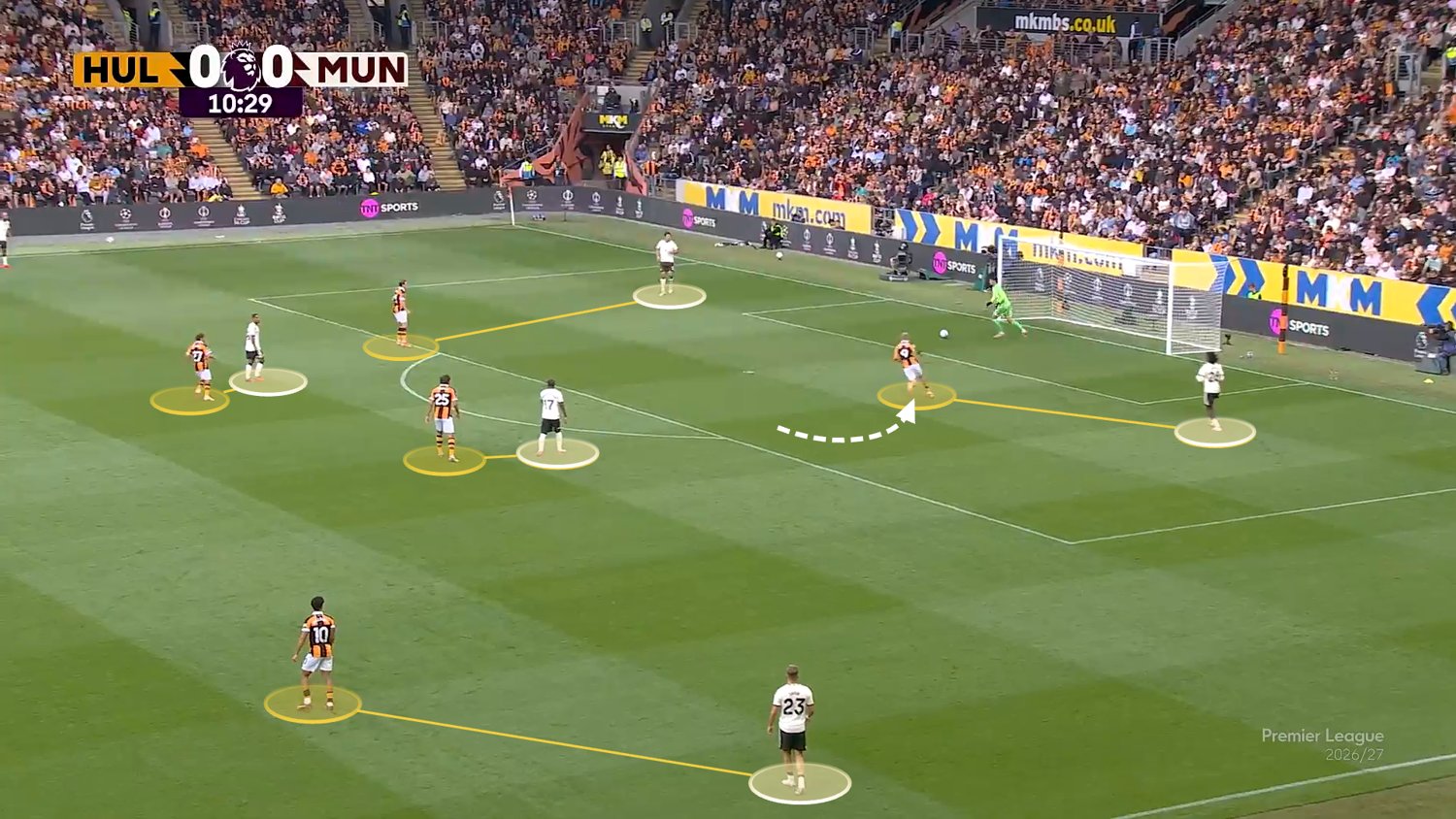
In Man United’s half, Hull City pressed aggressively, particularly after set pieces, employing man-marking tactics. Midfielders Regan Slater and Matt Crooks each neutralized their direct opponents. Man United’s decision to withdraw both Youri Tielemans and Santos in the 67th minute underscored the effectiveness of Hull City’s containment.
Man United's difficulty in breaking down disciplined defenses is hardly new under Carrick. From Matchday 22 last season—Carrick's first league game in charge—Man United won 12 matches but failed to win five: away draws against Bournemouth, West Ham United, and Sunderland, plus 1-2 defeats to Newcastle and Leeds United. These opponents are hardly elite sides.
This match starkly illustrated what happens when Man United face a well-organized defense and Bruno Fernandes cannot impose his will. The team looked tactically inflexible, resorting to bringing on Benjamin Šeško and repeatedly crossing to him. Carrick conceded afterward: "We exposed problems when facing teams with different setups, and we must find solutions."
That said, Hull City's performance also deserves equal praise. By patiently defending in a 5-4-1 and quickly transitioning into aggressive pressing when opponents recycled possession to midfield, they completed 17 tackles and dominated both ground and aerial contests.
Jakirovic explained: “When we win the ball, we push forward directly and quickly. In transition, we look to switch play to the opposite flank, where our wing-backs are often unmarked, giving us a numerical advantage in the box.” Hull City demonstrated these same qualities throughout last season.
A 14th-minute move exemplified this approach. After winger Elliott Stroud won an aerial duel against Noussair Mazraoui, Hull City exploited the five-on-four advantage created by their wing-back system. With Mazraoui out of position, left wing-back Ryan Giles received a pass from McBurnie and burst into the gap.
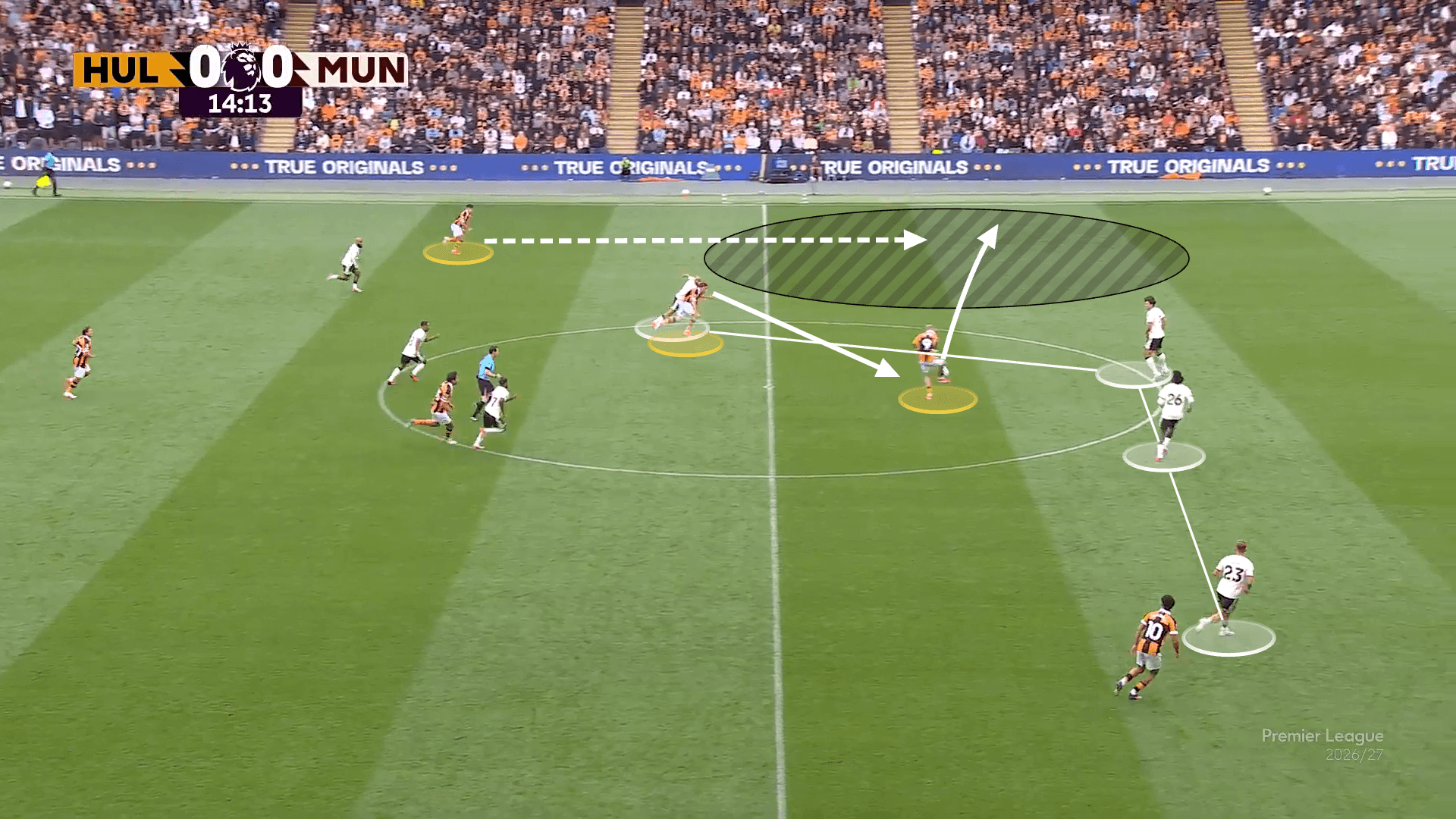
Hull City's attack surged forward, creating a two-on-one with support from Giles. He found McBurnie, whose header drew an excellent save from Man United goalkeeper Lammens.
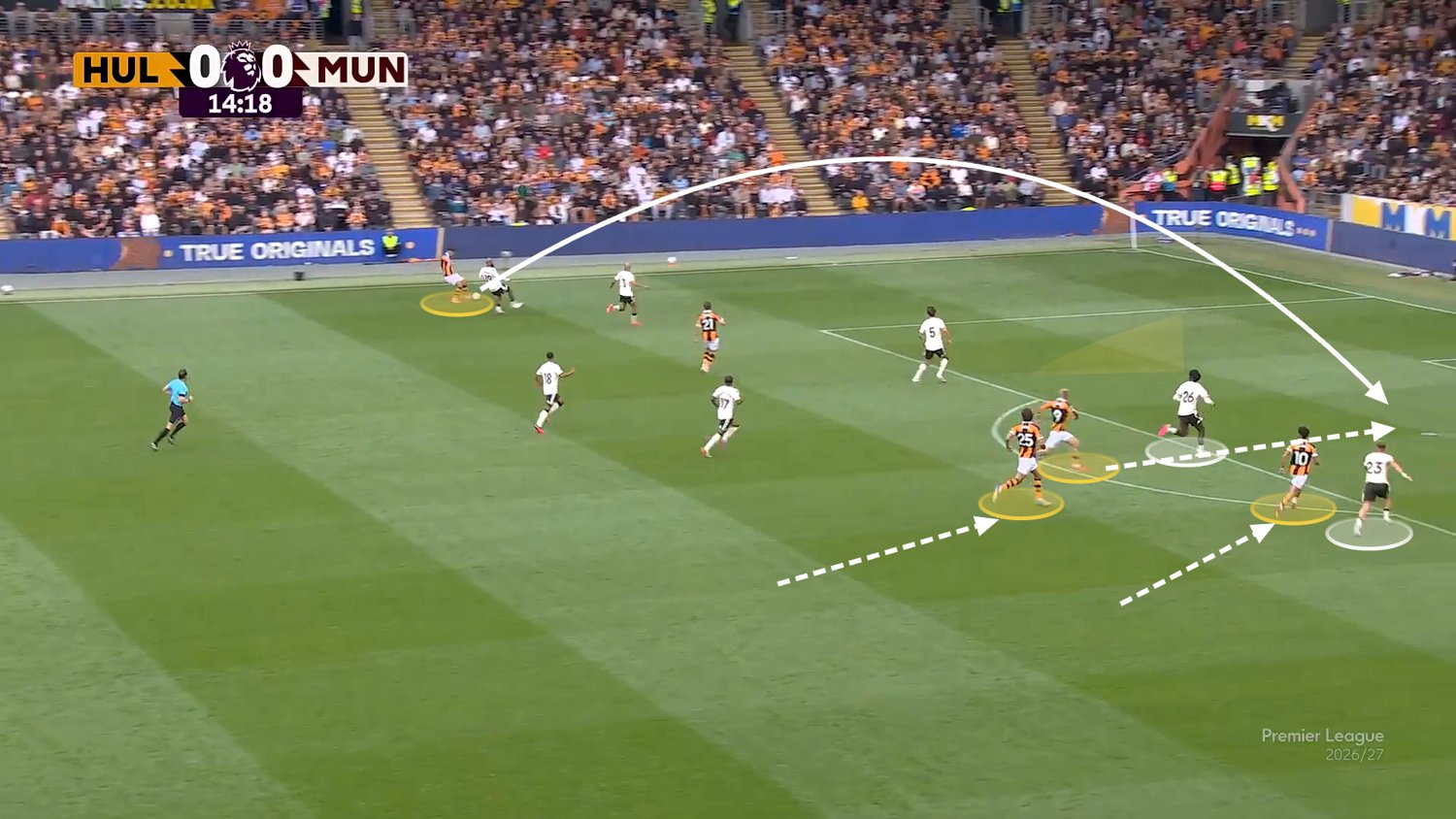
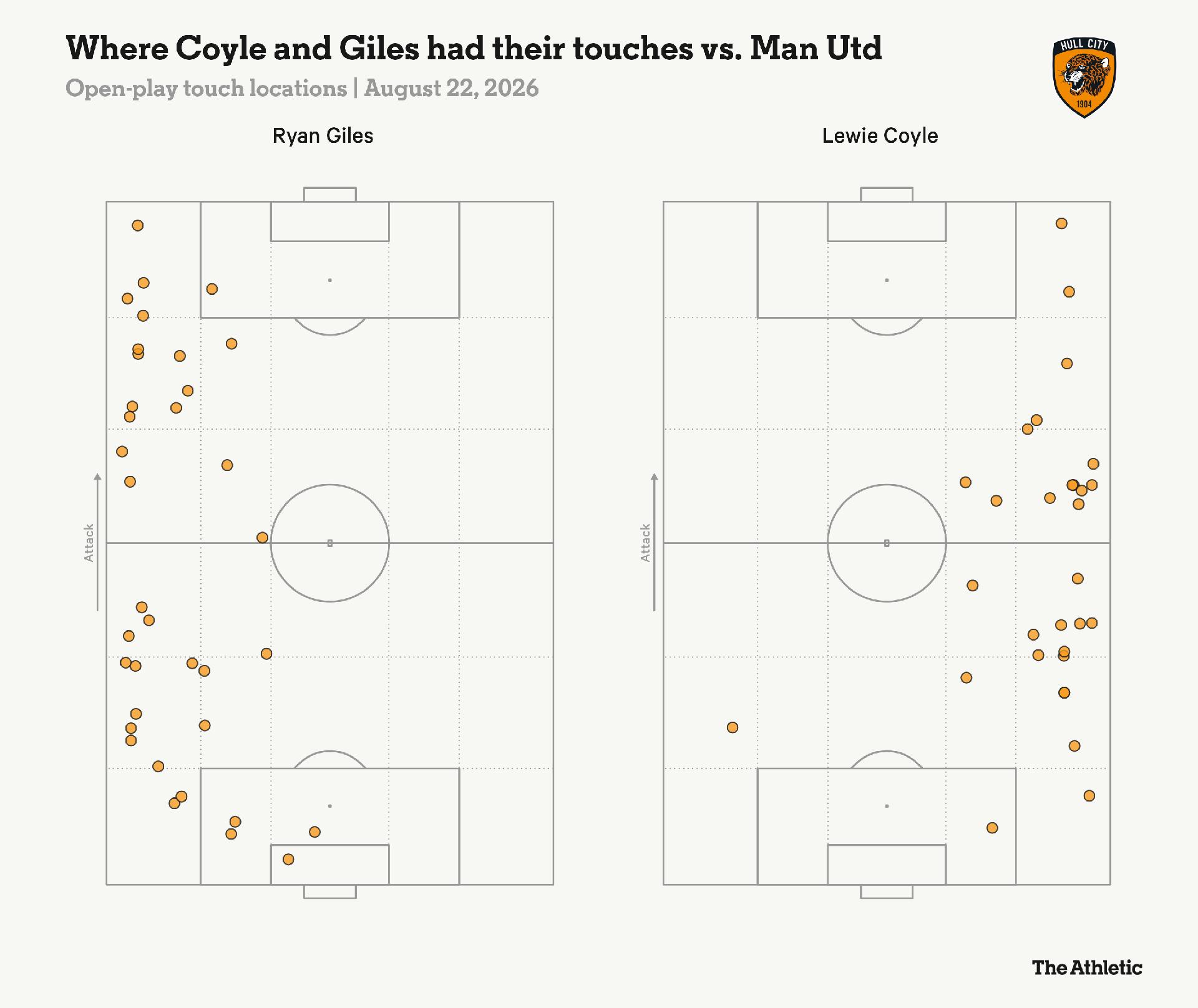
Giles attempted eight crosses and made four clearances, excelling at both ends of the pitch. On the opposite flank, Coyle also pushed forward regularly, repeatedly testing Luke Shaw’s positioning.
Hull City's persistent flank attacks and sustained pressure bore fruit in the 17th minute with their opening goal—a moment that encapsulated their entire approach. Slater's corner found the near post, where Egan flicked on a header, and McBurnie slid in to hook the ball toward the far corner. Lammels blocked the shot, but Junior Ajayi followed up instantly to tap in the rebound, giving Hull City a 1-0 lead.
In many respects, Jakirovic has built a thoroughly modern Premier League team: proficient at set pieces, physically commanding in duels, direct in attack, efficient in transition, and tactically flexible.
They also possess real technical and tactical sophistication. The second goal originated from a Slater free-kick, with Jaden Philogene heading home. The move was set up when Mohamed Belloumi nutmegged Tielemans at the edge of the box, forcing the new Man United signing to foul him and concede a central free-kick.
The season is long, but it bears noting: West Ham finished 18th last season with 39 points, the highest total for a relegated side in 15 years. Hull City still faces challenges ahead, but this performance and result demonstrated they are fully capable of establishing themselves in the Premier League. For Carrick's Man United, it delivered an uncomfortable reality check: do they truly possess the tactical resources to overcome teams that defend compactly?
AF's PC site is now live! Browse full news, comments, match details, and stats on your computer. Visit: www.allfootballapp.com
 Manchester United
 Hull City
 Michael Carrick
 John Egan
 Luke Shaw
 Semi Ajayi
 Bruno Fernandes
 Youri Tielemans
 Oli McBurnie
 Noussair Mazraoui
 Lewie Coyle
 Marcus Rashford
 Regan Slater
 Matheus Cunha
 Senne Lammens
 Bryan Mbeumo
 Konstantinos Tzolakis
 Ryan Giles
 Andrey Santos
 Nobel Mendy
Todos los comentarios (24)