After Barcola's transfer to Liverpool FC, his youth coach was interviewed by Sky Sports and spoke about the player's playing style.
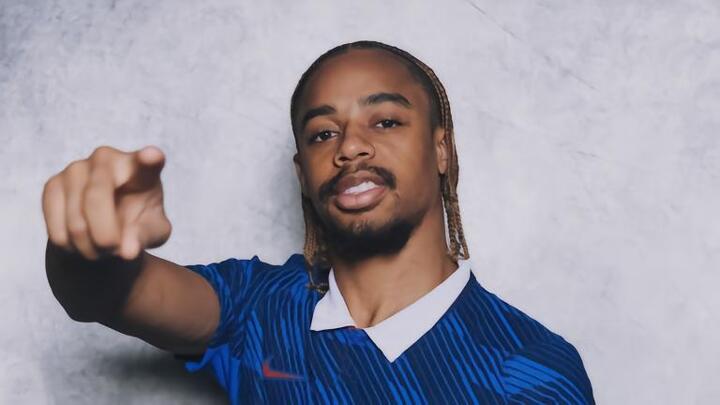
The player's talent is widely recognized, but his rise was rather fortuitous. During his time at Olympique Lyon, when French football legend Laurent Blanc was managing the team, Barcola was on the periphery of the first team until a player's departure changed his fate entirely. "That was a turning point," Jean-François Vulliez told Sky Sports.
"At that time, a Swiss club wanted to sign him because he wasn't getting playing time in Olympique Lyon's first team. Blanc was the manager then, and Karl Toko-Ekambi was also in the squad. But Ekambi decided to leave, so the manager stopped Barcola's loan plans, as the team had to keep him in case they needed him."
Vulliez explained: "That was a crucial moment. The manager realized that Barcola could break through after Toko-Ekambi's departure, and he got his chance to shine. Eventually Ekambi did leave, and Barcola stayed. After just one match, an injury hit the team, and Blanc threw him in."
Vulliez had coached Barcola early in his career at Olympique Lyon's youth academy and knew him very well. He even followed Barcola to Paris Saint-Germain, where he now works as a youth development coach for the Ligue 1 and Champions League winners. During his time there, he has seen countless talented young players.
But Barcola wasn't among the most spectacular initially. He was talented, but nobody expected him to achieve what he has today. "He was just a normal teenager, never skipped age groups, and developed at a very normal pace," he explained.
"Every player's development path is different. Some players, like Kylian Mbappé, mature early in their youth; others need more time to develop. Barcola was never called up to any level of the French youth national teams; his technique was good, but his physical condition hadn't met the standards."
"Olympique Lyon was patient with him at the time; we knew he had the technical foundation and just needed to wait for him to mature both physically and mentally. Once that transformation was complete, his abilities would improve rapidly."
After Toko-Ekambi's departure, Barcola scored 5 goals in 9 matches in early 2023. That summer he delivered a brilliant performance for France at the U21 European Championship, which sparked lengthy transfer negotiations that eventually brought him to Paris Saint-Germain. "His body was still in Lyon, but his heart was already in Paris."
In three seasons with Paris, he collected 13 trophies, played over 150 matches, and scored 39 goals. Under Luis Enrique, he refined his playing style and handled the ball more confidently than ever before. Barcola understood when to drive at the defense with the ball and when to simply play it.
Barcola's current strength stems from this patient youth development experience. He developed physically later, and in his teenage years it was unrealistic to overcome opponents through physicality, which forced him to refine other competitive skills. "That refined his football intelligence," said Vulliez.
"He's good at observing the situation on the pitch, reading the game, and making full use of space. He had this ability very early on, combined with pace. Then his physical attributes improved, and his physical strength increased significantly. Tactical awareness, technical ability, and physical talent came together to make him what he is today."
At Paris Saint-Germain, Barcola played primarily as a left winger, but his playing instincts are more those of a center forward than a pure winger. In fact, he played as a striker until he was 17 at Olympique Lyon. When operating on the left wing, he can cut inside and curl shots with his strong foot into the far corner.
Such playing instincts are hard to acquire later in life, and top clubs highly value wingers with these qualities—it's not enough for players to play beautifully; they must also deliver numbers. Barcola delivers both offensive and defensive statistics, both goals and assists for teammates.
Data shows his impressive shot volume at Paris; last season his shots per 90 minutes ranked in the top ten in Ligue 1, even playing as a winger. "His instinct to cut inside is very clever." The timing of his runs is one of his core strengths.
"Because he has experience as a striker, he knows when to cut inside and when to make runs in behind the defense. To use Barcola effectively, you need to utilize his specialty: exploiting gaps in the defense and making runs from deep, that's his strength."
Is Liverpool FC His Ideal Destination?
Like Victor Muñoz and Leo Ngumoha, Barcola is accustomed to playing on the left, but stylistically he fits very well with Arne Slot's tactical system: he tends to run towards the ball rather than wait for it to be played to him, which is exactly a quality Liverpool FC previously lacked.
Last season, Liverpool FC's overall performance under Arne Slot was significantly hampered by the lack of off-the-ball running from players like Luis Díaz, Jota, and Darwin Núñez. Florian Wirtz excels at precise through balls that break defensive lines, and Barcola is perfectly suited for this type of pass.
"During his academy time, he was very coachable, possessed high football intelligence, and was willing to listen to the manager's instructions. The coach could give him any tactical task, and he would understand and execute it; he was very astute."
"I believe it's difficult to reshape a player's football intelligence after age 17. If they don't have football intelligence in their youth, it's hard to cultivate it later. Therefore, early development of football intelligence is crucial, and Barcola had this ability naturally. After that, we could flexibly adjust his position on the field."
As his career progresses, higher demands will be placed on him. His finishing ability still has room for improvement; Enrique pushed him to improve his shot accuracy, but he still has time to grow. "Many excellent players steadily improve their finishing as they mature mentally," said Vulliez.
"Like all young players, he occasionally needs external motivation, but he has a strong mentality and is fully capable of it. The left wing may suit him better at this stage, but I'm very curious about his future development; I believe he has the ability to develop into a true center forward."
Position flexibility is a major reason for his appeal. Barcola can also play on the right wing; if tactics require it, he can use his pace to get to the byline. Last season his pace ranked in the top ten among Champions League players, which enabled him to execute counterattacks.
Today's Barcola is far stronger than when he moved to Paris, and he has long since surpassed the boy from his youth academy days at Olympique Lyon. "Nobody would have thought he'd make it this far," mused Vulliez. Now every club is asking the same question: How much further can Barcola develop?
Übersetzt von KI.
Die AF-Website ist jetzt online! Vollständige Nachrichten, Kommentare, Spieldetails und Statistiken auf dem Computer. Besuchen Sie: www.allfootballapp.com
 Liverpool
 Olympique Lyonnais
 PSG
PSG
 Florian Wirtz
 Bradley Barcola
Todos los comentarios