The spirit of Bill Shankly still shines in Liverpool, in the form of the supporters’ union which takes his name and is a vital presence as wealthy Americans trade shares of the club he rebuilt from the ground up in the 1960s.

But on the 113th anniversary of the iconic manager’s birth, plans have been revealed to revive the ‘lost’ hilltop village on Scotland’s East Ayrshire former coalfield, where he was born and raised, as a social history heritage site.
All that remains of Glenbuck are the foundations of a few houses in its main terrace, called Monkey Row, including the two-room dwelling where Shankly and his nine siblings were raised. A memorial stone to Shankly, which stands on the hill there, is still visited by Liverpool fans whose scarves and mementoes are testament to his enduring legend.
A project led by Shankly’s eldest granddaughter Karen Gill is now under way to literally build on those foundations, through the reconstruction of the Shankly home and creation of a small visitor centre and sustainable accommodation, to form a heritage destination.
Work has been under way for some time, with the formation of a not-for-profit social enterprise company. The next step is to undertake feasibility studies, commission architect's plans and fund the recruitment of a project manager. To that end, a crowdfunding initiative has been launched through the social enterprise organisation - Shankly Glenbuck Village Community Interest Company - to raise £250,000 initially needed.
As Glenbuck's coal seam was finally exhausted, the stone-built terraces emptied out and were demolished, though nearly 100 years on, it has become clear that the remnants of the village and the beautiful surrounding hills retain a huge appeal.

The Scottish Government, National Lottery Heritage Fund and East Ayrshire Council have helped fund a basic industrial heritage site with information boards. These tell the story of Glenbuck’s history as an iron ore and coal mining village and a production line of an extraordinary number of footballers, who played for the Glenbuck Cherrypickers, a team coached by Shankly’s father. The pitch the team played on is still visible.
Shankly’s parents raised their 10 children – five boys and five girls – in a tiny house which had no running water or electricity and other households faced the same tough existence. ‘The only way they could survive was if they worked together and I think this is where my granddad got so many of his ideals,’ said Ms Gill.
That same community spirit seems to explain why a place so small had such an extraordinary football team. The Cherrypickers, who possibly took the appellation from the nickname for miners who sifted coal, delivered stars for big English and Scottish clubs, including multiple members of the Shankly family, and Sandy Brown and Sandy Tait, both members of the 1901 FA Cup-winning side.
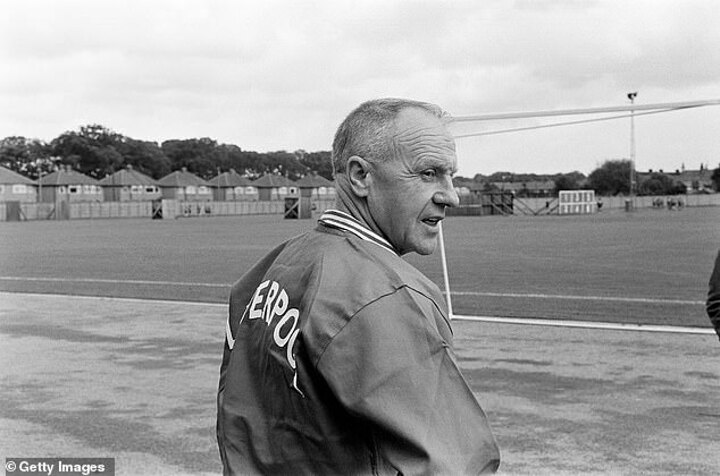
Shankly initially left the village for Carlisle United and enjoyed a long playing career at Preston North End before turning to the management role which brought him to an ailing Liverpool in 1959.
‘There was nothing left to signal that this was such a special place,’ said Ms Gill. ‘Our first stage is to rebuild his house as it was. That is part of a larger regeneration project to bring people to this beautiful place and join other communities together. It is what my granddad would have wanted. This is not a commercial project. It is community based.’

Glenbuck, like its most famous son Shankly, was fuelled by a firebrand spirit. The mine owners tried to subdue political debate, warning families that anyone offering hospitality to socialist Keir Hardie, when he visited during a miners’ struggle in the 1870s, would be turned out of their homes. But Glenbuck stood defiant.
‘We had our pride and our characters, who made their own world, the best of a bad lot, the best of isolation,’ Shankly said of the village. ‘We talked to each other and about each other. We had fun, jokes, laughs and exaggeration.’
He would still return to the place after what would prove to be a painfully premature retirement in 1974. His granddaughter’s memories are of Shankly joining the family in walks through the surrounding hills. ‘We want to complete the circle and help others to discover this beautiful place,’ said Ms Gill.
Visit www.shanklyglenbuckvillagecic.co.uk to learn more about the venture.
 Liverpool
Todos los comentarios