To complete the Camp Nou project, the financial structure still requires additional loans.
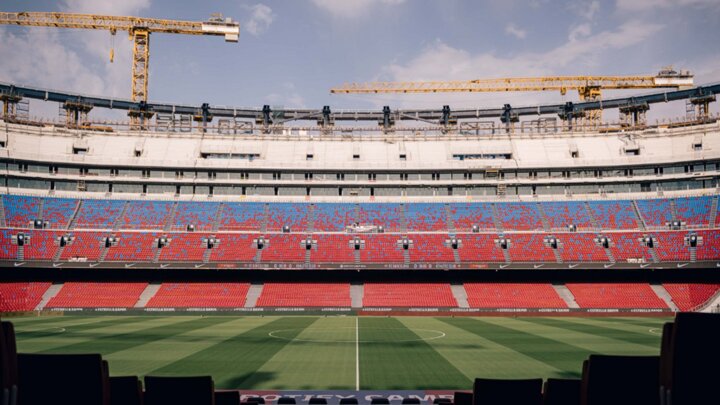
The market is closely monitoring the financial progress of the Camp Nou renovation project. According to the latest financial update presented to Spain's National Securities Market Commission (CNMV), the data corresponds to the end of the first half of 2026. The Espai Barça securitization fund, established by Goldman Sachs with investments from multiple investors, has injected €1.162.89 billion into the project, but approximately only half of the construction has been completed.
The stadium has reopened with two renovated sections, but the third tier still needs to be rebuilt from scratch, and the stadium roof has yet to be constructed. This means that at the beginning of the new season, Barcelona will relocate to Montjuïc once again. Another key component of the new Camp Nou project, the new Palau Blaugrana, has had no updates since the club released renderings ahead of March's elections.
Compared with data from the previous period as of December 31, the project's cumulative investment of €1.163 billion has increased by €153.6 million, indicating that capital expenditure remains steady as construction progresses. The same update, which can be downloaded free online, also shows that the fund's available liquidity decreased from €240.03 million in December 2025 to €141.2 million—a reduction of nearly €100 million.
The reason the reduction is not entirely equivalent to the €153.6 million investment is primarily because the fund avoided depleting nearly all its cash through a temporary withdrawal of €74.4 million. As a result, the fund paid €153.6 million for the project with only €988,200 in immediate cash reduction. These payments were made in installments once the relevant work was completed and certified.
As of June 30, the Espai Barça fund still holds €141.2 million, but the project remains incomplete. However, the total project cost far exceeds this amount. Since investors did not release committed capital all at once but instead disbursed funds gradually based on certification of completed work, Barcelona had to use its regular budget to cover the financing gap and prevent the renovation from stalling. Ferran Olivé, the financial director of Laporta's board, also acknowledged this in an interview with ARA.
When both spending components are combined, the project's cost overrun has approached €400 million, and the club urgently needs additional loans to complete the project. The Camp Nou stadium is Barcelona's principal asset and is expected to generate revenue now and in the future. The club is expected to ask members at the upcoming general assembly, scheduled for late this month, to approve an additional €500 million in debt, of which €210 million will be issued as bonds.
The new Camp Nou stadium has contributed €56 million toward interest payments. Currently, the €1.474 billion raised through securitization funds since 2023 appears insufficient to complete stadium construction. The first issuance in late May 2023 injected €987 million, followed by €424 million in additional nominal funds and €84 million in subordinated loans.
Total financing approaches €1.5 billion, of which €1.163 billion has been used to pay for certified work, representing 78.9% of total financing; €141.2 million remains in the account, representing 9.6%; another €42.49 million is held in other assets and receivables, representing 2.9%; and €127.52 million has been used to pay interest, fees, exchange rate differences, and establishment costs, representing 8.6%. By mid-2026, the debt and asset structure of Espai Barça corresponds precisely to these proportions.
The CNMV document also shows that the fund's debt performance is normal. As of June 30, 2026, the delinquency rate, doubtful asset rate, and default rate were all 0%, meaning Barcelona is paying strictly according to the established plan. Liquidity is being continuously converted into project expenses, while income generated by the securitized assets—which the fund records as future receivables related to the stadium's future operations—is used to cover the cost of issued debt.
The fund has recovered €55.93 million in asset income from the club, a figure higher than the €45.52 million in interest paid during the same period. This means that since its reopening, the Camp Nou stadium has contributed nearly €56 million toward debt interest payments. However, regarding principal repayment, the club has not yet returned a single euro.
Traducido por IA.
¡El sitio web de AF ya está disponible! Consulta noticias, comentarios, detalles de partidos y estadísticas en tu ordenador. Visita: www.allfootballapp.com
 Barcelona
Todos los comentarios