On September 4, Beijing time (CEST), The Athletic reported that several of Europe's leading football clubs, major leagues, and national football associations have reached a joint initiative with Football Supporters Europe (FSE), urging public authorities to use a complete ban on away supporters attending matches only as a "last resort".
According to reports, this consensus was reached at UEFA's Safety Conference in Madrid. This week, hundreds of professionals gathered there to discuss the contribution of away supporters to European football and the challenges posed by collective bans.
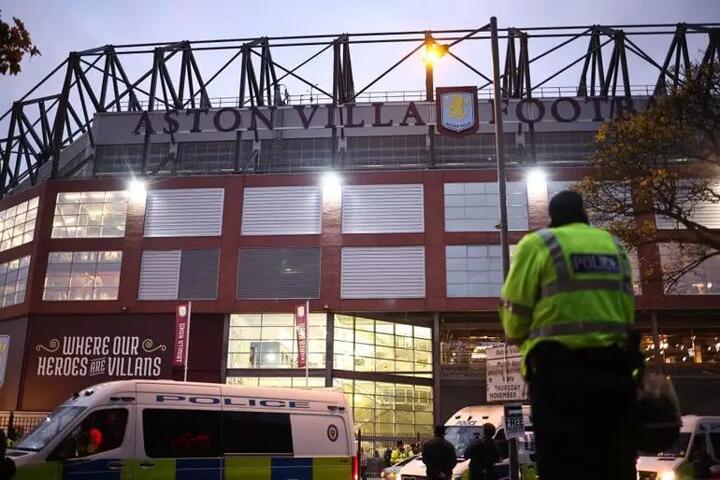
As an umbrella organization representing supporter groups from 50 European countries, Football Supporters Europe had previously lobbied and protested against the overuse of bans by relevant authorities. One of the most notable incidents occurred in November 2025, when Birmingham City Council and West Midlands Police banned Maccabi Tel Aviv supporters from attending a Europa League match as away fans against Aston Villa.
This decision was heavily criticized at the time by then UK Prime Minister Sir Keir Starmer. West Midlands Police Chief Craig Guildford retired early and is currently under investigation for gross misconduct due to his recommendation to completely ban Israeli team supporters from attending matches.
Although this incident attracted worldwide attention, it was by no means an isolated case. In the 2023 Europa Conference League semi-final return match, Basel supporters were banned from traveling to Nice because French local authorities feared that national strikes would affect the safety of the event, despite no previous clashes between the two sets of supporters. Basel fans ultimately had to watch the match in bars on the France-Switzerland border.
In 2024, Lyon's local government imposed a collective ban on Beşiktaş supporters before a Champions League match due to fan violence from seven years earlier; Paris police also denied entry to PSV Eindhoven supporters for a Champions League match against PSG.
In 2025, the French Interior Ministry attempted to close the France-Belgium border to prevent Feyenoord supporters from traveling to Lille; Paris police attempted to ban Bayern Munich supporters from attending a match against PSG; and the prefect of Naples banned Eintracht Frankfurt supporters from attending an away match.
All these cases and other similar incidents were heavily criticized at the time by supporter organizations, who argued that these measures were an overreaction to security risks and often lacked accountability mechanisms, due process, and transparency.
These protests caught the attention of the Council of Europe. This international organization, founded in 1949, aims to defend human rights and the rule of law in Europe and currently has 46 member states, including the United Kingdom.
In October 2025, its Standing Committee on Security and Service at Football Matches issued a non-binding recommendation to member states regarding collective bans on away supporters. The recommendation stated that national legislation prohibiting attendance at sporting events "must prioritize individual responsibility over collective restrictions, ensuring that sanctions are applied precisely to those responsible for causing disorder".
The recommendation also noted that collective bans "should only be considered in exceptional circumstances, and must be backed by clear, recent, and objective evidence," adding that such decisions must be made after thorough consultation and communicated to supporters as soon as possible to avoid unnecessary travel and accommodation costs.
Following this week's meeting in Madrid, UEFA, the European Club Association, European Leagues, and Football Supporters Europe have jointly endorsed the Council of Europe's recommendations and have collectively urged public authorities across Europe to adhere to five key principles: prioritize individual responsibility, impose general bans only in exceptional circumstances, ensure participation of football stakeholders in decision-making, guarantee timely communication, and promote fairness.
In a joint statement, the four organizations said: "All supporters, including away supporters, are crucial to the atmosphere, cultural identity, popularity, and sporting integrity of football at all levels".
"According to relevant laws and regulations, following your team both at home and away is a fundamental right for supporters. This is a deeply rooted and highly valued tradition in European football culture".
Football Supporters Europe added on its social media platform: "Away supporters belong in European stadiums. Collective bans should not be the standard approach to security issues".
However, it remains to be seen how UEFA itself will address such issues when imposing disciplinary sanctions for supporter conduct in European club competitions.
While the initiative focuses on urging municipal councils, national governments, and police to be more cautious in their decision-making, UEFA itself has issued collective bans on away supporters; the most typical case occurred in 2023, when UEFA imposed a five-match away ban on Legia Warsaw supporters due to serious disorder during a Europa Conference League match against Aston Villa.
Traducido por IA.
¡El sitio web de AF ya está disponible! Consulta noticias, comentarios, detalles de partidos y estadísticas en tu ordenador. Visita: www.allfootballapp.com
 Aston Villa
 Olympique Lyonnais
 PSG
PSG
 Lille
Lille
 Bayern München
 Eintracht Frankfurt
 Maccabi Tel Aviv
 Napoli
 PSV
PSV
 Feyenoord
 Basilea
 Beşiktaş
Todos los comentarios