Erling Haaland's goal in the Manchester Derby has reignited the debate over refereeing decisions, fueling fresh calls to abolish VAR. Jason Burt, a correspondent for The Daily Telegraph, argues that the problem lies not with VAR itself, but with how it's being implemented. The Premier League takes pride in being the world's best league, yet embarrassing refereeing errors happen far too often—mistakes of this magnitude are rarely seen in European competitions. Webb must step in to address this and use this moment to reassess whether some referees are actually competent for their roles.

Without VAR, the correct decision was already made. The assistant referee had flagged Haaland as offside. We wouldn't have to endure endless slow-motion reviews just to watch a correct decision get overturned inexplicably.
The initial offside decision was that Haaland was in an offside position, but it was actually his teammate Enzo Fernández who was offside. Yet the linesman's call was correct.
Scrapping VAR is the easy way out. The English Football League (EFL) has wisely chosen this path, claiming their league doesn't need VAR while letting the Premier League keep the system. Frankly, it's more about cost, but for the EFL it's a PR move—a way to show they're the purist, fan-friendly football league.
But the problem was never with the VAR technology itself, and it never has been. Those wanting to scrap VAR entirely might recall the 2017 League Cup final error: Manolo Gabbiadini's goal for Southampton was ruled out when the referee flagged for offside, but Gabbiadini wasn't in an offside position—it was his teammate Ryan Bertrand who was offside. Bertrand wasn't even involved in the play. One slow-motion replay could have clarified everything. Southampton ultimately lost the final 2-3 to Manchester United.
Outdated VAR implementation
The real problem all along has been VAR implementation and procedures that no longer suit the game. Worse still is the apparent lack of professional competence among those operating the system. Misunderstanding football's laws isn't just a one-off mistake—it's a fundamental misinterpretation and gross deviation in applying the rules. This is completely unacceptable, and those responsible must be held accountable.
Not just Matt Donoghue, the VAR official for this match, but the match officials' body, Professional Game Match Officials Limited (PGMOL), must take responsibility. The organization is led by Howard Webb, a former referee who has been in position long enough to reform the system. He took the job roughly four years ago with a promise that VAR would be a "safety net for correcting clear and obvious errors." If that was Webb's goal, he has failed and should be held accountable. VAR is no longer a safety net—it's become a trap, indicating serious systemic problems.
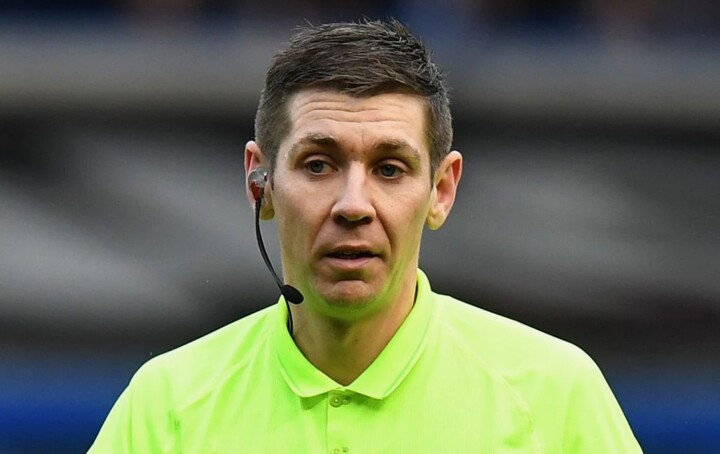
Even if Donoghue had doubts about the Enzo Fernández incident, he should have asked main referee Michael Oliver to review it himself at the pitchside monitor. He didn't. Why not? What prevented him?
No referee should have allowed this goal. The law is clear in this situation. According to the definition of offside, the provision on "interfering with an opponent" states that a player is in an offside position if:
> the player clearly attempts to play the ball when it is close to them, when this action impacts an opponent;
> or makes an action that clearly impacts an opponent's ability to play the ball.
Enzo Fernández of Manchester City charged at Lisandro Martínez of Manchester United to contest the ball from Guardiola's pass. This is a clear, undeniable, textbook example. His actions also obstructed Manchester United goalkeeper Onana's positioning, affecting his ability to anticipate Haaland's shot.
There is no ambiguity here. There is no room for misinterpretation. The facts are clear and indisputable. If someone cannot see this, they have no business being near a football pitch, let alone sitting in a VAR room making decisions that change a high-stakes match like this.
Yet PGMOL never seems committed to clarity. This time, within hours of the match, the organization did issue a swift and commendable statement acknowledging the refereeing error. While the statement cannot change the result and offers little comfort to Manchester United and manager Erik ten Hag, who are under enormous pressure, it was still the right thing to do.
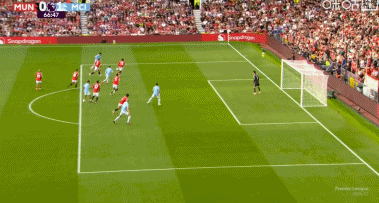
The referees' body spokesman stated: "Regarding the incident in the 60th minute of the Premier League match between Manchester United and Manchester City at Old Trafford on Sunday, we can provide clarification on the goal awarded to Erling Haaland.
The on-pitch decision was that Erling Haaland was in an offside position—this decision was reviewed by VAR, which determined he was not in an offside position.
During the same attack, it was established that Enzo Fernández did not make contact with the ball, making any offside offense immaterial. However, in this case, VAR failed to identify the potential impact of his positioning and should have recommended an on-pitch review.
We contacted Manchester United this evening regarding what we believe to be an error in the decision, and we will review this incident."
This is nearly a red line
Here's the detail that matters. When pressed by media whether this was a formal apology, the organization's public statement amounts to: "We're just acknowledging a mistake happened." If the referees' body hesitates to call a clear and significant error an apology, how can we expect their decisions to be clear and fair? Is it really that hard to simply admit: "Yes, this is an apology"?
Webb must step in. This is what we've been demanding for some time now. The world's supposedly best league—still the richest and most resourced—why do embarrassing refereeing mistakes keep happening? The Champions League group stage just ended, and the World Cup concluded not long ago, yet such shocking and fundamental errors are rarely seen in European competitions.
PGMOL will argue that such major errors are isolated incidents and will present data proving VAR's overall high accuracy.
Essentially, most referees do well, but the nature of the error in Haaland's goal is too severe. This incident should be a red line.
Webb should use this incident to reconsider guidelines given to the referees' team, and frankly, to assess whether some referees are actually competent for their roles. The severity of this refereeing error has reached that point, and it's shameful enough already.
แปลโดย AI
เว็บไซต์ AF เปิดตัวแล้ว! ดูข่าว ความคิดเห็น รายละเอียดแมตช์ และสถิติครบถ้วนบนคอมพิวเตอร์ของคุณ เยี่ยมชม: www.allfootballapp.com
 Manchester United
 Manchester City
 Erling Haaland
 Senne Lammens
 Enzo Fernández
 Matt Donohue
 H. Webb
Todos los comentarios