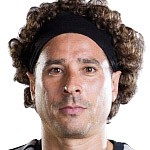
On June 10, local time, in an interview with L'Équipe, Mexican legendary goalkeeper Ochoa reflected on his career and looked forward to the upcoming World Cup in North America, which will be his sixth World Cup appearance.
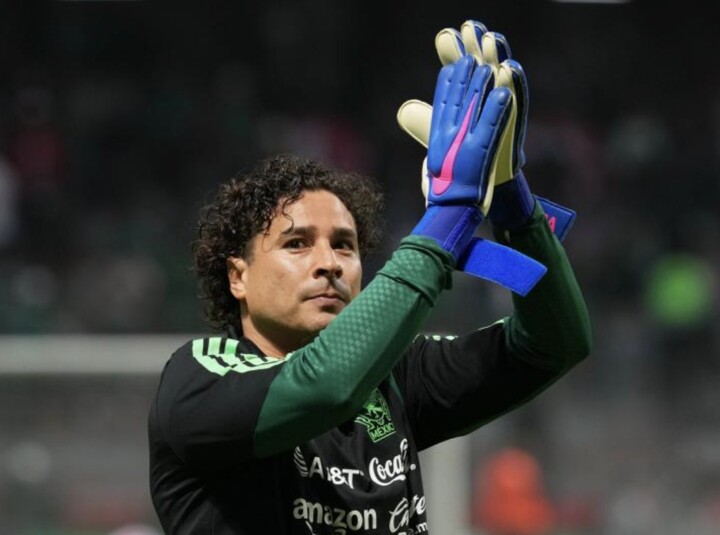
What will you feel when the opening whistle blows for your sixth World Cup?
Ochoa: I haven't really thought about that yet. When I was young, I always thought my career would be long, but time passes very quickly, so you have to learn to cherish these moments. It really is an incredible story.
Your World Cup journey didn't start smoothly, as you were on the bench in 2006 and 2010.
Ochoa: In 2006, I was 20, and I told myself, "This is my first World Cup, I need to learn." But 2010 was a completely different situation; it was a very heavy blow for me because I was already the starting goalkeeper then. However, that experience became a turning point, making me realize that if I wanted to succeed, I had to have the courage to leave Mexico and prove myself as a truly capable goalkeeper.
Was that decision difficult?
Ochoa: Very difficult. When clubs sign Brazilian players, they might think, "We signed a good one, maybe another one would be good too," but Mexican goalkeepers were completely different – no one had ever established themselves in Europe before. I became the pioneer, which motivated me, but the reality was also harsh because non-EU status limited many opportunities. Many teams would say, "A goalkeeper isn't worth a non-EU spot." It wasn't until after the Qatar World Cup, when I was 37, that I first played with EU status.
Is not joining Paris Saint-Germain in 2011 your biggest regret?
Ochoa: Yes. At that time, I was in talks with several clubs simultaneously, and I had even reached an agreement with Paris Saint-Germain before the Qatari consortium took over. But then the Clenbuterol incident happened – a substance used to fatten cattle. Because of eating beef, several of us national team players tested positive for doping. We were later proven innocent, but I missed two months of the transfer window because of it, which completely changed the situation.
Did joining Ajaccio change your career?
Ochoa: Yes. President Orsoni was like a father to me; he gave me confidence and changed my life. After that, our relationship continued, and he even came to Mexico to see my daughter. His passing hit me hard.
Was it because he made you change your identity?
Ochoa: Yes, but Ajaccio also changed many things, especially my understanding of football. Coming to Europe made me more well-rounded, more stable, and more disciplined. These things are what gave me a longer career. Without coming to Europe, my experience would have been completely different. In Corsica, I also found balance. People are calmer there, which is very helpful for thinking. You learn what's important and what's not. All of this helped me deal with media pressure more calmly and serenely. In Mexico, that pressure is immense. People talk about football every day, sometimes even too much. A footballer can face even more pressure than a politician. You have to learn to live with it.
Especially with the World Cup returning to your home country?
Ochoa: This is incredible on a historical level, for the World Cup itself, and for the country. This is the third time hosting the World Cup, following the Pelé era in 1970 and the Maradona era in 1986. People are crazy about it. You can see it from the ticket prices, which are ridiculously expensive. When you arrive in Mexico, you can feel the presence of the World Cup. You can feel the football in the air. You can see the energy of the people.
What's the secret to your long career?
Ochoa: How to explain it... it's psychological. The key is to set a goal for yourself, not a distant goal, but a goal that keeps pushing you forward. I can't imagine a career without the national team. The national team has always been my motivation, because I started playing early, both for the club and the national team. There was a time when if I was doing well at the club but was no longer selected for the national team, I would lose a lot of motivation. For example, after the Qatar World Cup, that tournament was postponed by six months, and I told myself at the time: no one has participated six times, I want to go to Italy sign a contract for another year and a half, and then return to my hometown of Mexico to end my career.
As you get older, what's the hardest part?
Ochoa: It's how others perceive you. Of course, there are physical effects too, depending on each person's characteristics. Some goalkeepers might see a decline in speed, reactions, or strength. But what people look at first is your passport and age. "Oh no, he's 36, 37, it's time for younger players." But deep down, you think: okay, but I'm in good shape, I'm still competitive, I give my all in every training, I never miss a session, but others don't see that. Another example is Neuer. At 40, no one knows if he participates fully in every training, if he makes two or three saves in every session. But he's still competitive, experienced, and can continue playing.
Hearing you talk about football with such passion, it's hard to believe you'll retire after this World Cup...
Ochoa: At the national team level, it's 100% certain. This is a very beautiful moment, and it's the best time to enter the list of these great players with my name, like Messi, Cristiano Ronaldo... At the club level, I still need to consider it. No one knows, because it's not shown on TV, but for the past three or four years I've made many sacrifices just to play in this World Cup. I played alone in Italy, Portugal, and Cyprus. It was hard for me and for my family who stayed in Madrid. After so many years dedicating myself to football, I need to completely clear my mind for two or three years.
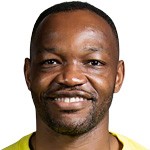
Are you worried about falling into depression like Mandanda? (In his book "After the Days," the French goalkeeper talks about the difficult psychological transition players face after retirement.)
Ochoa: I've read his book. I understand his situation. You wake up and don't have the daily life of a player anymore. It's tough. That's football. After the Qatar World Cup, I started preparing for retirement. So it won't be a surprise or a sudden break for me. While it won't be easy, I know myself, and I don't have to work out of necessity to live. I have that freedom. But it's still a shame not to be able to play football for a lifetime.
 AEL
AEL
 PSG
PSG
 Ajaccio
 Meksiko
 Guillermo Ochoa
 Steve Mandanda
Semua Komentar (18)
6-12 02:54
6-11 17:53