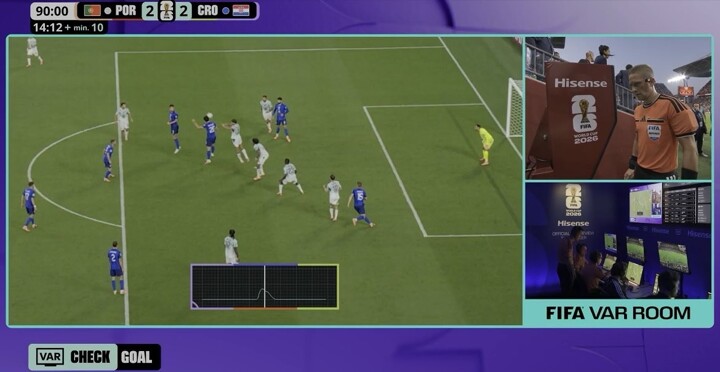
In the Round of 16 match between Portugal and Croatia at the FIFA World Cup, Croatia scored a crucial goal during extra time. However, VAR intervened, and Croatia was penalized for offside, and the goal was disallowed.
The "handball controversy" before Croatia's goal became one of the most disputed incidents at this FIFA World Cup.

The ball-tracking chip showed that Croatian player Matanović touched the ball. This touch meant that his teammate, who was participating in the attack from the far post, was in an offside position. For the referee and spectators, it was difficult to judge with the naked eye, and even slow-motion replays were inconclusive. Ultimately, the ball-tracking chip provided the evidence.
This technology is not new at this FIFA World Cup. The ball-tracking chip, semi-automated offside technology, and the VAR system have matured gradually in major competitions over the past few years. The controversy involving Croatia simply brought it back into the spotlight.
Modern football no longer relies solely on physical prowess. Technological innovation has made football more rigorous and precise.
Take the ball-tracking chip, for example, which assists referees. This chip uses sensors to capture changes in the ball's movement, such as acceleration, spin, and impact moments. Combined with a player-tracking system, it helps the referee team make decisions at critical moments in the match: who touched the ball, when the touch occurred, from what moment offside should be assessed, and so on.
However, it appears that the emergence of technology cannot entirely eliminate controversy. The Croatia case has demonstrated this.
Previously, people debated "whether he touched the ball or not." Now, with the chip confirming the touch, the debate has shifted to whether the data is accurate and whether a slight touch should determine an attack, and so on.
Offside is a similar issue.
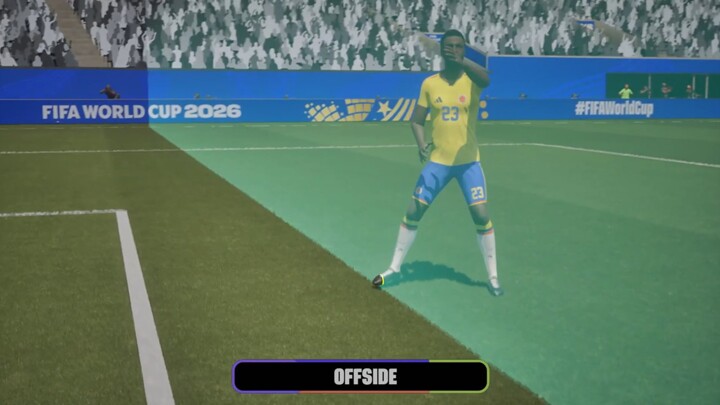
In the past, when assessing offside, spectators often saw only a frozen frame and a few lines. Every detail—shoulder, knee, toe, moment of the pass—could be debated at length. Even after a decision was announced, many people still didn't understand why it was offside.
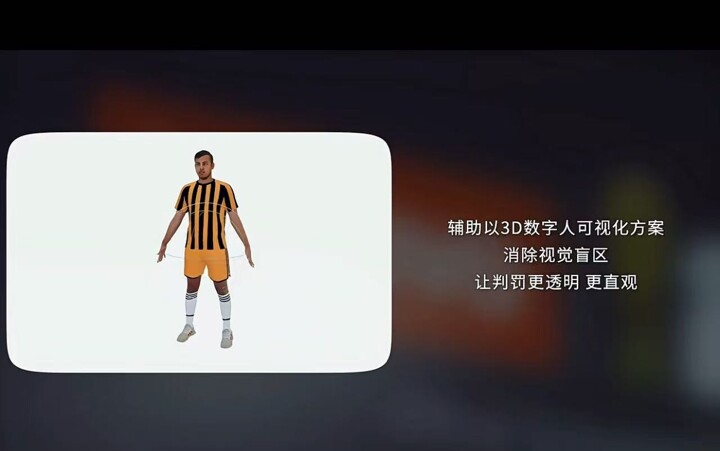
At this FIFA World Cup, FIFA introduced a 3D digital human visualization solution to address the problem of presenting offside decisions.
By scanning players' bodies and performing 3D reconstruction, corresponding virtual avatars can be generated for each player. During offside replays, the players' positions, body outlines, and posture can be displayed in 3D animation. This doesn't serve the referee, but the spectators, clarifying the reasoning behind the decision.
Additionally, when we typically watch matches, we mostly see high-angle cameras, sideline cameras, and goal-line cameras. The images are clear, but the sense of distance is completely different from being on the pitch. Many fans watching replays wonder how the referee could have missed it. But in reality, when you're actually on the pitch, the line of sight, obstacles, speed, and distance are all different.
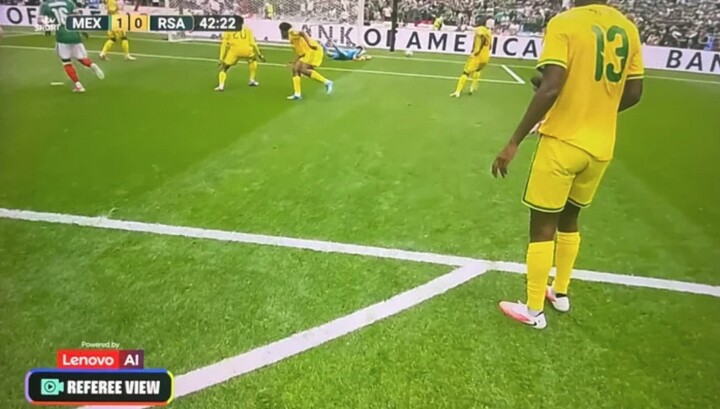
In recent years, we've seen first-person perspective footage from referees' body cameras in top-level matches, but the practical issue is that referees are constantly running, turning, and stopping suddenly, causing the footage to become too shaky for standard broadcast cameras.
At this FIFA World Cup, FIFA introduced an AI video enhancement system for referee view at the broadcast level. This technology stabilizes and processes the footage in real time. It reduces shake in the referee's view footage, controls latency, and maintains broadcast-quality clarity. Fans can get closer to the referee's position at that moment and see how the referee made the decision.
Of course, this technology only brings spectators closer to the decision-making location. But it still won't reduce the controversy arising from the decision.
But perhaps technology is merely a tool we use to pursue "standard answers," aiming to serve ourselves better. As for controversy, most of it stems from different perspectives and information asymmetry; technology shouldn't be blamed for controversy. In any case, at this FIFA World Cup, new technology has provided unprecedented solutions for many tasks.
For example, team preparation.
Modern football has long been inseparable from data analysis. Stronger teams naturally have larger data collection and analysis teams, which can improve the team's technical and tactical level and preparation efficiency. After the FIFA World Cup expanded to 48 teams, the difference in information processing capability between teams became more pronounced; not every team has the same resources for data analysis.
FIFA AI Pro addresses this issue.
FIFA AI Pro can process millions of data points, analyze over 2,000 metrics, and generate tactical insights, video clips, graphics, and 3D animations. Coaches can use it to understand opponents, analysts can compare team patterns, and players can receive more personalized game analysis.
Modern football is competitive not only in player ability but also in information processing capability. AI cannot instantly turn a weak team into a strong one, but it can at least enable more teams to use better tools to pursue stronger teams.
Additionally, technological innovation at this FIFA World Cup also extends beyond the stadium.
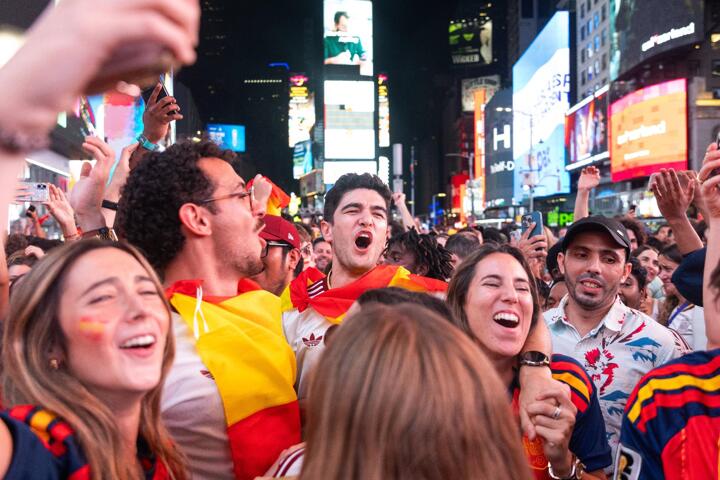
The tournament takes place across three countries—the United States, Canada, and Mexico—spanning 16 cities and involving 48 teams. Every aspect, including matches, training, broadcasting, equipment, transportation, security, and fan flow, is highly complex.
Technologies such as smart command centers, digital twins, and smart navigation can solve operational challenges. These technologies help organizers monitor the status of various venues in real time, predict potential risks, and optimize equipment, logistics, and personnel movement. Fans traveling from hotels to stadiums can also use smart navigation to get routes, entry points, and venue information.
These technologies are often invisible to people, but they truly facilitate different roles across various aspects throughout the FIFA World Cup.
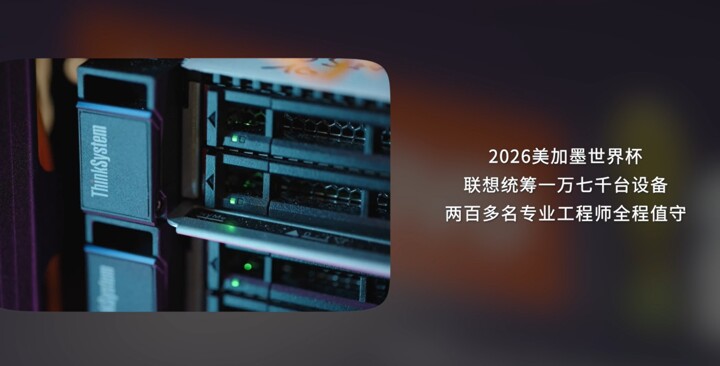
As FIFA's official technology partner, Lenovo participated in various real-world technology scenarios, including FIFA AI Pro, 3D digital human visualization, AI referee view enhancement, smart command centers, and smart navigation. Lenovo's goal is not constant exposure on advertising boards along the sidelines, but rather the desire to personally participate in optimizing the FIFA World Cup's operational processes.
Lenovo Enterprise AI has stated, "Qingtian AI delivers visible AI value." This is easily understood in the context of the FIFA World Cup: whether AI is effective should not depend on how grand the concept is, but on its ability to be embedded in real scenarios and solve real problems.
We often say that people should not be limited by technology, but they should not reject it either. As mentioned above, technology's role should be as a tool to enhance efficiency and accuracy. Technology is not and should not be a source of controversy.
At this FIFA World Cup, technology may still be unable to eliminate controversy.
But perhaps the emergence of some new controversies is precisely because technology subtly influences people.
Now, the US-Canada-Mexico FIFA World Cup has ended. But the new technologies that emerged at this FIFA World Cup will likely be gradually applied to various upcoming events.
So, what new technologies can we expect to see at the FIFA World Cup four years from now?
Diterjemahkan oleh AI.
Situs web AF kini hadir! Lihat berita lengkap, komentar, detail pertandingan, dan statistik di komputer Anda. Kunjungi: www.allfootballapp.com
 FIFA World Cup
Semua Komentar (24)
Hari ini 12:57
Hari ini 12:57
Hari ini 16:43
Hari ini 15:33
Hari ini 15:33
Hari ini 15:33
Hari ini 15:30
Hari ini 14:31
Hari ini 14:31
Hari ini 14:30
Hari ini 14:29
Hari ini 14:27
Hari ini 13:45
Hari ini 13:45
Hari ini 13:43
Hari ini 13:43
Hari ini 13:43
Hari ini 13:42
Hari ini 13:42
Hari ini 13:41
Hari ini 13:40