Modric is enjoying a new chapter in his life, but Madrid remains deeply woven into his story. He spent 13 years there that transformed his life and his family's. He misses the city, and his children were born and raised in Madrid, identifying themselves as Madrilenians. He's also been candid about his thoughts on life after retirement.
Looking Ahead
In this interview with Marca, he made clear that he wants to return, settle in Madrid, and make it his permanent home—a place he has long considered home.
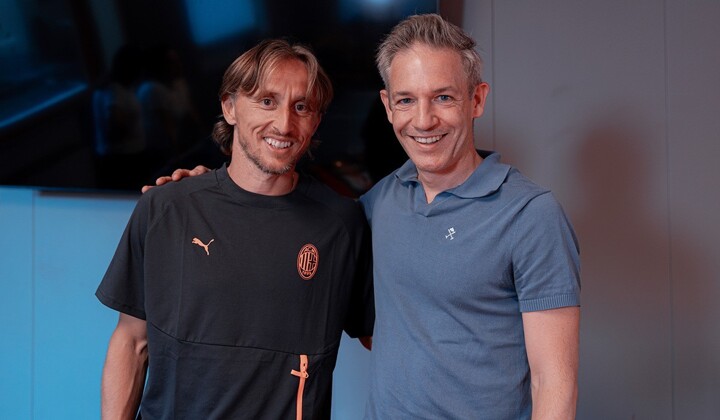
Milanello is nestled among trees, peaceful and steeped in football atmosphere. When Marca arrived here, far from the hustle of the city center, they met a relaxed and cheerful Luka Modric in a green, tranquil setting. He maintains exemplary physical condition, and more importantly, he still possesses the same hunger for the game as he did in the past. The entire conversation was filled with his love for football. "Since I was 6 years old, I've never gone a week without training," he explained, describing why he's still able to maintain such a competitive level—and offering a lesson for veteran players: people should pay less attention to the age on their ID and more attention to a player's performance on the pitch.
At the same time, Luka is still Luka. He trains, maintains discipline, plays, and enjoys the sport every day. When talking about football, he still has the enthusiasm of that small boy from Zadar, and he's also proud that he still maintains friendships with people he met when he was 6 years old. Now, Milan is his present, but Madrid will always be there. Because Luka never truly left.
Interview Transcript
Luka, I imagine people in Madrid miss you terribly...
(Laughs) Thank you for coming. It's wonderful to hear that you miss me. I miss Madrid very much too—I miss the city, the club, and everything there. But I can say that I feel very good and happy in Milan right now. From day one, they welcomed me with open arms, and I'm very happy here. The proof of that is I've been here for the second consecutive year.
So even though I miss Madrid greatly, I'm in Milan now and I'm very happy here too.
It's been a year since you left Real Madrid. Now that you can look back with some distance, how do you remember that day of departure?
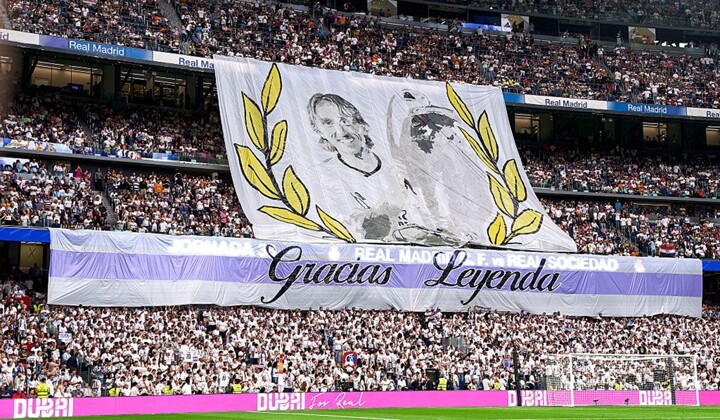
Looking back, I feel very proud, although that day wasn't easy. You can see it in the photos from before the match, including those on the bus, and in the moments I announced my departure days earlier, and then the photos on the pitch.
On the pitch, I managed to keep my composure, and then when I gave my speech... Those days were truly filled with emotion—very, very moving—because I knew that the best period of my football career was coming to an end.
But looking back now, I feel even more pride and emotion. Even though it's been more than a year, I sometimes still watch those images. When you see people in the stands crying, and all the messages and support, you feel very proud and satisfied, because you know you've achieved something significant at the biggest club in the world.
Who found it harder—you or your family? Your children were older by then and already understood who Luka Modric and their father were.
I think it was difficult for both my family and me, but perhaps it was harder for them, since they had lived in Madrid their entire lives, especially my children.
My oldest was born when we were still living in England, and he was only two years old when we moved to Madrid, but his entire childhood was spent there. He's 16 now. When you talk to them—for example, when we go on holiday or travel somewhere else—they ask, "When are we going home?" And by "home," they mean Madrid.
So it was very difficult for them, and for me as well. But that's life—it's part of life—and you have to keep moving forward. Now we're here. It was truly difficult, very difficult. But when you look back at all of it, you feel proud, satisfied, and happy.
Which was harder—saying goodbye to Real Madrid, or adjusting to no longer being a Real Madrid player?
In my experience, I think saying goodbye was harder than adapting, because ultimately you have to accept that one day everything ends. Football or anything else... You gradually separate yourself from something you dedicated completely to and experienced intensely.
So for me, the truly difficult part was saying goodbye. By comparison, coming here and gradually adapting to the new daily life, new reality, and new club wasn't as hard.
Saying goodbye wasn't easy, but as I said, it's part of life. When you know you've given everything and done all you could for the club, you can leave with your head held high. I left with my head held high.
If I remember correctly, you're the player with the most trophies in Real Madrid history. How does that feel?
It's truly incredible. I never imagined anything like that. When you join a club, you know you'll compete for titles there, and you know that for a club as big as Real Madrid, competing for titles is the norm. But even in my wildest dreams, I never thought I would be the player with the most titles in the club's history.
Not because I didn't believe in myself or didn't think I could succeed there, but because... How many players have played for Real Madrid? How many legends? And how many iconic figures in the heart of Real Madrid and its fans? To be the one who won the most titles is truly extraordinary. I never imagined it.
If you strip away the Champions League, La Liga, and all those titles, what else has Real Madrid left you besides the trophies? What has Real Madrid given to Luka Modric?
It taught me never to give up, to always fight until the final whistle, to always keep faith, and to always give my best. Of course, this was initially part of my character and my way, but Real Madrid made these things even stronger within you—it truly instilled them in your heart. I think that's the most important thing I can say.
Diterjemahkan oleh AI.
Situs web AF kini hadir! Lihat berita lengkap, komentar, detail pertandingan, dan statistik di komputer Anda. Kunjungi: www.allfootballapp.com
 Real Madrid
 Luka Modrić
Semua Komentar