Regarding this summer's transfer window, The Telegraph published an opinion piece stating that the Premier League transfer market has become uncontrollable and unsustainable. Economic rationality has been abandoned so completely that it is no longer a question of if the bubble will burst, but when.
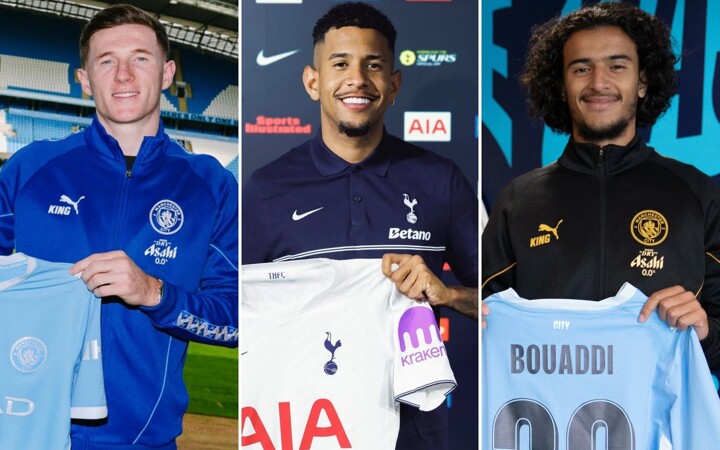
The asking prices in the Premier League transfer market have become so inflated that even the wealthiest club owners are shocked. The metrics used to determine transfer values continue to collapse. Take Savinho as an example. He changed his name from Savio, apparently for good luck. However, this winger hardly needed fortune—as a Manchester City reserve, he scored just two goals in two seasons yet was sold to Tottenham for £85 million. Such irrational and unpredictable agreements are rare outside England. PSG, which has won the European Championship two years in a row and won the World Cup final, bought Fabian Ruiz—who scored 21 goals for Barcelona and won the World Cup—for roughly half of what Savinho commanded.
The English transfer market is not only overheated but completely out of control, with the line between shrewd recruitment and excessive spending entirely blurred. If you need proof, look at Chelsea's departures this summer. Chelsea convinced Nottingham Forest that Radek Souček is a £50 million striker, despite the defender having played just 1,907 minutes across a full season at Stamford Bridge and scoring only three goals. Incredibly, this fee is £20 million more than what Chelsea paid for him just 14 months earlier. He was praised as an outstanding success story for Clearlake Group—not because they genuinely developed his abilities, but because they were able to flip an underperforming initial purchase for profit. This is not illogical anger but a genuine sense of absurdity.
This absurdity intensified when Chelsea sold academy product Nicolas Jackson to Aston Villa for £65 million. What could possibly justify such a massive investment in a Senegalese international? To be fair, he exemplifies Clearlake's early strategy: signing promising young talents to lengthy contracts, spreading transfer costs over longer periods, and weakening the constraints of historical profit-and-sustainability rules. However, they soon extended his contract through 2033, deemed him surplus, and loaned him to Bournemouth. Yet German clubs did not value him enough to properly develop him—they used him merely as backup for Harry Kane. Still, his market value more than doubled from when he arrived from Villarreal to Chelsea in 2023.
Four days before the transfer window closes, players are being viewed as commodities with increasingly inflated price tags, and sale prices bear no connection to reality. The most common justification is "it's the market, innit"—a variation of Clinton's 1992 presidential campaign slogan. This argument is hard to dispute. The 20 Premier League clubs have spent a combined £2.7 billion this summer, on track to break last year's transfer spending record. This amount exceeds the combined transfer spending of all clubs in Spain, Italy, and Germany's top leagues.
However, many agreements emerging today have inflation rates comparable to some nations' currencies. When Manchester City offered £116 million for Elliot Anderson from Nottingham Forest, speculation began, and that agreement directly inflated the entire market. Football is now consuming itself. Newcastle is valuing Tonali, who made just two appearances and scored zero goals for them last season, at £100 million. Even Tonali's family would struggle to see him as a nine-figure player, with his most notable achievement at St. James' Park being a 10-match ban for breaching betting regulations. Yet under Levy's stewardship, Tottenham—typically a net seller—is now aggressively pursuing targets and ranks among the 15 most expensive players in football history. Disappointingly, Savio's excessive transfer fee combined with the £85 million signing of Matheus Fernandes demonstrates that Tottenham's actions reflect only frustration.
All established industrial standards have collapsed, yet no one seems to notice. Tottenham sold Luka Vušković to Brighton for £46 million. This Croatian youngster never made a competitive appearance for Tottenham, yet his market value rose significantly at age 19 due to an impressive loan spell at Hamburg. Then there is the goalkeeper paradox: fewer appearances mean higher transfer fees. Last July, Trafford became a regular starter for Burnley in the Premier League, and Manchester City activated a £31 million buyback clause. However, Guardiola subsequently signed Donnarumma from PSG, and this promising English goalkeeper—one of England's best talents—made just one appearance in the following eight and a half months. Yet sitting on the bench inflated his perceived value among other clubs, and Leeds United signed him for a club-record £40 million.
In this chaotic transfer window, such oddities are not isolated incidents. Liverpool was once considered a transfer market expert, cleverly balancing signings of high-quality foreign players with academy products. Yet look at their current situation. The £241 million spent on Isak and Wirtz has become a massive burden for the club. Curtis Jones, who joined the Kirkby academy at age nine, left for Inter Milan for merely £30 million. Combined with Trent Alexander-Arnold's departure from his boyhood club to Real Madrid, the situation is concerning. Liverpool's famous homegrown cornerstone players and "This Means More" marketing slogan now ring hollow.
Reality has been completely inverted. Manchester City recklessly spent £86 million on an 18-year-old player to reassert domestic dominance. Manchester City supporters might argue that Boady's outstanding performance in Ligue 1 fully justifies the fee. However, the truth is that few in Britain had heard of this Moroccan talent until three months ago. No one can predict how successful he will become. Ultimately, spending vast sums on a teenager is not economic justification—it is more akin to 17th-century Dutch merchants frantically purchasing tulip bulbs that had not yet bloomed, a "tulip mania" that collapsed within three years. Yet this Premier League transfer spending frenzy is far more severe. The degree to which it has abandoned economic rationality has become irrelevant, and the only question is not whether the bubble will burst, but when.
AI ဘာသာပြန်ဆိုသည်။
AF ၏ PC ဝဘ်ဆိုက် စတင်ထွက်ရှိပြီ! သင့်ကွန်ပျူတာမှ သတင်းများ၊ မှတ်ချက်များ၊ ပွဲစဉ်အသေးစိတ်နှင့် စာရင်းဇယားများကြည့်ရှုနိုင်သည်။ ဝင်ရောက်ရန်: www.allfootballapp.com
 Liverpool
 Aston Villa
 Tottenham Hotspur
 Manchester City
 Leeds United
 Nottingham Forest
 Brighton & Hove Albion
 Inter
Inter
 Elliot Anderson
 Sandro Tonali
 Curtis Jones
 Liam Delap
 James Trafford
 Nicolas Jackson
 Sávio
Sávio
 Mateus Fernandes
 Luka Vuskovic
 Ayyoub Bouaddi
Tutti i commenti