To complete the Camp Nou project, Barcelona's financial structure requires further borrowing.
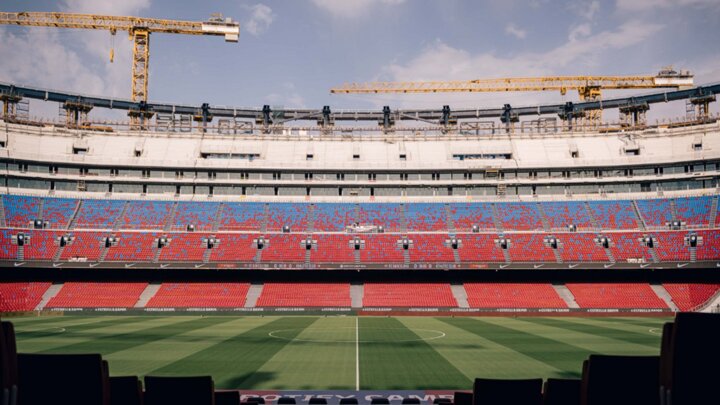
The Camp Nou renovation project remains under close financial scrutiny. According to the latest financial update submitted to Spain's National Securities Market Commission (CNMV), based on data from the end of the first half of 2026, the securitization fund Espai Barça, FT—established by Goldman Sachs with capital from multiple investors—has invested €1.163 billion in the project, though only approximately half the construction is complete.
The stadium has reopened its first two renovated sections, but the third stand requires complete reconstruction, and the roof installation remains pending. As a result, Barcelona will begin the new season playing at Montjuïc Stadium. The complementary Palau Blaugrana project has seen no developments since renderings were released before the March elections.
Compared to December 31 figures, cumulative project investment increased by €153.6 million to €1.163 billion, reflecting steady capital expenditure. However, the fund's available liquidity fell from €240.03 million in December 2025 to €141.2 million—a reduction of nearly €100 million.
The liquidity decrease is smaller than the investment increase because the fund withdrew €74.4 million temporarily, resulting in a net cash reduction of just €988,200 despite €153.6 million in construction payments. Payments are processed in batches after works are certified as complete.
As of June 30, Espai Barça held €141.2 million, but the project remains incomplete. Since investors release capital gradually based on certified work completion, Barcelona must use its operating budget to cover funding gaps and prevent construction delays—a reality acknowledged by Ferran Olivé, the Laporta administration's financial director, in interviews with ARA.
Combined expenditures have pushed the project overspend to approximately €400 million, forcing the club to seek additional borrowing. At the upcoming general assembly expected this month, Barcelona will seek member approval for €500 million in additional debt, including €210 million in bond issuances.
The new Camp Nou has already contributed €56 million toward interest payments. The €1.474 billion raised through the securitization fund since 2023 is insufficient to complete construction. The initial May 2023 issuance provided €987 million, followed by €424 million in nominal funds and €84 million in subordinated loans.
Of the €1.5 billion total financing, €1.163 billion has been spent on certified works (78.9%), €141.2 million remains in accounts (9.6%), €42.49 million is held in other assets and receivables (2.9%), and €127.52 million covers interest, fees, exchange rate differences, and establishment costs (8.6%). These proportions align with the fund's debt and asset structure as of mid-2026.
The CNMV filing confirms normal debt service, with delinquency, doubtful asset, and bad debt rates all at 0% as of June 30, 2026—indicating Barcelona strictly maintains its repayment schedule. Liquidity is continuously converted into construction costs, while income from securitized assets—recorded as future receivables from stadium operations—covers debt service costs.
The fund has recovered €55.93 million in asset income from the club, exceeding the €45.52 million in interest paid during the same period. Since reopening, the Camp Nou has generated nearly €56 million toward debt interest. However, Barcelona has not yet repaid any principal.
AF's PC site is now live! Browse full news, comments, match details and stats on your computer. Visit: www.allfootballapp.com
 Barcellona
Tutti i commenti (2)