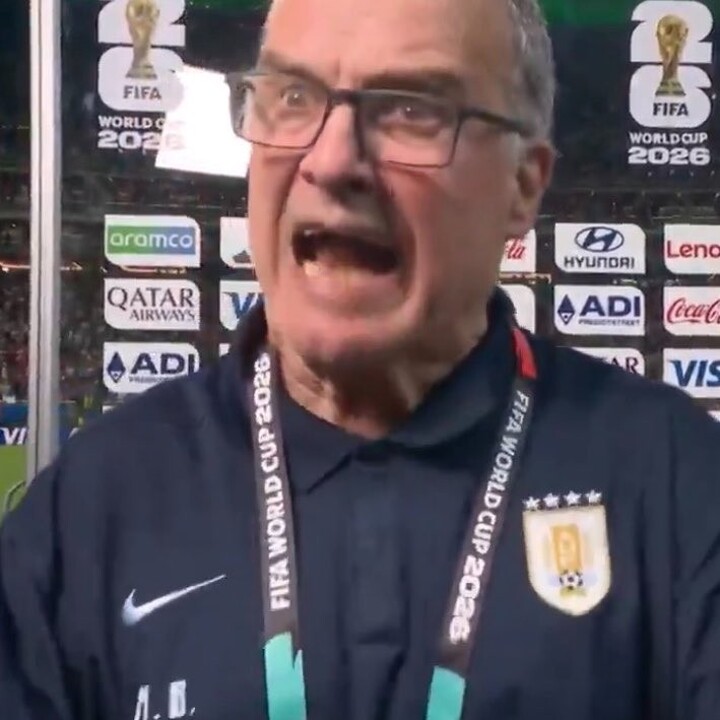
Sports commentators have noted that several managers at this FIFA World Cup have displayed emotional outbursts during post-match interviews, creating an uncomfortable viewing experience. Clark reinforced the stereotype of old-school Scottish male football coaches being short-tempered. Pochettino openly displayed frustration at his press conference, creating an awkward atmosphere. Uruguay's manager Bielsa shouted at reporters while waiting to give a post-match interview after elimination. National team managers have a responsibility to manage their emotions, and Sir Alex Ferguson previously emphasized that press conferences are critically important to a manager's public image.
"How would you summarize the match? What do you think about your team's chances of advancing? There are no easy games at this level, are there? How do you assess your team's second-half performance?"
These questions were neither harsh nor accusatory. Yet at this FIFA World Cup, several managers have found it difficult to answer even such mild and straightforward questions calmly.
The above questions were posed to Scotland's Steve Clark and USMNT's Mauricio Pochettino after their respective final group matches. Their reactions ranged from bewilderment to complete irritation. The emotion was reminiscent of the look a partner gives you at 11:30 p.m. on a stormy November night when you ask them to take out the rubbish.
There is a long-standing stereotype that old-school Scottish male football coaches are short-tempered, and Clark embodied this characteristic to the fullest.
His interviews and press conferences are typically brief and cold. On the eve of this FIFA World Cup, he broke from his usual style, joking with reporters. However, after consecutive losses to Morocco and Brazil left Scotland facing elimination, Clark reverted to his typical reserved demeanor.
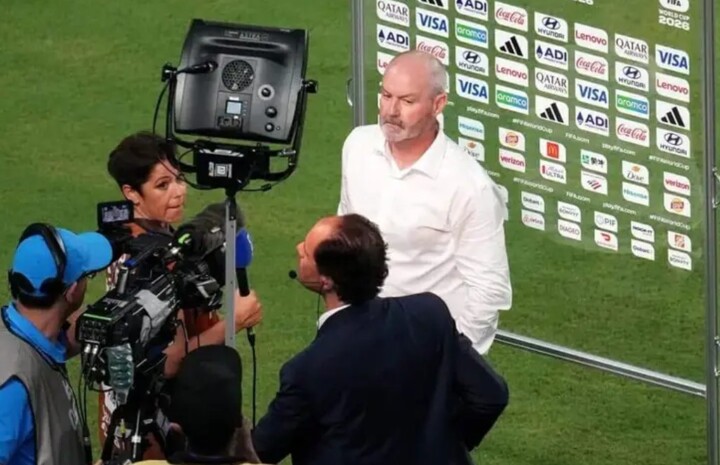
After a devastating 0-3 defeat to Brazil on Wednesday, here is the transcript of Clark's exchange with reporter Eilidh Barbour:
Barbour: "Steve, I'll ask for a detailed review later, but for now, can you tell me how you're feeling? It's hard to be composed immediately after a match. How difficult was tonight's match? What's your first impression of the 90 minutes?"
Clark: "We threw the match away ourselves, that's all."
Barbour: "Against such a top-level opponent, when your team conceded, they barely broke a sweat. You must be extremely frustrated, yes?"
Clark: "We gifted them goals and gave them the win ourselves. Really disappointing."
Barbour: "So now your qualification chances depend on the other match. How do you feel about what comes next?"
Clark: "Honestly, I'm not thinking about anything. I don't want to think about anything."
With that, he turned and left without waiting for another question.
While reading the text alone might not convey the room's tension, Clark's face showed complete dejection—as if he'd taken his car in for a routine annual inspection only to be told that the engine, wheels, chassis, and wipers all needed replacement.
Objectively speaking, it may be slightly insensitive to thrust a microphone at a manager minutes after a crushing defeat and ask them to be composed and review the match. However, not everyone responds poorly. After the final whistle in Miami, Scotland midfielder John McGinn spoke with Barbour. In contrast to Clark, he clearly and calmly expressed the nation's disappointment.
McGinn acknowledged that the team conceded goals at crucial moments and that he and all his teammates were extremely frustrated. He noted that despite giving their all, everyone was physically and mentally exhausted, their qualification fate rested with other results, and their World Cup hopes were already fading. While McGinn's pain from the heavy defeat remained, he expressed hope that Scotland's World Cup journey wasn't over and heartfelt gratitude to the thousands of fans who had traveled to the United States to watch, even if it couldn't change the fact that they had spent considerable money to witness defeat. This response conveyed an appropriate and dignified attitude.
Meanwhile, after USMNT's loss to Turkey, Pochettino—in quite a different situation—held an equally strange press conference. He appeared irritable from the start, believing the media's overall post-match sentiment was too negative despite the US team having already secured first place in the group.
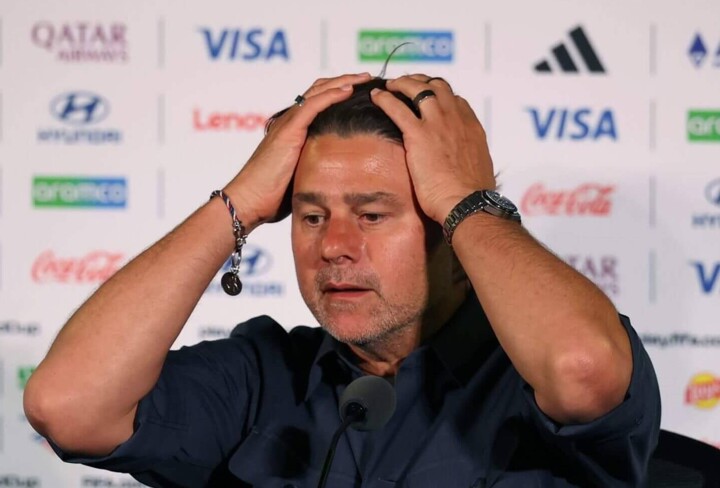
Fox Sports reporter Doug McIntyre began with a relatively positive question about team cohesion. McIntyre: "Of tonight's starting lineup, only three had previous World Cup starting experience. I understand you don't want to admit defeat, especially to a late goal. But how do you assess your team's resilient comeback in the second half?"
Pochettino pursed his lips and replied with an irritable expression: "We fought hard for 97 minutes, didn't we? Not just the second half—we fought for 97 minutes."
After saying this, he shrugged dramatically and displayed his frustration openly. It was as if he were saying, "What more do you want from us?"
An awkward silence fell over the room.
Pochettino's frustration is understandable. The team had already advanced, and he had rotated his squad heavily for this match. The loss was not decisive, but broadcasters and media had been filled with negative commentary throughout.
He later added: "I'm confused. The atmosphere is as if we've been eliminated and Turkey, who were already eliminated, advanced instead. Isn't that right?"
When asked what the team could learn from the match, Pochettino interrupted and stated: "No one has congratulated us on topping the group among such strong opponents so far. I want to congratulate the players, the coaching staff, the US team, and all our fans."
Since the team had secured first place days earlier, reporters naturally wouldn't have continued asking about already-confirmed good news. Moreover, the purpose of a post-match press conference is to ask questions and gather information, not simply to offer praise. The overall atmosphere of the interview was unusually strange. Was Pochettino engaging in psychological tactics? Or was he simply angry about the late goal?
Not just Clark and Pochettino, but several other managers at this FIFA World Cup have experienced similar situations.
South Korea's press conference had already become a tense tug-of-war between reporters and manager Hong Myung-bo. The team lost 0-1 to South Africa in their final group match with a poor performance. Reporters immediately questioned whether the players had food poisoning, and Hong Myung-bo was clearly suffering.
Earlier, Paraguay's manager shouted at assembled reporters after a devastating 1-4 defeat to the United States: "Criticize me if you want, don't blame my players."
After Uruguay's Bielsa lost to Spain and was eliminated from the group stage, he shouted at reporters while waiting to give a post-match interview: "Ask your questions quickly!"
Are these details truly important? Honestly, yes. National team managers bear responsibility for communicating emotion to their country's people and aligning with public sentiment.
This job requires finding balance between accepting reality and remaining optimistic (Canada's Jesse Marsh is a prime example of extreme optimism). If a manager is overly pessimistic or blindly optimistic, it can jeopardize his position.
Sir Alex Ferguson, who once managed Manchester United and understood media relations well, stated: "Whether the result is good or bad, you must act like a winner at the press conference. A single press conference can destroy your reputation. This is an extremely important part of a manager's job."
Given that fans at this FIFA World Cup are spending thousands of dollars to watch a single match, Clark, Pochettino, and other managers should weigh their words more carefully before speaking.
AI翻訳。
AFのPCサイトが新登場!パソコンでニュース、コメント、試合詳細、詳細データをご覧いただけます。アクセス:www.allfootballapp.com
 マンチェスター・ユナイテッド
 韓国
韓国
 スコットランド
 ウルグアイ
ウルグアイ
 ホン・ミョンボ
 Sir Alex Ferguson
 ビエルサ
ビエルサ
 スティーブ・クラーク
 FIFA World Cup
すべてのコメント (15)
昨日 23:40
昨日 23:40
昨日 23:35
昨日 23:36
昨日 23:38
昨日 23:47
昨日 23:45
昨日 23:44
昨日 23:39
昨日 23:36
昨日 23:36
昨日 23:36
昨日 23:36
昨日 23:35
昨日 23:35