According to Sky Sports, despite England's opponents accumulating just 0.87 expected goals (xG) across the matches against Croatia and Ghana, the team repeatedly showed defensive vulnerabilities in both games. With Reece James sidelined by injury and likely to miss the remainder of the tournament, England's defence still needs to be tightened.
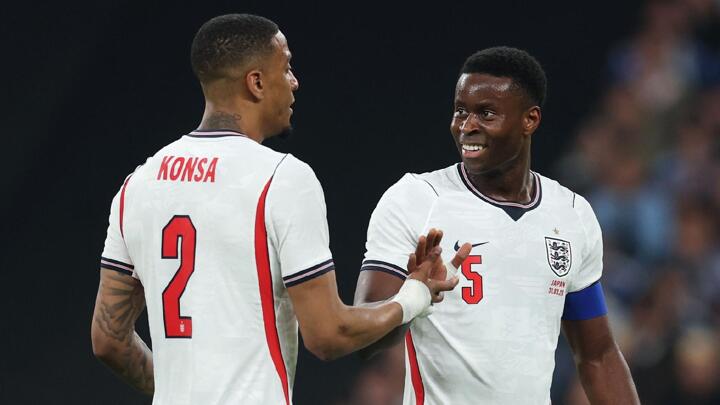
Reports suggest that England has exposed defensive issues in the first two group-stage matches of the FIFA World Cup. Against Ghana, England's attack stalled, and the Three Lions repeated their second-round group-stage struggles. While this performance was particularly frustrating, Thomas Tuchel's biggest headache may have been on the other side of the pitch.
Against Ghana, England conceded just one shot on target, with a combined expected goals against (xGA) of 0.87 across both group matches.
However, in that match, Ezri Konsa made a reckless tackle on Prince Adu that should have been a penalty, yet the referee did not react. This missed decision proved highly controversial, with Ghana manager Carlos Queirós sarcastically questioning whether the VAR system was functioning properly.
In the previous match against Croatia, England struggled for the opening 45 minutes against an ageing team. The team only gradually stabilized after Tuchel delivered an emotionally rousing half-time speech, though defensive lapses remained evident. Had Harry Kane not been influential in stoppage time, the team would have faced a nervous finale in their Dallas match.
While England conceded no goals in World Cup qualifying, their defence looks fragile against two teams widely regarded as having limited competitive strength in this tournament. Given that more formidable opponents loom later, the team has little time to adjust.
Reece James's injury is a blow, as the right-back's hamstring injury will likely keep him sidelined for the remainder of this FIFA World Cup.
The American football adage "offence sells tickets, defence wins championships" applies equally to any knockout-stage match in the FIFA World Cup held in the host nation.
Looking back since the 1998 FIFA World Cup, when the tournament expanded to 32 teams, five of the seven champions since then achieved five clean sheets, conceding just one goal combined across the remaining matches. Spain 2010 is a typical example: they won all four knockout matches 1-0 and scored only eight goals in the entire tournament, a perception completely at odds with how the world viewed them at the time.
Of course, there are exceptions. Argentina, the 2022 champions, conceded eight goals throughout the tournament, the most for any FIFA World Cup winners since West Germany in 1954, but they had one of the greatest players in football history on their team, allowing them to compensate for defensive shortcomings through their attack.
Before this FIFA World Cup began, defence was a major concern for England. The Three Lions' top talent is concentrated mainly in attack, and while individual defenders are capable, overall vulnerability is unavoidable.
Tuchel recognized the limitations of his defence. Against Ghana, he made two defensive changes, anticipating England would possess the ball for most of the match.
The manager explained: "Jed Spence and Marc Guéhi deserved to play. They can add speed to our defence, and their playing style suits our needs better."
Marc Guéhi delivered a solid 90 minutes, but Spence failed to meet Tuchel's attacking expectations. When Spence was substituted in the 66th minute for Nico O'Reilly, O'Reilly provided an outlet in attack but lacked Spence's pace and defensive awareness. As a result, the team faced counter-attacking opportunities, and Ezri Konsa's controversial foul was a consequence of this change. Most of Tuchel's defensive players face such trade-offs.
What's more concerning is that Ezri Konsa and Reece James were the only defenders to start both group-stage matches—England's stable key players—yet both matches showed multiple moments of defensive instability.
Should stronger opponents lie ahead, England will naturally adjust its defensive tactics, but in the first half against Croatia, the team was forced into a low-block defensive setup that Tuchel did not want, with gaps between the final line and midfield.
From an attacking perspective, England's style without the ball actually suits them. The team can rely on quick transitions and direct through balls to attack opponents, exemplified by their second-half performance against Croatia.
However, this playing style also exposes the team's defensive weaknesses. Sky Sports pundit Gary Neville remarked after England's opening group-stage match: "Declan Rice and Elliot Anderson must perform at their best to protect our final line."
Tuchel constantly rotates his defensive line, attempting to find the perfect balance between attacking output and defensive stability. However, frequent changes and the difficulty of solidifying the final line make it challenging for defenders to develop long-term understanding, inevitably hindering the establishment of a coordinated, stable defensive system.
Yet there are still objective reasons for England and Tuchel to be optimistic. Since the 1998 FIFA World Cup expanded to 32 teams, not a single champion has kept clean sheets throughout the entire group stage. All winning teams have conceded at least one goal in a group-stage match.
Without exception, these champions gradually consolidated their lineups during a relatively low-intensity group stage, found their collective rhythm, and incrementally resolved various team cohesion issues.
With the group stage not yet complete, this is a critical window for the team to refine defensive details, address early lineup integration problems, and repeatedly practice defender coordination. England still has a chance to correct the defensive issues exposed at this stage.
Should England defeat Panama and comfortably secure top spot in their group, in the Round of 16 they would face only the third-place team from another group, whose overall strength is relatively limited. The team could then use this knockout round to further refine defender coordination.
However, if England advances to the Round of 16 against Mexico and faces a top-tier powerhouse with world-class attacking prowess like Brazil in the quarter-finals, the strength of subsequent opponents increases dramatically, and the margin for error shrinks considerably. Tuchel would lose the opportunity to debug defence and adjust through trial and error.
Currently, there are still clear questions about personnel selection at every defensive position, and the stability of the entire final line is not guaranteed. As the tournament progresses and England faces elite teams with world-class strikers, the team's overall defensive resilience will face an extremely severe test. How to resolve this series of potential defensive vulnerabilities is the critical challenge Tuchel must think deeply about and find effective solutions for.
AI翻訳。
AFのPCサイトが新登場!パソコンでニュース、コメント、試合詳細、詳細データをご覧いただけます。アクセス:www.allfootballapp.com
 チェルシー
チェルシー
 アストン・ヴィラ
 トッテナム
トッテナム
 マンチェスター・シティ
 イングランド
 エズリ・コンサ
 リース・ジェームズ
 マーク・ゲイ
 ジェド・スペンス
 FIFA World Cup
すべてのコメント (4)
今日 00:42
今日 00:37