On August 25th, The Times analysed that Manchester United's primary objective in restructuring their midfield this summer was to address the lack of physical dominance and defensive coverage in their double pivot system. Although André Santos and Tielemans have improved the team's organisation and creativity, they lack the physical intensity and mobility required. Baleba is precisely the type of player United need; he possesses strong defensive abilities, physical presence, and ball-winning capability, and could become a Casemiro-style defensive shield in midfield. However, the potential £70 million transfer fee carries risks, and this player's form has not been without issues. If the deal succeeds, Baleba is expected to bring greater balance to United's midfield.

Here is The Times' analysis:
At the start of last season, in Ruben Amorim's preferred 3-4-3 system, United had five players capable of playing in the double midfield pivot: Bruno Fernandes, Mason Mount, Casemiro, Manuel Ugarte, and Kobbie Mainoo.
However, after Amorim departed, Carrick took over and switched to a 4-2-3-1 formation, clearly positioning Bruno Fernandes as an attacking midfielder rather than a midfielder in the pivot system.
Playing as part of a double pivot in a 4-2-3-1 has different responsibilities compared to a midfielder in a 3-4-3 system, as the former role only requires protecting behind two centre-backs, rather than three.
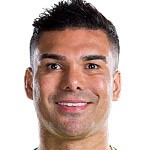
And each midfielder Carrick inherited had clear limitations: Casemiro had departed with mobility that seemed almost as laboured as a battleship; Mount is genuinely better suited to playing as an attacking midfielder and has been sidelined by long-term injury; Ugarte has been hampered by fitness issues and struggled to adapt to the pace of the Premier League; while Mainoo, despite having better mobility than Casemiro, lacks the physical dominance required for a demanding defensive midfield role.
In this context, it is unsurprising that United completely overhauled their midfield configuration this summer.
They signed André Santos. This player has stated that his best position is a deep-lying playmaking number 6, meaning in a 4-2-3-1 system, he is better suited to playing as the more defensive of the two pivot midfielders.
Additionally, United also recruited Yoane Tielemans. He is more of a number 8, and in a 4-2-3-1 formation, he will assume the more attacking and creative role in the midfield pair. At the same time, should Fernandes suffer an injury, Tielemans can also deputise as an attacking midfielder.
These two players started in the match against Hull City, which appeared to indicate they are Carrick's preferred pairing at present.
Ugarte (typically number 6) and Mainoo (typically number 8) have become backup options.
However, as United's 0-2 defeat to Hull City exposed, these alternatives still carry significant issues.
Although Santos is only 22, twelve years younger than Casemiro, his pace and physical presence are not particularly impressive. The same applies to Tielemans – while he possesses many excellent qualities, physical dominance is not his strong suit.
Both players were overrun and overwhelmed in their encounter with Hull City's midfield. Bringing on Mainoo did not substantially alter the match. Meanwhile, Ugarte suffered a serious knee injury and is expected to be sidelined for an extended period.
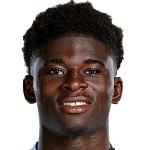
Therefore, Baleba directly addresses United's most glaring midfield deficiency. He is a genuine defensive midfielder, possessing the athleticism to quickly cover large areas, win physical contests, and break up play – precisely the type of player United's system is missing. Furthermore, he also has some ability to play forward passes.
Baleba can function as the more defensive midfielder in a double pivot, partnering with Tielemans, Mainoo, or Santos. Although Santos considers his best position to be number 6, some believe he could actually be better suited to a number 8 role.
However, signing Baleba also carries clear risks. Although he has three seasons of Premier League experience, Baleba still appears somewhat raw. His development has even plateaued somewhat during his time at Brighton. In the 2024-25 season, he made 31 Premier League starts, but in the previous season he could not hold down a regular starting position, making just 23 appearances. Given this trajectory, if United need to pay a £70 million transfer fee, the price does seem rather steep.
However, the current transfer market has inflated prices significantly, and United may need to pay what could be termed a "Brighton premium". This is because Brighton has an exceptional track record in identifying and developing talent, and players from that club typically carry a certain quality guarantee.
Among the high-profile players Brighton have sold to other Premier League clubs, Caicedo, Marc Cucurella, Pervis Estupiñán, Ben White, Alexis Mac Allister, and Leandro Trossard have all proven to be highly successful signings.
The only player who has underperformed is Bissouma.
For Baleba, his greatest appeal is that he could become Casemiro's genuine successor.
He possesses the physical attributes that a young Casemiro once had – strong, dominant in his coverage, and willing to put in the hard graft.
This type of player can relieve pressure on his teammates, allowing players like Tielemans, Mainoo, or Santos to play more expansive roles.
Therefore, Baleba's arrival is not without risk.
But at least he could provide Carrick with a more complete and balanced set of midfield options.
Website AF đã ra mắt! Xem tin tức đầy đủ, bình luận, chi tiết trận đấu và thống kê trên máy tính. Truy cập: www.allfootballapp.com
 マンチェスター・ユナイテッド
 ブライトン&ホーヴ・アルビオン
 カセミーロ
カセミーロ
 インテル・マイアミ
 カルロス・バレバ
すべてのコメント