Following Barcola's transfer to Liverpool, his former youth coach spoke to Sky Sports about the player's playing style.
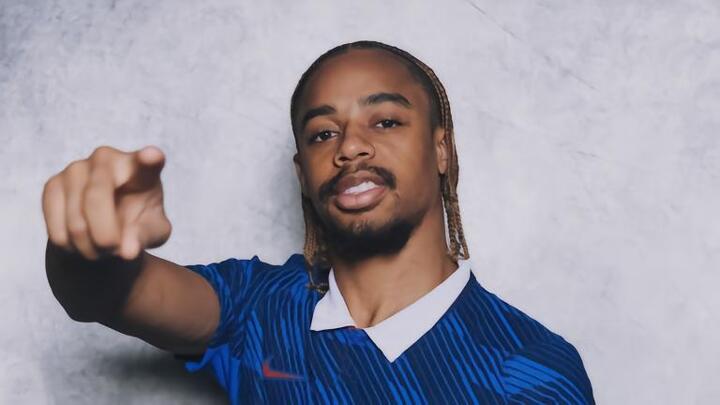
The player's talent is widely recognized, but his rise was somewhat unexpected. During his time at Olympique Lyonnais, under French football legend Laurent Blanc, Barcola remained on the fringes of the first team until the departure of one player completely changed his trajectory. "It was a turning point," Jean-François Vullioud told Sky Sports.
"At that time, a Swiss club wanted to sign him because he wasn't getting playing time in Olympique Lyonnais's first team. Blanc was the coach then, and Karl Toko Ekambi was also in the squad. But Ekambi was determined to leave, so the coach canceled Barcola's loan move because the team needed to keep him as a backup."
Vullioud explained: "It was a crucial moment. The coach realized that after Toko-Ekambi left, Barcola could step up, and he got his chance to shine. Then, Ekambi did leave, and Barcola stayed. After just one match, an injury struck the team, and Blanc threw him in."
Vullioud has coached Barcola at Olympique Lyonnais's youth academy since the beginning and knows him well. He even followed Barcola to PSG, where he now serves as a youth development coach for the Ligue 1 and Champions League champions. During his time there, he has seen many talented young players.
However, Barcola was not initially one of the most exceptional prospects. He was talented, but no one expected him to achieve what he has today. "He was just an ordinary teenager; he never skipped age groups and his development was very normal," he recalled.
"Every player's growth trajectory is different. Some players, like Kylian Mbappé, mature earlier in their youth; others need more time to develop. Barcola was never selected for France's youth national teams at any age group. His technical skills were good, but his physical condition hadn't met the standard yet."
"Olympique Lyonnais was patient with him back then. We knew he had solid technical foundations and just needed time to mature physically and mentally. Once that transformation was complete, his abilities would improve rapidly."
After Toko-Ekambi left, Barcola scored 5 goals in 9 matches in early 2023. That summer, he impressed for France at the U21 European Championship, then began lengthy transfer negotiations before joining PSG. "His body was still at Olympique Lyonnais, but his heart was already in Paris."
During three seasons in Paris, he accumulated 13 trophies, played over 150 matches, and scored 39 goals. Under Luis Enrique, he elevated his playing style, handling the ball more reliably than before. Barcola knows when to carry the ball and attack the defense, and when to play a simple pass.
Barcola's current strength stems from this unspectacular youth academy development. His physical maturation was delayed; as a teenager, it was unrealistic to rely solely on overpowering opponents physically, which forced him to hone other competitive skills. "It sharpened his football IQ," said Vullioud.
"He's good at reading the game, processing information, and exploiting space to the fullest. He had this ability early on, combined with his pace. Later, his physical fitness improved, and his physical confrontation ability increased significantly. Tactical awareness, footwork, and physical talent combined to make him what he is today."
At PSG, Barcola primarily played as a left winger, but his playing instincts are closer to a center-forward than a pure winger. In fact, before age 17, he played as a striker at Olympique Lyonnais. When operating on the left wing, he can cut inside and curl shots toward the far corner with his stronger foot.
This kind of playing instinct is difficult to develop later, and top clubs highly value wingers with these characteristics – it's not enough for a player to look good; they also need to deliver statistics. Barcola balances offensive and defensive output, both scoring goals and creating chances for teammates.
Statistics show his impressive shot volume at Paris; last season, his shots per 90 minutes ranked in the top ten in Ligue 1, unaffected by playing on the wing. "His instinct to cut inside is very intelligent." His running off the ball is one of his core strengths.
"Because he played as a striker, he knows when to cut inside and when to run behind the defense. To get the best out of Barcola, you need to exploit his expertise in penetrating defensive gaps and running forward from deep, that's his advantage."
Is Liverpool his ideal destination?
Like Viktor Muñoz and Leo Ngoumou, Barcola is accustomed to playing on the left, but based on his playing style, he fits very well with Iraola's tactical system: he tends to run toward the ball rather than waiting for it to be delivered to his feet, which is precisely a quality Liverpool has lacked.
Last season, under Arne Slot, Liverpool's overall performance was significantly hampered by the lack of off-ball running ability from players like Luis Díaz, Jota, and Darwin Núñez. Florian Wirtz is excellent at playing incisive through passes, and Barcola is perfectly suited for this type of pass.
"He was easy to manage in the youth academy, has high football IQ, and is willing to follow the coach's instructions. The coach can give him all sorts of tactical tasks, and he can understand and execute them; he's very intelligent."
"I believe it's difficult to reshape a player's football IQ after age 17. If they don't have football intelligence in their youth, it's hard to develop it later. So early football IQ development is crucial, and Barcola inherently possesses this ability, which allows us to flexibly adjust his position on the pitch later."
As his career progresses, greater demands will be placed on him. His finishing still needs to improve, and Enrique has pushed him to increase his shot accuracy, but he still has time to develop. "Many great players only show steady improvement in their finishing after they mature mentally," said Vullioud.
"Like all young players, he sometimes needs external motivation, but he has a strong mentality and can definitely do it. The left wing may suit him better at this stage, but I look forward to his future development, and I believe he has the ability to transition into a true number 9 center-forward."
Position versatility is a major reason for his appeal. Barcola can also play on the right, and if tactics require it, he can use his pace to penetrate to the goal line. Last season, his pace ranked in the top ten among Champions League players, capable of executing counterattacks.
Barcola today is far stronger than when he first joined Paris, and he has long since transcended the boy from his Olympique Lyonnais youth academy days. "No one would have guessed he'd come this far," Vullioud reflected. Now all clubs are pondering the same question: how far can Barcola develop?
Diterjemahkan oleh AI.
Situs web AF kini hadir! Lihat berita lengkap, komentar, detail pertandingan, dan statistik di komputer Anda. Kunjungi: www.allfootballapp.com
 リヴァプール
 リヨン
リヨン
 パリ・サンジェルマン
 ヴィルツ
ヴィルツ
 ブラッドリー・バルコラ
すべてのコメント