According to Sky Sports, England's combined expected goals against (xGA) across two matches against Croatia and Ghana was just 0.87, yet defensive vulnerabilities were repeatedly exposed in both games. With Reece James facing an injury concern that could sideline him for the remainder of the tournament, England's backline still needs to find cohesion.
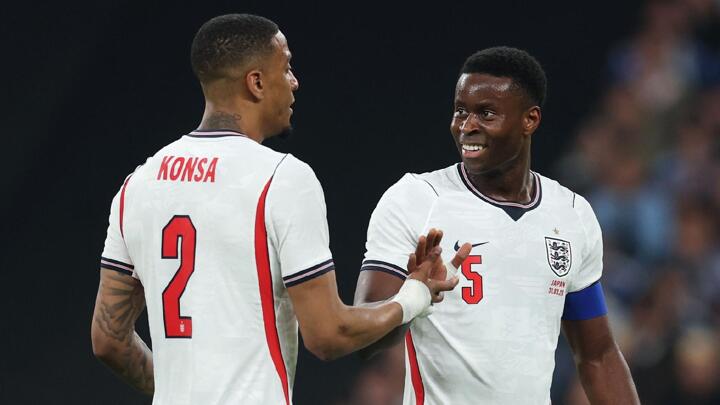
England's defensive issues were evident in both opening group matches. Against Ghana, the team's attack was restricted, and the Three Lions' second-group stage curse resurfaced with a particularly underwhelming performance. However, manager Thomas Tuchel's most pressing concern may lie at the other end of the pitch.
Against Ghana, England conceded just one shot on target, with a combined xGA of 0.87 across both group matches.
Yet in that match, Ezri Konsa's reckless challenge on Prince Addo should have resulted in a penalty kick, but the referee overlooked it. The error proved highly controversial, and Ghana manager Carlos Queiroz even posed a pointed question about whether the VAR system was functioning properly.
In the earlier match against Croatia, England struggled for the entire first 45 minutes against an aging side, only finding stability after Tuchel's inspiring halftime address. Even then, the defense revealed multiple vulnerabilities. Had Harry Kane not stepped up in extra time, the team would have faced a precarious situation heading into their remaining Dallas-area fixture.
While England recorded clean sheets during World Cup qualifying, their defense now appears vulnerable against two teams considered limited threats in this tournament. As stronger opponents emerge, there is little time for the team to adjust.
Reece James's injury is another setback, with the right-back likely sidelined for the remainder of the World Cup due to a hamstring problem.
"Offense sells tickets, defense wins championships," a phrase originating from American football, applies equally to every knockout-stage match in this World Cup.
Looking back to 1998 and the first 32-team World Cup format, five of the seven subsequent champions achieved five clean sheets, while the remaining two conceded only one goal combined. Spain in 2010 is a prime example. They won all four knockout matches 1-0, scoring just eight goals throughout the tournament—a stark contrast to popular perception of that team.
There are exceptions, of course. Argentina, the 2022 champions, conceded eight goals across the tournament, the most by a World Cup-winning team since West Germany in 1954. However, they possessed a player widely regarded as the greatest footballer in history, whose attacking prowess could compensate for defensive shortcomings.
Defense has been England's primary concern since before the tournament began. Most of the Three Lions' elite talent is concentrated in attack, and while individual defenders possess quality, an overarching vulnerability remains unavoidable.
Tuchel was aware of his defensive line's limitations. Against Ghana, he made two defensive substitutions despite expecting England to dominate possession for much of the match.
The manager explained: "Jed Spence and Marc Guéhi deserved to play. They add pace to our defense, and their characteristics suit our needs better."
Marc Guéhi delivered a steady 90-minute performance, but Jed Spence failed to meet Tuchel's attacking expectations. In the 66th minute, Spence was substituted for Nico O'Reilly, who could provide attacking outlets but lacked the pace and defensive awareness of Spence. This change created counterattacking opportunities for the opposition, and Konsa's controversial foul was a direct consequence of this tactical shift. Most of Tuchel's defenders face such tradeoffs.
More concerning is that Ezri Konsa and Reece James appeared in both group matches and were England's only defensive starters considered stable core players, yet Konsa demonstrated multiple defensive lapses in both matches.
Should England face stronger opposition later, the team will naturally adjust its defensive approach. However, during the first half against Croatia, the team was forced into prolonged low-block defending, which is not what Tuchel prefers. The entire defensive line and midfield connection was porous.
From an attacking perspective, playing without the ball actually suits England better. The team demonstrated in the second half against Croatia that it can attack through quick transitions and direct through balls.
However, this approach also fully exposes the team's defensive weaknesses. After England's opening group match, Sky Sports pundit Gary Neville said: "Declan Rice and Elliott Anderson must do their best to protect our defense."
Tuchel has continuously rotated his defensive line in search of the right balance between attacking threat and defensive stability. However, frequent changes to the defensive lineup and failure to maintain a fixed formation make it difficult for defenders to develop long-term understanding, naturally hindering the construction of a cohesive and stable defensive system.
Nevertheless, the entire England squad and Tuchel have plenty of objective reasons to remain optimistic. Since the 1998 World Cup adopted the 32-team format, none of the seven championship teams achieved clean sheets in every group match. All conceded at least one goal in the group stage.
Without exception, these champion teams gradually fine-tuned their lineups during relatively low-intensity group matches against weaker opposition, slowly finding unified team rhythm and progressively resolving various adjustment issues within the squad.
With the group stage still ongoing, now is the critical period for the team to sharpen defensive details, address early lineup issues, and repeatedly improve cohesion among defenders. England still has the opportunity to resolve defensive problems exposed at this stage.
Should England defeat Panama and top their group, the Round of 16 would pit them against third-place teams from other groups, whose overall strength is relatively limited. The team can further refine defensive understanding during this knockout round.
However, if England reaches the Round of 16 via Mexico and subsequently face a top-tier attacking threat like Brazil in the quarterfinals, the opposition's quality will significantly increase, and margin for error will shrink considerably. Tuchel's opportunity to adjust and experiment with his defense will disappear entirely.
Currently, there remain substantial questions about England's defensive personnel combinations, and overall defensive stability is not guaranteed. As the tournament progresses and the team encounters strong opponents boasting world-class attackers, England's defensive resilience will face an extremely severe test. How to address these existing defensive vulnerabilities will be a critical challenge for Tuchel, requiring careful deliberation and effective solutions.
AI 번역.
AF PC사이트가 오픈했습니다! 컴퓨터에서 전체 뉴스, 댓글, 경기 상세 정보와 데이터를 확인하세요. 방문하기: www.allfootballapp.com
 첼시
첼시
 아스톤 빌라
 토트넘 홋스퍼
 맨체스터 시티
 영국
영국
 에즈리 콘사
 리스 제임스
 마크 게히
마크 게히
 제드 스펜스
 FIFA World Cup
모든 댓글 (3)
오늘 00:37