After Ghana lost 1-2 to Croatia and remained in third place in Group F, manager Carlos Queiroz said the team paid the price for critical errors.
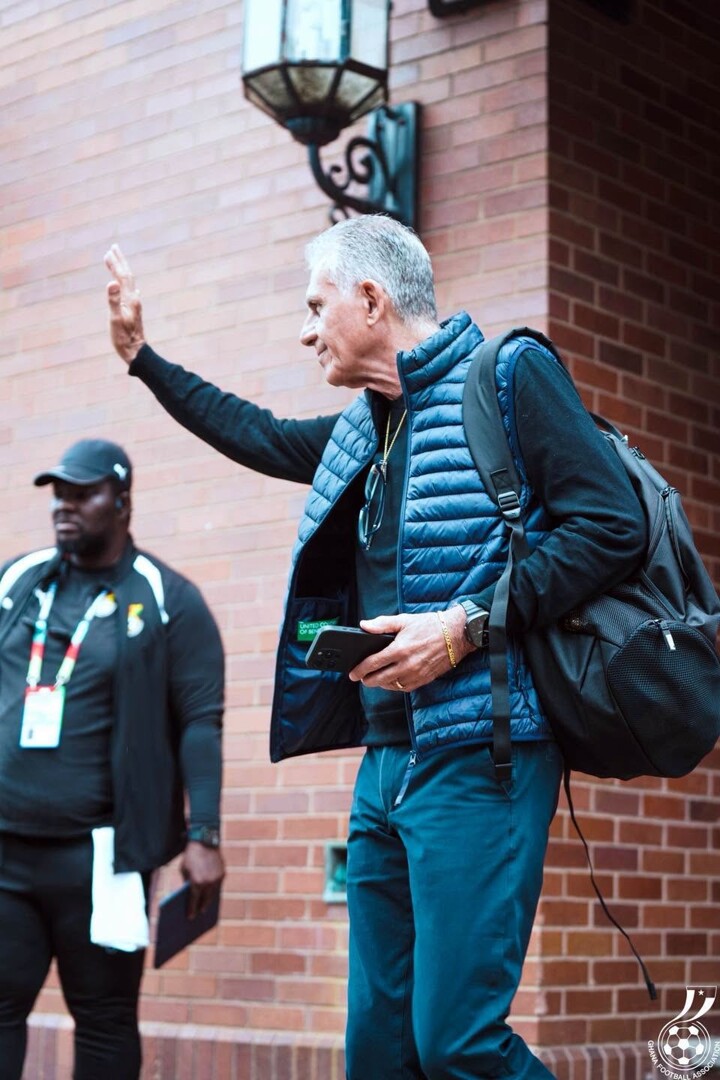
Queiroz said Croatia dominated the first half and made the most of Ghana's mistakes, including a 40-yard strike by Suzuki. He believes conceding a goal from that distance at this level of competition "should not happen."
Praising Ghana's second-half response, Queiroz noted the team created chances but failed to capitalize, ultimately paying the price.
On the match, Queiroz said: "Croatia scored two goals. In my view, both goals we conceded were far too easy—the manner in which they scored the first and second goals was far too simple. But I have to give credit to Croatia. If you score one more goal than your opponent, you deserve to win; it's that straightforward. It also means you made at least one more critical error than your opponent. If you make one more mistake than your opponent, there's no way to win the match."
He continued: "The only thing we can say is that I believe Croatia played better and controlled the match in the first half. In the second half, only Ghana was playing. I don't think our second-half performance should be punished by conceding that second goal. A draw would have been the fairest result. But football has no fairness—only the team that scores more goals wins, and the team that scores less loses."
Regarding Ghana having just one chance in the first half, Queiroz stated: "If I didn't misspeak, that's exactly what I'm saying. Croatia played better and controlled the first half better. We performed much better in the second half. From an overall balance perspective, considering our second-half performance, a fair and acceptable result would have been a draw."
He added: "They capitalized well on our mistakes in the first half. We lost possession several times after back passes. Those two goals were too easy at this level of competition. Some of the ways we conceded are below World Cup standard. When we allow the opposition to score from 40 meters away, we have to do better. We had chances in the second half and should have scored. But it's simple: we played better in the second half but didn't convert our chances. They played better in the first half and scored one more goal than us. When that happens, there's nothing more to say. The winner deserves the result. We made one more critical error than Croatia. If you make one more decisive mistake than your opponent, you can't complain about the result."
On Luka Modrić, Queiroz said: "Yes, he played very well. As always, he was the team's commander. We deployed different players at various stages of the match to limit Modrić's influence and prevent him from being the team's playmaker. But the way he moves always makes him difficult to control. This doesn't just happen in our matches—it's been this way for the past ten years."
He continued: "If we can't control him, we must control the players receiving his passes. We did that for the most part. But when someone shoots from 40 meters away, we can't allow them to score. At this level, 40 meters is too much. We can't allow the opposition to score from 40 meters."
Regarding an injury to Antoine Semenyo, Queiroz said: "No, it's just a bruise. He turned his ankle slightly, but he should be fine."
On the team's progress since his arrival, Queiroz said: "As I've always said, this is my fourth match managing the team now. I learned a lot from this match. It gave me the opportunity to test some different tactical decisions on the field. The best thing about this match is what we learned from it."
He continued: "In terms of team development and progress, we learned a great deal. Through today's match, we gained clear insights into the performances of some players and how we can do things differently in the coming matches. This was our first time attempting a 4-4-2 formation with two strikers for 45 minutes. We didn't have much time to practice this system, but the players executed it well. With some adjustments, as we showed in the second half, I believe we can improve."
On African teams' performance and whether Africa should receive more World Cup spots, Queiroz said: "It's a two-sided issue. Personally, I think we have to wait and see the future. I believe rare things of tremendous value are uncommon. I've never seen something of tremendous value that is also common in my lifetime."
He stated: "Regarding the number of teams qualifying for the World Cup, I worry this would make the tournament an ordinary event. Because in South America right now, a coach's major success is not about qualifying for the World Cup. What really deserves media attention should be the opposite. Since so many teams currently qualify for the World Cup, I still think the scarcity value of World Cup qualification is worth discussing. I need to wait and see. This is just a personal opinion based on my feelings."
Queiroz continued: "Look at Europe—which European teams were eliminated in qualifying? Even the European and African qualifiers are losing their importance and meaning because almost all South American teams qualify, and most European teams do as well. So looking to the future, my view is just a humble personal opinion on your question. Personally, I believe the focus should remain on meaningful qualifying. Qualifying should be very difficult, very serious, and highly competitive, and then 24 nations should advance to the World Cup."
He added: "This also relates to the number of matches players have to play at the end of the season. So there are many small details that require very careful consideration in the future. Of course, as you know, money now does the talking in football. It's no longer called football; it's called money football. When money starts talking, the decisions on the field will start to change as well, so let's see what happens in the future. Personally, I prefer the World Cup to remain a rare event, with qualifying itself being very important, and competing for the world championship in the knockout stage. But that's just my personal opinion."
On whether the team achieved its goals despite the loss, Queiroz said: "Yes, as I've always said, we either win or we learn. Today we learned something, and we learned how to be better prepared for a World Cup. The real World Cup starts from the next match. The group stage is just a warm-up to qualify."
Queiroz concluded: "As I told the players today, qualifying is not the end. Qualifying is just a credit card that shows we have the right to participate at this stage of the tournament. Now we have to pay the price for having that credit card in our pocket. This is when the real World Cup begins. Winners take all, and losers get nothing. This means there's drama in every match. From the first moment, no one can hide. Everyone has to give their best and pour everything into the match. Go through the knockout round with entertainment, drama, and emotion. The real World Cup starts from the next match."
AI 번역.
AF PC사이트가 오픈했습니다! 컴퓨터에서 전체 뉴스, 댓글, 경기 상세 정보와 데이터를 확인하세요. 방문하기: www.allfootballapp.com
 가나
가나
 카를로스 케이로스
 FIFA World Cup
모든 댓글