According to The Athletic, grass quality at MetLife Stadium continues to draw scrutiny ahead of the 2026 FIFA World Cup final.
Since the tournament's opening day, MetLife Stadium's pitch has faced intense scrutiny. French player Adrien Rabiot, Brazilian player Vinicius Jr., and Norwegian manager Ståle Solbakken have all raised concerns about the playing surface.
Rabiot said in an interview: "This grass... I'm not even sure I can call it grass. It's more like artificial turf, quite hard and stiff."
While there are external concerns about whether this pitch could affect FIFA's flagship event, many may not realize that the real challenge was simply ensuring there was grass to play on in the first place.
MetLife Stadium, with a capacity of 78,576, is home to the New York Giants and New York Jets of the NFL. It was one of eight of 16 World Cup venues across the United States, Canada, and Mexico that had to install temporary natural grass in a very short timeframe.
Houston faced the greatest challenges among these eight stadiums, and was also the last to have grass laid—with just over 10 days remaining before matches began. On June 14, Germany kicked off their campaign with a 7-1 win over Curaçao.
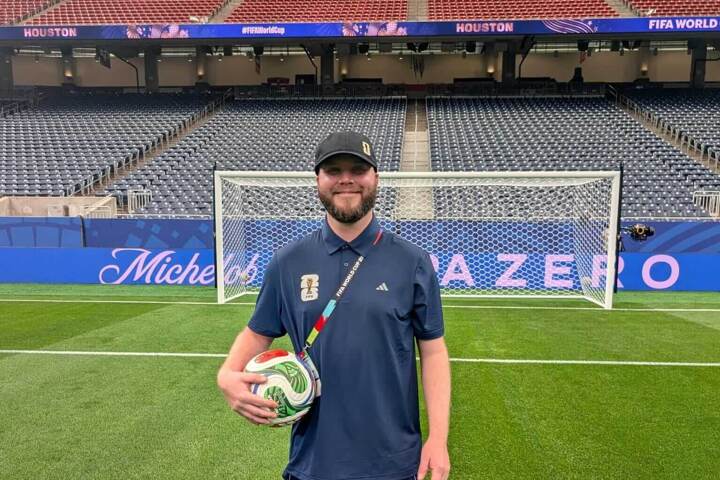
Ethan Reed, head groundskeeper at Premier League club Nottingham Forest, oversaw grass preparation at Houston. He discussed the various challenges the eight grass-laying World Cup venues faced.
Reed told The Athletic: "The moment Nottingham Forest's final match ended, I was on a plane the next day. From that point on, I worked 15 hours a day. The day I arrived was the day the grass was laid. The turnaround from installation to the first match was shorter than at any other stadium."
"Houston laid grass last because of the Houston Rodeo. Everything in Texas revolves around that event. The grass was laid on May 27, and all installations were complete by May 30. After that, stitching machines wove artificial fibers throughout the entire pitch."
Over 650 grass management specialists were involved in preparing the 16 venues. However, Houston, with its retractable roof, faces different challenges compared to open-air stadiums like MetLife. Houston is home to the NFL's Houston Texans and the Houston Rodeo, the world's largest rodeo event.
Reed said: "All the research on indoor stadiums has helped us. I remember at a pre-tournament briefing, someone joked, 'Good luck to those managing indoor stadiums.' But we can actually create ideal conditions. With proper UV lighting, good air circulation, and solid moisture management, conditions at an indoor stadium can actually be easier to control."
"From what I've seen at the World Cup, indoor stadiums can perform better than some outdoor venues because we can control the environment. Outdoor stadiums face heavy rain and other factors that affect playability, and these are things we cannot control."
Does Reed think this is one of the challenges MetLife Stadium faced?
He said: "Maybe, maybe not. Every stadium has its own challenges. I'm not sure how many resources they had, but I'm sure they did their best. What I can speak to is how difficult it is to lay grass in such a short timeframe."
"Indoor stadiums use cool-season grass, similar to what's used at most stadiums in Britain and Europe. The grass was grown in Denver, Colorado. We transported it on 24 trucks, each carrying 18 rolls of sod. The transport vehicles were equipped with refrigeration to keep the grass cool. It was harvested around midnight and delivered early the next morning."
"Originally, installation was supposed to take two days, but initially we were one truck short. There was a small gap in the middle where sod was missing. Fortunately, a truck arrived on the third day and filled the gap."
Reed, who grew up near Nottingham Forest's picturesque City Ground in his teens, gradually fell in love with grass maintenance after mowing neighbors' lawns. This unexpected journey ultimately led him to the World Cup stage this summer. At 32, he oversaw pitch preparations at Houston, where Cristiano Ronaldo, Neymar, and Vinicius Jr. all played, and where Portugal, Brazil, the Netherlands, and tournament dark horse Cape Verde left their mark.
Reed said: "A few years ago, I never imagined I'd be preparing grass for the world's biggest sporting event. That might have been Cristiano Ronaldo's final dance with Portugal. Brazil also played here. It's quite a journey from a kid mowing neighbors' lawns to where I am now—really extraordinary and humbling."
However, despite all efforts to prepare the pitches before the World Cup kicked off, many fans still don't realize the extensive work required to maintain the grass between matches.
He explained: "Six of seven matches had noon kickoffs. FIFA requires us to certify the pitch six hours before kickoff. This means we have to go in the night before, first mow lengthwise from goal to goal, then return at 2 a.m. to mow crosswise."
"Sometimes you can really feel the grass growing behind you. You start at 2 a.m., finish at 5 a.m., shower, have breakfast, then head back to the stadium. On match days, you can be busy from 2 a.m. to 5 p.m., and this happens every three days."
"Is there pressure? Absolutely. The whole world is watching, and the world's best players are playing on this grass... but I really enjoyed this experience. It's an honor."
However, Reed wasn't able to take home a special souvenir. He added: "I cut a small piece of grass and tried to keep it alive in my apartment. I wanted to bring it home, but I thought it was best to check customs regulations about taking grass overseas first. In the end, I had to leave it behind. But if I could do it again, I'd do everything all over again after taking a break."
AI 번역.
AF PC사이트가 오픈했습니다! 컴퓨터에서 전체 뉴스, 댓글, 경기 상세 정보와 데이터를 확인하세요. 방문하기: www.allfootballapp.com
 아르헨티나
아르헨티나
 스페인
스페인
 FIFA World Cup
모든 댓글 (6)
오늘 09:19
오늘 08:38
오늘 08:29
오늘 08:29
오늘 08:27
오늘 08:25