According to "A Bola", the Portuguese Professional Football League's statutes have been criticized as undemocratic and chaotic. The author argues that the governance rules should be reformed first, followed by a presidential election ten months later, rather than electing a president first and then implementing reforms.
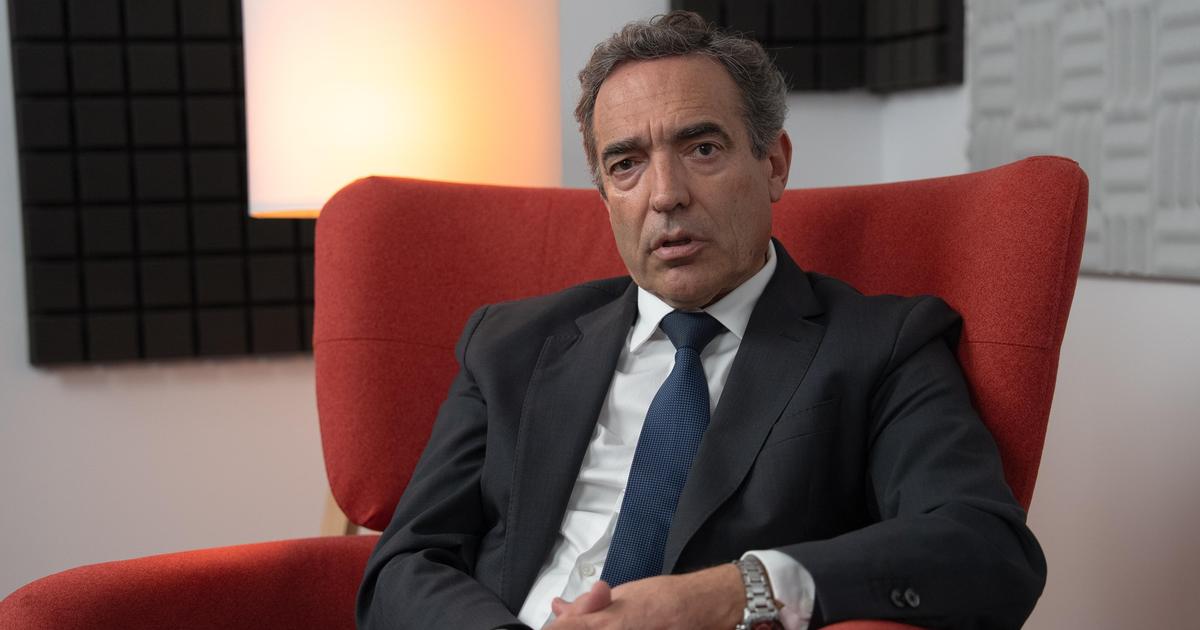
The statutes of the Portuguese Professional Football League are neither democratic nor orderly. Strong institutions should not function this way.
With ten months remaining until the election for a four-year term, voting for a person first and then changing the rules is like building a house backwards.
Before re-electing Reinaldo Teixeira or choosing another president to serve until 2031, member clubs must first decide what kind of league they want.
The priority should be to define a new governance model, implement the necessary statutory amendments, and then hold elections.
If elections come before reforms, the power to set the rules falls to the winner, who then decides how to use that power.
Initially deemed urgent, reforms often become inconvenient after an election victory and are ultimately forgotten.
In the 18th century, Montesquieu explained that liberty requires that power not be concentrated in the same hands.
Executives should not control the rules, representatives of interests should not act only for themselves, and overseers must be independent of those they supervise.
The separation of powers does not eliminate conflict; rather, it organizes and limits it, preventing it from escalating into domination.
The Portuguese Professional Football League is not a state, nor are its statutes a constitution, but this principle still applies. Under the current governance model, the same member clubs compete, accept decisions, and participate in the body responsible for making them. Management, representation, and oversight are all mixed together.
The governance of the Portuguese Professional Football League completely contradicts Montesquieu's teachings.
Three reforms are absolutely necessary.
The first concerns Article 45, paragraph 2 of the statutes: the League president shall be “the candidate who receives the most votes.”
With a limited electorate, a fragmented election could lead to a president being elected with the support of fewer than half of the member clubs.
A minority president would initially lack the legitimacy to centralize television rights and manage conflicting interests. The presidential election should require an absolute majority across successive ballots.
The second amendment concerns Article 47. The Executive Committee is essentially a meeting of interest representatives disguised as an executive body: it consists of 10 members, including the president, a representative of the Football Federation, and 8 member clubs.
The three clubs with the highest average ranking over the past four seasons — effectively Benfica, Porto, and Sporting — hold permanent seats with no term limits. They then elect two others. Only clubs invited by these 'big three' can join. If an agreement cannot be reached, it is decided by drawing lots, which has happened before.
These three are permanent members, while the other two rotate and are selected by them. Sporting superiority has been transformed into statutory privilege and greater influence.
Sporting Braga, Vitória Guimarães, FC Famalicão and other clubs: will they accept the status quo, or seize this last chance over the next five years to change this model?
Acknowledging the stature of the 'big three' clubs does not require granting them permanent institutional seats. The League should recognize their importance but not be dependent on them.
Having clubs on the Executive Committee also creates information asymmetry. Some member clubs can follow processes internally and participate in decision-making preparations, while others receive only consolidated information later.
A member club should not simultaneously be a competitor, a recipient of decisions, and a member of the body that manages the League.
The solution is to establish an independent Executive Committee composed of the president and two directors, each elected separately by the General Assembly. Each would have defined responsibilities and be accountable for their position and results.
The elected directors would have the right to object, supervise, and propose alternatives. They would no longer be mere subordinates of the president; instead, they would have their own legitimacy. The Executive Committee must function as a team, not a court.
Currently, executive directors are elected by the Executive Committee based on the president's proposal. Article 52 states that if dismissed before the end of their term, there is no severance compensation.
Their professional security depends entirely on the president's goodwill. Questioning the president could lead to immediate dismissal.
Strong institutions cannot be built on conditional independence.
Removing clubs from the Executive Committee does not mean excluding them from decision-making, but rather separating management, representation, and oversight.
The statutes should also require that Primeira Liga clubs and Segunda Liga clubs meet monthly, with documents provided in advance to ensure information parity and record all parties' positions.
The Executive Committee is responsible for management, clubs are responsible for follow-up and proposing directions, and the General Assembly makes decisions on structural matters.
In this way, the Portuguese Professional Football League would shift from a model in which a few clubs participate in management to one in which all clubs participate equally in decision-making.
The third amendment is straightforward. Article 49 provides for a High Council, but after 11 years, it has never been established. If it has never been needed, it should be removed.
Statutes should not be a repository of bodies that might be used someday. They should contain necessary structures, clear responsibilities, and defined accountability.
The reforms must be completed before the election. What is the point of re-electing Reinaldo Teixeira first and then discussing curtailing the powers he has just been granted?
In the coming years, the Portuguese Professional Football League must centralize television rights, boost revenue, enhance the value of its competitions, and re-engage fans.
It cannot meet the challenges of 2030 with a structure built to manage the power dynamics of the past.
First, decide what kind of league the member clubs want, then choose the person to lead it.
AF's PC site is now live! Browse full news, comments, match details and stats on your computer. Visit: www.allfootballapp.com
 포르투
포르투
 벤피카
벤피카
 스포르팅 CP
 스포르팅 브라가
 비토리아 기마라에스
 FC 파말리카오
모든 댓글 (4)