Rhys Carr is a football coach, perhaps best known for his time as assistant manager at Coventry City, where he was briefly in caretaker charge. But spending time with the Welshman, it quickly becomes clear he has a broader skillset than most.
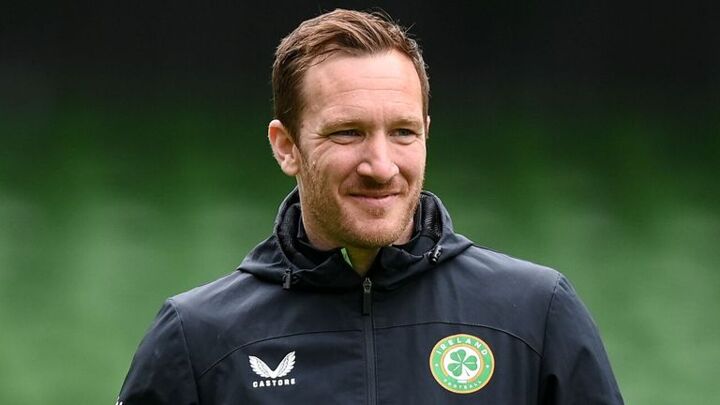
He worked as an individual coach at Bristol City, Wolves and Sheffield United at a time when the role was still rare. He has just finished the League Managers' Association diploma in football management. "Probably the best course that I have done," he says.
He still runs his own coaching conferences, in fact, with another lined up at Brentford's stadium after three years hosting events at St George's Park. Big names sharing their experiences. "It is like the Wizard of Oz, pull the curtain back and it is just me," he jokes.
There was his time as assistant manager of Republic of Ireland's women's team. "It was only a handful of games but I learned loads about communication. I am probably a better husband because of it. All of a sudden, I was learning from 30 different women."
While his recent roles have been as an assistant manager, he is ambitious. "I want to be a head coach," he tells Sky Sports. That taste of it at Coventry has whet the appetite. "It has made me even hungrier." But, at 39, time is on his side. He is open to anything.
There is nothing but praise for Coventry. "The fans are incredible. They surpassed what I thought they were going to be. There are unbelievable people at the football club." There is admiration for Mark Robins too. "One of the best in terms of giving you a purpose."
But perhaps the clues that it would not be a stable environment were there on day one. Robins' long-time assistant Adi Viveash departed. "It was on my first day that I was told that the club had parted company with Adi. The whole training ground was in shock."
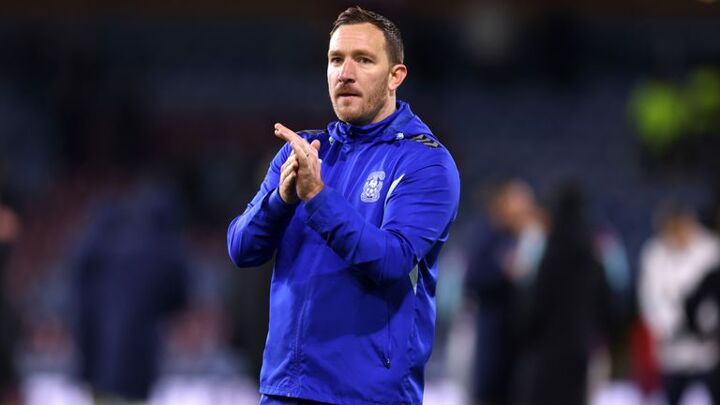
By November, Robins' seven-year-spell in charge was over and Carr found himself being asked to take over the team on a temporary basis. "I was shocked by the decision and had a real sense of duty to Mark. But I needed to work too," he explains. It was tough.
"I wanted to be really authentic. I would hate to have been the type of coach who had been supporting Mark and then did something totally different when it was my turn. You would come across as a fraud then because why had you not been saying this before?"
Carr oversaw three games. "The toughest games you could have had." There was a draw at Sunderland and at home to Sheffield United before being beaten at Burnley. The Blades were second at the time. Sunderland and Burnley would go on to be promoted.
"It was a brilliant experience," he admits. "It is exciting being able to put what is in your head and your ideas out onto the pitch so that people can kind of see it and showcase it. But then, it is quite daunting as well. It might go wrong and then it falls back on you."
It was not too long before Lampard wanted to bring in his own staff. "We had a good conversation. It was frustrating in a personal sense, but there is no ill feeling. That is what happens in football." But Coventry's subsequent success is a what-if moment.
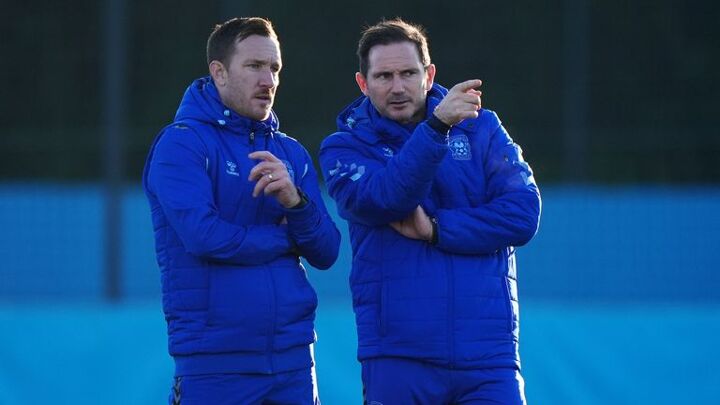
"I sent Frank a message when they got promoted. Would I have loved to have still been a part of that? Yes, of course. And it is a credit to the club's recruitment over the years that there were so many Premier League attributes there just waiting to be unleashed."
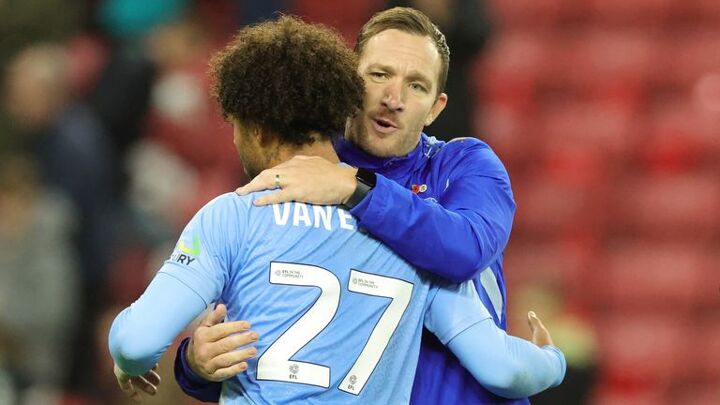
Carr worked with many of them. He picks out players like Jack Rudoni, Milan van Ewijk and Bobby Thomas. There is praise for Victor Torp. "His ceiling is really high. He is going to be such a good player. The development of the group has not been a surprise."
That development work has been the focus for much of his coaching career, simply trying to make players better. "That was one of the remits when I went in. Because of my background, it was to ensure every player had their own individual development plan."
He explains: "If kids of nine have that now then why would that support fall away in the first team when the challenge is at its highest? You do not want to create robots, you want to give them solutions. We look at their super strengths. Why were they signed?"
A lot of it is common sense. "If it is centre-backs you want them winning first contacts and building attacks. If it is your eights and 10s, you want them receiving between the lines, creating opportunities for others and chipping in with goals of their own."
Working with someone like Rudoni, the former Wimbledon youth player who made his Premier League debut on the opening day of the season against Arsenal, was particularly rewarding. "Jack was so articulate when discussing his plan," says Carr.
"No disrespect to the lower levels, but he would have to come searching for the ball there. Part of the challenge with Jack at the time was working with him to have the patience to stay in position, because these good players will now find you with the ball.
"That way, when you get it in that position, you are now in a place where you can hurt the opposition, because you are off the back of their midfield, you can slide through for assists, you can get your own shots off, you can create and you can score goals.
"Then, we could look at the bits to brush up on. How smooth can you be when receiving the ball, how quickly can you move from the back foot, hips open, face forward and find quality with the pass. It is about creating more moments to showcase their skill."
But in terms of personal satisfaction, it is a moment with Niclas Eliasson, the Swedish winger, that stands out. "He was a bit like Eden Hazard in terms of his dribbling style. He would keep it close until the defender had a nibble and then shift it," says Carr.
"I remember working with him and we saw that an opposition full-back liked to lunge in a little bit. He went and worked on it, getting that little half yard, and he scored. He slid over the dugout because it was literally exactly what we had rehearsed the day before.
"And that is all credit to him, none to me at all. He had to do the action. But it is all about the buzz in that moment that you get from working with someone on such a detailed element. The action might only come up once in six games but it did and he nailed it."
Listening to Carr talk about these one-on-one sessions, it is evident he is still chasing that buzz. He knows that his next chance is unlikely to be a firefighting role. "I don't have the reputation for that project." But developing players? "That is my skillset."
He wants to set a team up. "I have a 50-page document on it." And has knowledge beyond his years too. "Almost 500 games in the technical area of senior teams." Young but experienced, Carr is eager for that chance now. "I am just itching to get going again."
 ကော်ဗင်ထရီ
မှတ်ချက် အားလုံး