According to Bild, several Bundesliga and 2. Bundesliga clubs are currently pursuing major infrastructure development plans, including stadium expansions, training facility upgrades, and new stadium construction projects. Clubs such as Eintracht Frankfurt, Cologne, Hamburg SV, Union Berlin, and Schalke 04 are researching or implementing expansion plans, while Bayern Munich faces restrictions preventing further capacity increases at Allianz Arena despite extremely high home match demand.
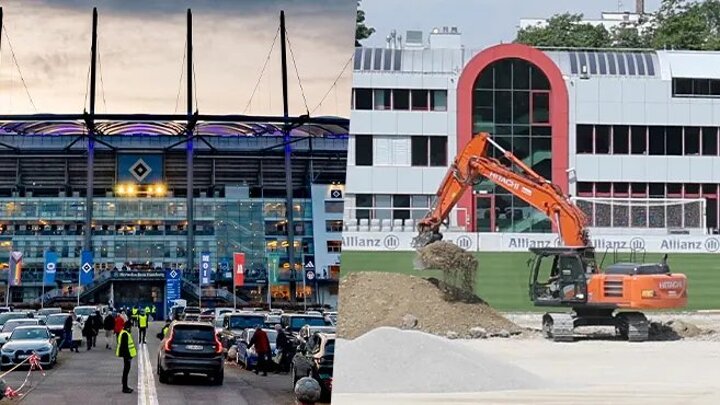
Bayern's Allianz Arena currently has a capacity of 75,000, but the club's ticket demand has already far exceeded available capacity. Before the new season started, all of Bayern's home matches sold out, and the marquee match against Dortmund received nearly 350,000 ticket requests. However, since Munich city authorities have approved a maximum capacity of 75,000, Bayern cannot temporarily expand Allianz Arena.
Meanwhile, Bayern continues major renovations at its Säbener Straße training facility. The massive training center expansion project, originally budgeted at approximately €150 million, has been temporarily postponed until 2025, but construction of the professional team area has continued since May of this year, including expansions to locker rooms, showers, fitness training and physiotherapy spaces, and upgrades to sports performance testing facilities. The club is also building new training pitches, warm-up areas, and a specialized goalkeeper training facility, with the first team currently training in what amounts to a large construction site.
Eintracht Frankfurt is studying the next phase of its home stadium expansion plans. The club is evaluating the possibility of adding a third-tier stand or directly constructing an entirely new stadium with a capacity of up to 80,000. Feasibility studies have already begun with the goal of building a modern, larger stadium within the next 10 to 12 years.
Bayer Leverkusen faces a more pressing issue. Due to plans to expand the A1 motorway from 2031 onward, the club's current training facility adjacent to the stadium will be seized, so construction of the new Bayer training complex must begin no later than 2028. The project is estimated to cost €120 million, but the final construction site has not yet been determined.
After a decade-long search, Bayer Leverkusen previously considered the nearby Monheim as an ideal location, but local political authorities opposed the project. However, this site has not been completely ruled out, and there remains a possibility that a citizen initiative could eventually lead to the training facility being built on Bayer's own grounds. In the meantime, the club has begun exploring alternative locations.
Cologne plans to construct a new two-story youth academy center covering approximately 4,500 square meters near its current training facility starting spring 2027, with an estimated investment of €50 million to €60 million. As compensation for the seized training ground, the club is also responsible for renovating three municipal sports facilities.
Additionally, Cologne is also studying the possibility of expanding RheinEnergieStadion from its current capacity of approximately 50,000 to 75,000. The club's internal committee will evaluate this project by 2027, with an estimated investment of approximately €250 million. The primary driver for expansion is extraordinary ticket demand, as Cologne's home matches almost always sell out, with approximately 45,000 members currently on the waiting list for season tickets.
Hamburg SV has received official approval to expand Volksparkstadion to over 60,000 capacity. Construction is scheduled to begin this October and will proceed during the breaks between men's and women's home matches.
Union Berlin is pursuing one of the Bundesliga's largest infrastructure projects. The club plans to invest approximately €190 million to completely renovate and expand Stadion An der Alten Försterei, increasing capacity from the current 22,012 to 34,500 and then to 40,500.
During construction, Union Berlin will temporarily relocate to Olympiastadion Berlin and plan to return to Stadion An der Alten Försterei for the 2029/30 season. The new plans include constructing new upper-tier stands, adding seating and modern VIP areas, and building an underground passage beneath the stadium to directly connect the boxes, training center, and main building.
Schalke 04 is also pursuing a major expansion of Veltins-Arena. The somewhat ambitious plan involves removing the existing roof and adding a three-tier stand to significantly increase the stadium's capacity. However, the club is currently evaluating the technical and economic feasibility of the project and has not yet announced specific capacity figures or investment amounts.
In contrast, another Schalke project is more concrete. The club is constructing a "Schalke Terrace" between the stadium and training facility to create a new fan gathering space, complete with beer dispensers and a large beer garden.
Hertha BSC is pursuing plans for a new dedicated football stadium. After years of discussion, Berlin city authorities have principally determined that a site near Jesse Owens Straße in the Olympic Park is suitable for the new stadium construction. Consequently, Hertha can now proceed to the next planning phase and submit its initial construction application, marking significant progress toward the club's long-held goal of building its own dedicated football stadium.
Hannover 96 plans to invest approximately €2.2 million in modernizing HDI-Arena to host the 2029 UEFA Women's European Championship. The stadium's lighting system has already been upgraded, and future plans include installing rooftop solar facilities, as well as renovating the media zone, VIP areas, sound system, large video screen, and pitch heating system, while capacity will remain at 49,000.
Nuremberg plans to complete a full renovation of Max-Morlock-Stadion by 2031. The stadium's iconic octagonal structure and 50,000-seat capacity will be preserved, but the existing running track will be removed. The entire project is estimated to cost €260 million to €280 million and could begin as early as 2028. Whether Nuremberg will continue playing at the original stadium during construction or temporarily relocate has not yet been decided.
AI 번역.
AF PC사이트가 오픈했습니다! 컴퓨터에서 전체 뉴스, 댓글, 경기 상세 정보와 데이터를 확인하세요. 방문하기: www.allfootballapp.com
 ဘိုင်ယန် မြူးနစ်
 လေဗာကူဆင်
 ရှော်လ်ကေး
 ဟမ်ဘာ့ဂ်
 ဟန်နိုဗာ ၉၆
 ဟာသာ ဘာလင်
 နူရင်ဘာ့ဂ်
 ဖရန့်ဖတ်
 ကိုလုံး
 ယူနီယံ ဘာလင်
မှတ်ချက် အားလုံး