In the fourth round of the Premier League, Manchester United lost 0-1 at home to Manchester City in the Manchester derby while playing against 10 men. Subsequently, analysts reviewed the match.
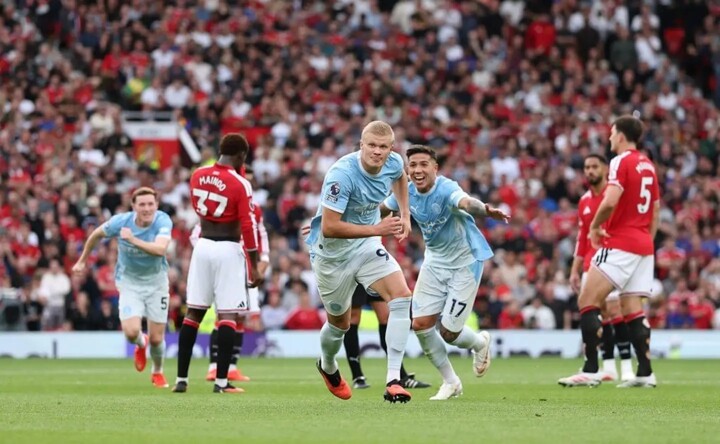
Should Erling Haaland's Goal Have Been Disallowed?
Beyond the objective positioning of Erling Haaland and Doku, this decision also involved subjective judgment: Enzo Fernández from Manchester United attempted to reach the ball, but the ball subsequently passed him by.
Had he touched the ball, he would have been in an offside position. However, he did not touch it, though some argue that he was in Lisandro Martínez's line of sight, potentially affecting his ability to play the ball.
Manchester United had grounds for complaint, but Lisandro Martínez always had sight of the ball, and for VAR to intervene, the evidence would have needed to be more conclusive.
The assistant referee on the field at that moment likely did not give much weight to Enzo Fernández's movement because he was convinced that Erling Haaland was in an offside position.
Therefore, VAR was essentially asking the referee to determine whether there was a clear error by the on-field official at Old Trafford, but in reality, they did not form a definitive judgment themselves.
In this situation, the more prudent approach would have been an on-field review, allowing the referee to reassess the entire incident. However, the refereeing team is also under immense pressure to make decisions quickly, and VAR should not intervene without clear necessity.
Had Oliver reviewed all the replays, he would have allowed the goal, but this was an extremely contentious decision, and either outcome could have been justified.
VAR reviewed the referee's initial decision to disallow the goal for offside, determined that Erling Haaland was in the correct position, and recommended the goal be allowed.
VAR also determined that, although Enzo Fernández was in an offside position, he did not touch the ball.
What Was Phil Foden Thinking at That Moment? Was Enzo Fernández Lucky?
Phil Foden became the second player in the first month of this Premier League season to be sent off for a retaliatory strike against an opponent in the torso.
In the first-round match, João Gomes from Aston Villa struck Luton, and was sent off following a VAR review. This time, referee Michael Oliver personally witnessed the foul and correctly showed a red card.
Phil Foden will undoubtedly feel he was treated unfairly because the apparent "victim" Bruno Fernandes was not punished, but he has no grounds to dispute his own dismissal.
In the previous season, Renyildo and Shade from Sunderland also received red cards for similar actions, and coincidentally, the victim was Cash from Villa on both occasions.
The question about Enzo Fernández is whether he should have been punished for his actions, or whether Phil Foden overreacted and brought the trouble upon himself.
This depends on whether Oliver clearly saw the entire incident and judged Enzo Fernández innocent, or if he focused his attention only on the moment Phil Foden struck, missing the initial provocation.
If Enzo Fernández had been given a yellow card, it would have been fair; however, in any case, VAR cannot intervene in this situation to correct a possibly missed yellow card.
The Perpetually Controversial Manchester Derby Was Decided in a Controversial Way
The 199th Manchester derby was ultimately decided by two highly controversial moments. The first was Phil Foden's direct red card, and ironically, this decision appeared to help Manchester City rather than Manchester United. Enzo Fernández fouled from behind, then struck Phil Foden when he was on the ground.
Phil Foden, in anger, struck back at Manchester United's captain. This action clearly was not enough to cause real injury to Enzo Fernández, but it greatly facilitated referee Michael Oliver's decision to show a red card. The most striking aspect of this sequence was that Enzo Fernández escaped punishment entirely.
Regarding the other major point of contention, it will continue to spark discussion in the coming days. Erling Haaland appeared to be in an offside position when he received a pass from Pep Guardiola, and when the linesman raised his flag, Manchester City's striker seemed to accept the decision. However, a VAR review followed.
The review showed that Doku kept Erling Haaland in an onside position. But one question remained unanswered: was Enzo Fernández, who attempted to intercept Pep Guardiola's pass before it reached Erling Haaland, not in an offside position? The answers are both yes and no. The final ruling was clear: Enzo Fernández was not interfering with play. At minimum, this was a very confusing moment, and difficult to understand at first glance.
How Did Manchester United Perform Against Manchester City While Playing with a Man Down?
Manchester United is not accustomed to dominating possession against Manchester City, and after the red card, they clearly lacked ideas.
In their past victories over their local rivals, Manchester United has relied on swift and effective counterattacks. This time, Michael Carrick's tactical approach was clearly designed with this in mind, starting the more mobile Antony as the central forward instead of the traditional striker Rasmus Hojlund.
After Phil Foden's dismissal, this counterattacking style quickly became ineffective, as Manchester City retreated into a compact defensive formation. Manchester United initially struggled to adapt, only slowly recycling possession, allowing Manchester City to easily maintain their shape. Harry Maguire's speculative long-range attempt was most telling; the ball rolled softly along the ground, and with a lack of purposeful runs ahead of him, he had few other options.
However, in the second half, they built momentum, particularly through Kobbie Mainoo, who consistently drove forward with quick one-touch passes and powerful runs. Kobbie Mainoo even came close to scoring, his curled strike hitting the crossbar. But Erling Haaland's decisive finish interrupted Manchester United's growing momentum, and the team's attack became disjointed once more.
Overall, one stark statistic summarized Manchester United's performance that day. Despite two shots on the frame, after the red card, Manchester United did not register a shot on target until Bruno Fernandes' attempt in the 70th minute.
What Was Enzo Fernández's Role in Manchester City's Performance?
Manchester City's performance with 10 men in the second half will likely remain memorable for traveling supporters, and fans will consider everyone in this victory a hero. No one wavered; Elliott Anderson recycled the ball throughout midfield, Ndiaye proved an inspiring replacement in midfield, Erling Haaland raised the intensity in the second half, and the back four also performed well.
If anyone best embodied this hard-fought battle and some of the "dark arts" necessary when playing with a man down, particularly when you believe the red card decision was unfair, it should be Enzo Fernández.
He was everywhere in midfield, winning loose balls, linking up play, slowing the tempo when needed, and also buying himself a few seconds of respite by pressing faces and hitting the ground, and had an altercation with Harry Maguire—both were cautioned, so Michael Oliver likely recognized that this approach was nonetheless effective.
Enzo Fernández was substituted 10 minutes from the end and had to walk the entire length of the far side of the field, past Manchester United supporters. Depending on whether he was helping Manchester City control possession and recover, or attempting to stoke passions, these supporters at various moments wanted to quieten him down and also provoke him.
Manchester City supporters chanted his name throughout the match, singing the song "Zombie," first heard in Porto. His performance in this match will also earn him a place in Manchester City's historical memory, just as it will for his teammates.
How Widespread Were the Protests Inside and Outside Old Trafford?
According to police estimates, approximately 500 supporters participated in a protest held at the junction of Sir Matt Busby Way. This demonstration was organized by the "1958" group in protest against the club's ticketing policy.
Manchester United came under heavy criticism for how it handled ticket resales: nearly 700 season-ticket holders were initially denied entry, then had to appeal to retain their seats. A further 1,000 were actually fined. Ticket prices have also been rising.
Outside Old Trafford, supporters held banners reading: "You're taking everything from the fans and banning us for no reason." They also ignited red, green, and gold flares and chanted for the Glazer family to leave, with Ratcliffe also becoming a target.
Later, when Ratcliffe sat in the director's box at Old Trafford, supporters deployed another banner at the Stretford End. The banner read: "The way you treat us is outrageous." When the players took to the field, this banner was displayed by the players' tunnel to maximize the protest's impact.
This was an action by the TRA organization. Over the past 10 years, this organization has worked to improve the atmosphere at the stadium. They also removed the flags that typically adorned the Stretford End.
Переведено ИИ.
Сайт AF теперь доступен! Читайте полные новости, комментарии, детали матчей и статистику на компьютере. Посетите: www.allfootballapp.com
 မန်ယူ
မန်ယူ
 မန်စီးတီး
 မိုက်ကယ် ကာရစ်
 Enzo Maresca
 ဟယ်ရီ မက်ဂွိုင်းယား
 ဘရူနို ဖာနန်ဒက်စ်
 အယ်လီယော့တ် အန်ဒါဆန်
 ရက်ရှ်ဖို့ဒ်
 ဟာလန်း
 ဖီးလ် ဖိုဒန်
 လီဆန်ဒရို မာတီနက်ဇ်
 ကွန်ဟာ
 ဂဗာဒီယောလ်
 အီလီမန် အန်ဒီယာယီ
 ဘင်ဂျမင် ဆက်စကို
 ကိုဘီ မိုင်နူး
 အန်ဇိုဖာနန်ဒက်ဇ်
 ပက်ထရစ် ဒေါ်ဂူး
 ဆာ ဂျင်မ် ရက်ကလစ်ဖ်
မှတ်ချက် အားလုံး