This article is reproduced and translated from AP News, originally published on June 1 local time, by Evens Sanon and Danica Coto.
Introduction: For decades, Brazil has been the sole favorite team for Haitians during the FIFA World Cup. But this time, with their own national team competing, Haitian fans have decided to put Brazil "aside for now."
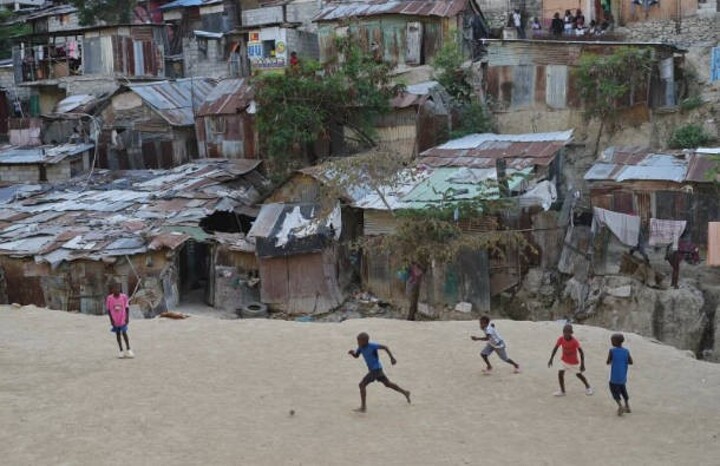
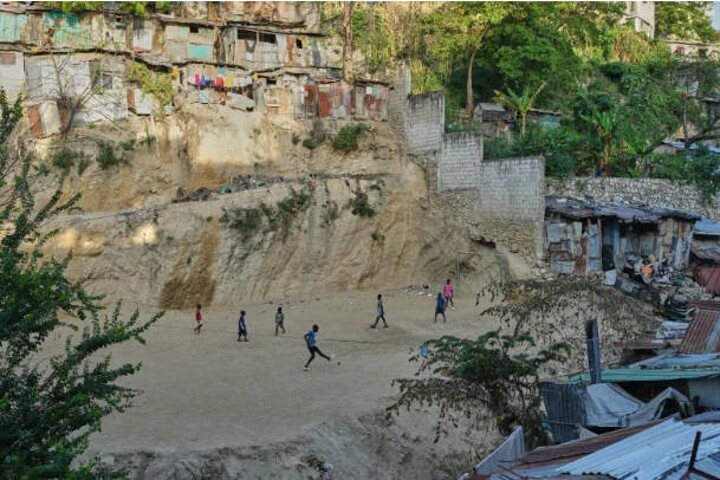
Children play soccer with plastic balls in Pétionville, Port-au-Prince, Haiti.
For decades, Haitian soccer fans have gathered in front of televisions and radios to cheer for Brazil in every FIFA World Cup, but this year is different.
The Haitian national team is participating in a global tournament for the first time since 1974, and the entire nation is buzzing with excitement. Impromptu soccer games are being played on dusty pitches, and jerseys featuring the faces of Haitian national team players are being sold on more and more street corners.
The Haitian team, nicknamed the "Grenadiers," will face Morocco, Scotland, and Brazil in Group C. On June 19, they will play against their long-time football idols in Philadelphia.
Sixteen-year-old Grilière Lima laughed and said, "My favorite team is Brazil, but my country is also in this FIFA World Cup, so Brazil has to be 'put aside' for now."
He had just finished playing soccer on a potholed street in Port-au-Prince, the capital of Haiti, with one foot in a sneaker and the other in a plastic slipper, and the goal made of two stones.
He wore a replica Brazil jersey with the number 10, a number worn by superstars like Pelé, Neymar, and Ronaldinho.
He continued, "I want to be like Nazon (Haiti's all-time leading scorer) and represent Haiti in major tournaments. My family can't afford to send me to a club for training, but I'm finding ways to make it."
Lima also said he liked Kaká, but his favorite player is striker Nazon — "Brazil is good, but I'm supporting my Haitian brothers."
"Grenadiers" Bring Hope
Haitians are eager to cheer for their team, and the pervasive hunger, brutal violence, and fears of surging gang violence in the country have been temporarily set aside.
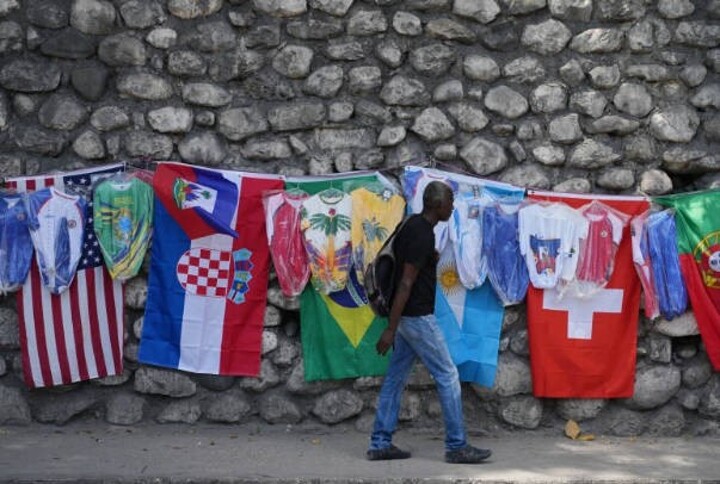
Profit Ismaël, a 52-year-old agent, scanned replica jerseys for sale on a dusty street corner in Port-au-Prince. Unable to afford a $13 jersey, he bought a $1 plastic bracelet in the red and blue colors of the Haitian flag.
He said, "I'm doing my best to show my support for Haiti, and I hope Haiti can beat Brazil."
Ismaël said that when he has more money, he will return to the street vendor to buy a flag, "so when Haiti scores against Brazil, I can wave it."
Fito Joseph, a street vendor selling replica jerseys, said he stopped supporting Brazil after Haiti qualified for the FIFA World Cup finals: "Even if a family has 10 people, everyone should wear a jersey."
Wilkenson Daroman, 33, agreed: "Wearing this jersey, I want to send a message to every 'Grenadier' fighting for us, for Haiti – there is still hope here, and we must persevere. We are in an extremely difficult situation, but they have given us hope, and we must give them hope too."
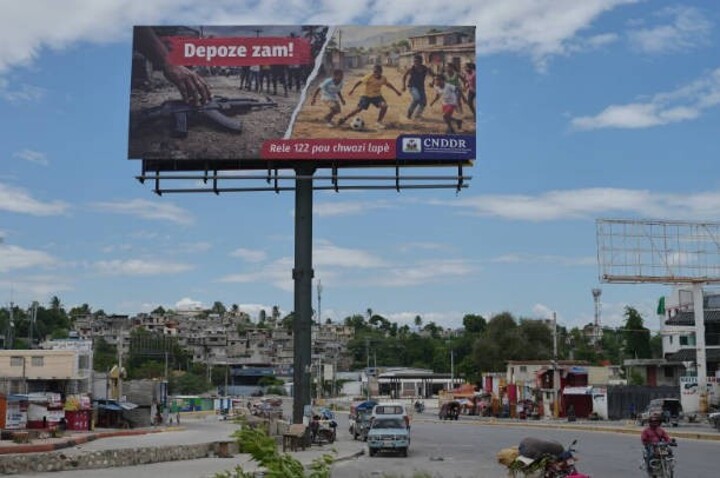
The battle cry of Haitian fans is "Grenadye, alaso!" which means "Army, attack!" This slogan originated during the revolutionary period when Haiti became the world's first Black republic.
Mario Etienne, 15, said this will be the first time he witnesses his country participate in the FIFA World Cup, as Haiti last participated in 1974: "This will be a national gathering. If there's a power outage at my house, I'll watch the games in the street or at a friend's house."
Claudy Denis, 14, also plans to do so: "We can't go to the stadium to watch, but we'll watch on TV. They have 3 games, and I won't miss any of them."
Enduring Love for Brazil
Haitians have always adored the Brazilian team, and many people's love for Brazil began with the 1982 FIFA World Cup, when the Brazilian team, led by captain Sócrates, featured stars like Zico, Falcão, and Toninho Cerezo.
In 2004, when Brazil led a UN peacekeeping force to Haiti, public support for the Brazilian team surged. The Brazilian team organized a soccer match aimed at promoting peace in Haiti—at that time, the country was still in turmoil due to a violent rebellion in which former President Jean-Bertrand Aristide was overthrown.
Thousands of Haitians ran alongside the armored convoy that transported Brazilian superstars, including Ronaldo and Roberto Carlos, to a stadium in Port-au-Prince.
On that day, Roberto Carlos said in an interview: "It was impressive that from the airport to here, there were people everywhere, and everyone was shouting 'Brazil! Brazil!'"
The Haitian team suffered a 0-6 defeat, but that didn't matter. Haitian fans waved Brazilian flags and celebrated the successful holding of the match.
This was just one of the few matches between Haiti and Brazil. In a 2016 Copa América match, Brazil again defeated Haiti 7-1.
Evenson Lucsama, a 34-year-old street vendor, said he expects Haiti to attack Brazil like "tigers." "I'm definitely watching this game," he added, and he will cover his eyes when Brazil attacks.
But the upcoming FIFA World Cup means little to Jean-Paul Jean-Pierre, a 29-year-old street vendor who just started selling jerseys and flags: "I'm here to make a living, and I don't have any particular feelings for any team."
Pierre is one of more than 1.4 million Haitians displaced by gang violence. He lives with his partner and two children in a crowded temporary shelter, struggling to support them.
He said, "Making money is what interests me. I hope there's a FIFA World Cup every year so I can continue to survive."
 Brasil
 Haiti
Haiti
 Esteghlal
 Roberto Carlos
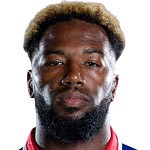 Duckens Nazon
 FIFA World Cup
Todos os comentários (48)
6-19 22:49
6-19 22:49
6-19 22:56
6-19 22:37
6-19 22:32