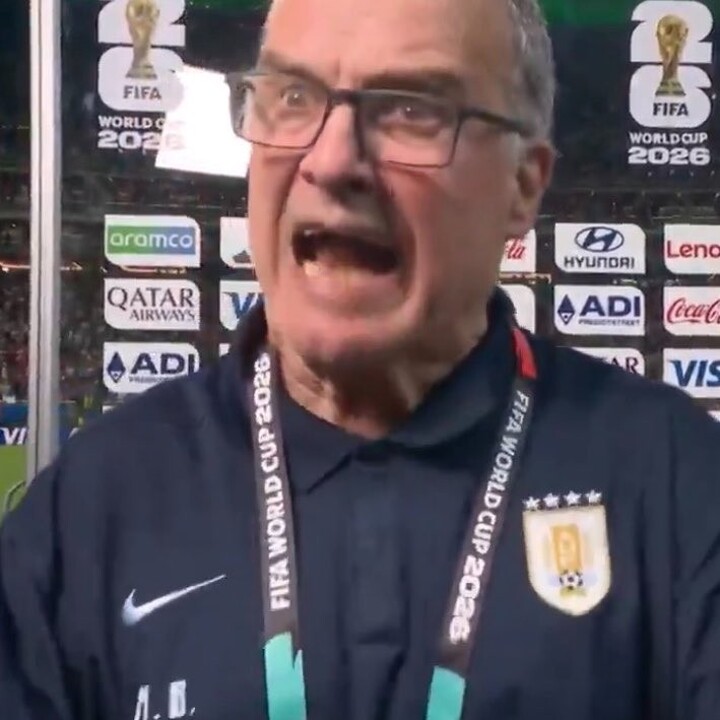
The Athletic highlights that many managers at this FIFA World Cup have frequently lost control of their emotions during post-match interviews, creating a genuinely poor viewing experience. Clarke reinforced the stereotype of old-guard Scottish male football managers with poor temperament; Pochettino's direct display of irritation at the press conference created an awkward atmosphere; Uruguay's manager Bielsa shouted at reporters while waiting for an immediate post-match interview. Managers of national teams have a responsibility to manage their emotions, and Ferguson previously emphasized that press conferences are crucial for a manager's image.
"How would you summarize the match? What do you think about your team's qualification chances from here? No match at this level is easy, right? How do you assess your team's second-half recovery?"
These questions were not sharp interrogations, far from rigorous grilling. Yet at this FIFA World Cup, several managers struggled to answer calmly even such mild and straightforward questions.
The above questions were posed to Scotland manager Steve Clarke and USMNT manager Mauricio Pochettino, respectively, after their final group-stage matches. Their responses were either evasive or openly irritated—that emotion was like the reluctant look a partner gives when you ask them to take out the trash at 11:30 p.m. on a stormy November night.
Old-guard Scottish male football managers have a stereotype of having poor temperaments, and Clarke displayed this trait to the fullest.
His interviews and press conferences have always been brief and cold. On the eve of this FIFA World Cup, he changed his usual style, chatting and laughing with reporters, but after successive defeats to Morocco and Brazil, with Scotland facing elimination, Clarke reverted to his typically distant self.
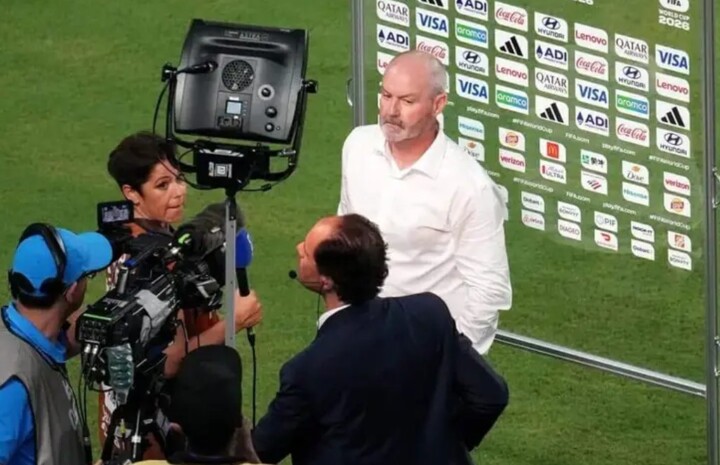
After Scotland's 0-3 defeat to Brazil on Wednesday, reporter Eilidh Barbour's exchange with him went as follows:
Barbour: "Steve, we'll get a detailed analysis later, but for now, tell us how you're feeling. It must be hard to settle down right after coming off the pitch. How difficult was tonight's match? What are your initial impressions of the 90 minutes overall?"
Clarke: "We played the game away, that's it."
Barbour: "Facing such high-level opponents, your team conceded goals almost effortlessly. You must be very frustrated, right?"
Clarke: "We gave them the goals, we gave them the victory. It's very disappointing."
Barbour: "Now your qualification depends on other results. How do you feel about your fate from here?"
Clarke: "Sorry, I'm not thinking about any of that. I don't want to consider it at all."
He had barely finished speaking before turning and walking away, without waiting for the reporter's next question.
Reading the words alone may not convey the tension in the room, but Clarke's face was completely deflated, with an expression as if you'd taken your car for a routine annual inspection only to be told that the engine, wheels, chassis, and windscreen wipers all need to be replaced.
Objectively speaking, it's somewhat harsh to thrust a microphone in front of a manager minutes after a painful defeat and ask him to control his emotions and analyze the match. But it's not impossible to handle it gracefully: after the final whistle in Miami, Scotland midfielder John McGinn also accepted an interview with Barbour, and in contrast to Clarke, he calmly and appropriately expressed the nation's disappointment.
McGinn acknowledged that he and all his teammates were extremely frustrated, that the team conceded goals at critical moments, and that despite giving their all, everyone was physically and mentally exhausted. The team's qualification fate could only depend on other results, and Scotland's hope of advancing was already slim. McGinn stated that the pain of the heavy defeat still lingered, but he still hoped Scotland's World Cup journey wasn't over and extended sincere thanks to the enormous number of supporters who traveled to the United States to watch the matches. This statement may not change the fact that thousands of supporters spent a fortune to attend only to witness a defeat, but it conveyed an appropriate and correct attitude.
On the other hand, after the USMNT lost to Turkey, Pochettino, whose situation was completely different, held an even stranger press conference. He was dissatisfied from the start, believing that the overall media commentary after the match was overly negative, even though the U.S. team had already secured first place in their group.
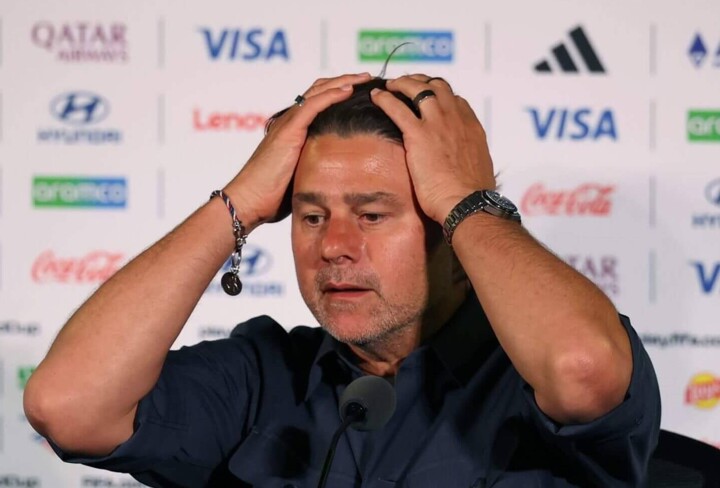
Fox Sports reporter Doug McIntyre began with a positive question, asking about team cohesion. McIntyre: "Only three players in tonight's starting lineup had previous World Cup starting experience. I know you never want to accept a loss, especially losing in the closing moments, but how would you assess your team's resilient second-half recovery?"
Pochettino pursed his lips in displeasure and responded: "We fought hard for all 97 minutes, didn't we? We played hard for 97 minutes, not just in the second half."
With that, he shrugged dramatically and exaggeratedly, openly conveying his irritation—a gesture that seemed to come with the caption: "What exactly do you want?"
An awkward silence fell over the room.
Pochettino's dissatisfaction is understandable: the team had already qualified, and there were significant lineup rotations for this match. This defeat was not consequential, but broadcasters and media were filled with negative commentary.
He added later: "I'm confused—the atmosphere now makes it seem like we're eliminated and Turkey, which is already out, has advanced, isn't that right?"
When asked what lessons could be learned from the match, Pochettino interrupted the question: "Nobody has congratulated us yet for finishing first in a group surrounded by strong opponents. I want to congratulate the players, the coaching staff, the U.S. team, and all the supporters."
The team had secured first place days earlier, so reporters naturally wouldn't focus on that already-decided happy outcome. Moreover, the purpose of a post-match press conference is to ask questions and gather information, not simply to flatter and praise. The entire interview environment was particularly bizarre. Was Pochettino playing psychological games? Or was he simply irritated by his team conceding a goal shortly before the final whistle?
It wasn't just Clarke and Pochettino; many managers at this FIFA World Cup experienced similar situations.
South Korea's press conferences became a tense tug-of-war between reporters and manager Hong Myung-bo. After the team's 0-1 defeat to South Africa in their final group match, the performance was poor, and reporters immediately asked whether players had food poisoning, leaving Hong Myung-bo visibly distressed.
Earlier, Paraguay's manager took his team to a 1-4 defeat against the United States, and after the match, angrily told reporters present: "If you're going to criticize, criticize me, don't blame my players."
Uruguay manager Bielsa's team was defeated by Spain and eliminated in the group stage. While waiting for an immediate post-match interview, he shouted at reporters: "Ask quickly!"
Do these details really matter? Honestly, managers of national teams have a responsibility to convey emotion to their citizens and align with public sentiment.
This role requires balancing acknowledgment of reality with remaining optimistic (Canada manager Jesse Marsch is a classic example of excessive optimism). If a manager is overly pessimistic or blindly optimistic, it can jeopardize his position.
Sir Alex Ferguson, who once managed Manchester United and was well versed in media relations, said: "Regardless of the result, good or bad, you must present yourself as a winner at press conferences. A single press conference can ruin your reputation; it's a crucial part of a manager's job."
With supporters spending thousands to attend a single FIFA World Cup match, Clarke, Pochettino, and other managers should perhaps consider their words more carefully before speaking.
Traduzido por IA.
O site do AF já está online! Acesse notícias completas, comentários, detalhes de partidas e estatísticas no seu computador. Acesse: www.allfootballapp.com
 Manchester United
 Coreia do Sul
 Escócia
 Uruguai
 Myung-bo Hong
 Sir Alex Ferguson
 Marcelo Bielsa
 Steve Clarke
 FIFA World Cup
Todos os comentários (14)
Ontem 23:40
Ontem 23:40
Ontem 23:35
Ontem 23:36
Ontem 23:38
Ontem 23:45
Ontem 23:44
Ontem 23:39
Ontem 23:36
Ontem 23:36
Ontem 23:36
Ontem 23:36
Ontem 23:35
Ontem 23:35