On June 28, local time, in his column for The Telegraph, Carragher stated that England's performance at the FIFA World Cup so far has been poor, and the team is still heavily dependent on Kane and Bellingham.
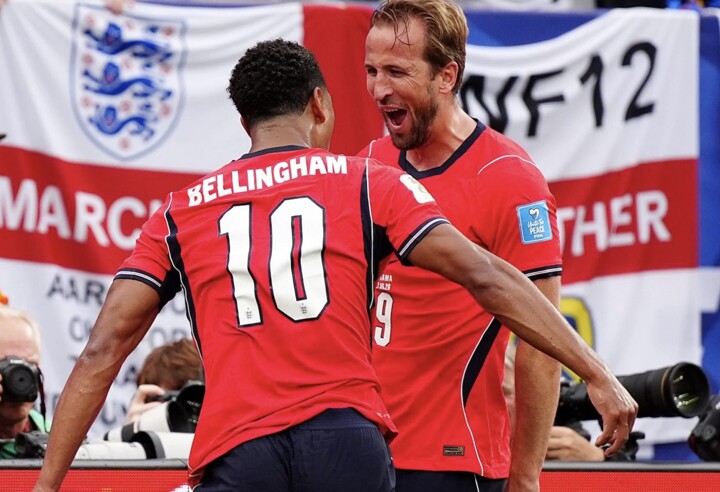
Here is the content of the column:
When Tuchel took over the England squad, he knew he was fortunate to have two world-class players. But he was unsure whether he could build a truly great English team. Now, with the FIFA World Cup entering the knockout stage, that hasn't changed. Kane and Bellingham have proven once again why they play for two of the world's biggest clubs respectively. Because of this, they were England's greatest hope before the team came to the USA for the FIFA World Cup; and how far England can go in the future still depends heavily on their form.
Just as they have done for England in the past, Kane and Bellingham once again stood out and delivered under the greatest pressure. So far, five of England's six goals in this FIFA World Cup have come directly from their contributions. Meanwhile, Kane is almost setting new records with every goal he scores. His 70th goal of the season has also made him England's all-time leading scorer in World Cup finals.
However, while Kane and Bellingham led the team to beat Panama, returned to the hotel, enjoyed their praise, and began thinking about the next match, I couldn't help but wonder whether they privately believed that if the team's system were more rational, they could contribute even more to this side. My guess is that, while both were satisfied with their crucial performances, they are actually disappointed with many aspects of the first three matches.
Especially Kane.
Over the years, whenever there is a major international tournament, a phrase I most hate to hear is: "Kane always drops too deep, and it hurts the team." This statement is overly simplistic. Kane has played this way for many years, so it's nothing new. The real problem isn't Kane dropping deep to collect the ball. The real problem is how his teammates should play around him when Kane is allowed to continue playing this way.
There are several reasons why Kane constantly drops deep. First, with age, his pace is not as good as it once was, so he needs to adapt his game rather than simply stay behind the centre-backs for the entire match waiting for chances. He is one of the smartest players in world football, instinctively knowing where he should be. Second, he is also one of England's best passers. He can play through balls that break defences and also finish chances himself.
The real problem lies in the tactical setup. If many players in the starting lineup like to occupy that space "between the lines" after Kane drops deep, it becomes very crowded. The result is: the area in front of the penalty box is packed, but there aren't enough players attacking behind the defence. Southgate encountered this problem at the last major tournament. And at this FIFA World Cup, the problem still exists. In the first half against Panama, Kane had only one touch in the penalty box. More worrying still is that he had very few touches outside the penalty box—only 10 in total. And against Ghana, he had only 20 touches throughout the entire match. This is effectively limiting a striker with complete skills and England's most lethal weapon. Tuchel needs to rethink this before facing stronger opponents.
Last night, one clear problem was that he lined up two attacking midfielders. This meant that both Morgan Rogers and Bellingham liked to come into the space where Kane operates to receive the ball. Sometimes Nico O'Reilly also appeared there. And in the first two matches, Rice often played that way too. One solution would be, once Rice returns, to pair him with Elliot Anderson as a double pivot, playing deeper.
Against Panama, Anderson exposed some problems. Panama launched many quick counterattacks. If it had been a stronger team, England would have been punished long ago. If Rice played deeper, there could be more direct connections between Kane and Bellingham. However, this would mean Tuchel would have to abandon his initial attacking philosophy. Currently, he wants the team to have five attacking players when in possession and to create triangular patterns on the flanks through wingers, full-backs, and advancing midfielders. When Kane drops deep, the two wingers should assume more responsibility in directly attacking the opposition defence.
At Bayern Munich, Kane has teammates like Olise and Luis Díaz. Tuchel also designed this England team around quick, direct wingers. So he brought many such players in his squad for the FIFA World Cup. Unfortunately, so far, the main characteristic of these wingers seems to be that they perform better when they are not playing.
Rashford is currently the winger with the best performance. But overall, all the wingers' performances have been far from sufficient. This forces Kane and Bellingham to assume more responsibility for creating chances and scoring goals. Now, others need to step up. Otherwise, England will go home early.
So far, England have not played a truly complete and high-level 90-minute performance. They are still relying only on the brilliant moments created by the individual brilliance of Kane and Bellingham. Is this enough to take England all the way? Can a team rely long-term on two players who are so superior to their teammates? Usually, the answer is no.
Every time I watch Bellingham play in an important match, I am reminded of my former Liverpool teammate Gerrard. I always recall someone who made an extremely accurate assessment of Gerrard: "He doesn't control the game, but he changes the game."
The same applies to Bellingham.
He was born for these crucial moments.
He always scores the decisive goal or provides the unforgettable assist at the most important moments.
Any neutral fan, after watching England's current performance and then looking at France, or Argentina and Spain, which have been winning championships in recent years, will certainly remind England fans: let's be realistic.
Other top teams have a large number of world-class players.
And Tuchel knows very well that if England want to compete with these teams in the later knockout stages, the only way is to continue exploiting the maximum potential of Kane and Bellingham, while hoping that other players can finally perform at a level they have never consistently shown for England.
When the team's performance is still so inconsistent—in the three group matches, England really played well for only 45 minutes total—future opponents will certainly grow increasingly confident.
Because they will believe: as long as Kane and Bellingham are contained, Tuchel will be as helpless as his predecessor when it really matters.
Of course, there is a positive side as well.
As long as your team has two world-class superstars who can change the game, there will always be hope.
After last year's European Championship, I wrote that England should evolve from a "Kane team" to a "Bellingham team".
It turns out I spoke too soon.
Today, England's greatest reliance for competing for the title is still the era jointly led by Kane and Bellingham. How long England can last in this FIFA World Cup will depend on one question: will we end up merely consoling ourselves repeatedly that they once again provided flashes of individual heroism; or will we be able to celebrate that they truly inspired all their teammates, finally allowing England to become a complete, mature, and successful team?
Traduzido por IA.
O site do AF já está online! Acesse notícias completas, comentários, detalhes de partidas e estatísticas no seu computador. Acesse: www.allfootballapp.com
 Inglaterra
 Bayern München
 Real Madrid
 Jamie Carragher
 Thomas Tuchel
 Harry Kane
 Jude Bellingham
 FIFA World Cup
Todos os comentários (1)
Hoje 10:46