On June 28, Morocco coach Walid Regragui gave a pre-match interview, discussing the format of this FIFA World Cup and related matters.
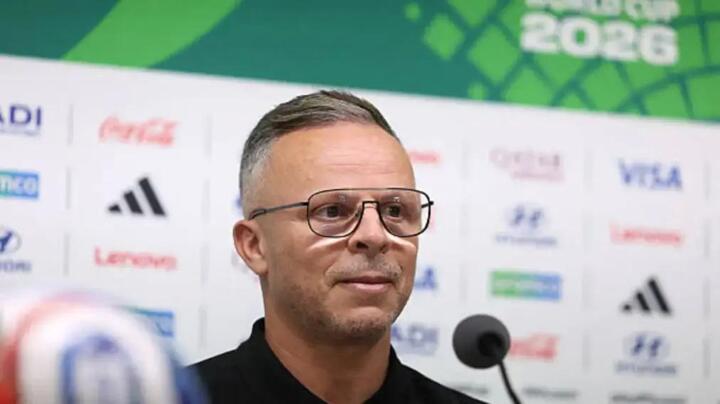
When asked if the format following the FIFA World Cup expansion was fair, Regragui said: "I wouldn't call it 'unfair.' The rules of the game were established long ago. After the draw, we already knew which teams we could face and how the entire format would work. Since that's the case, there's nothing to complain about now. Of course, is this the ideal format? Perhaps not.
But we have no choice. FIFA has always researched better formats, and I believe it will continue to improve in the future. The biggest difficulty with the current format is the comparison between third-placed teams from each group. Sometimes a runner-up in one group might have only 3 points and still advance, while another third-placed team with the same 3 points is eliminated. That has some irrationality to it.
Additionally, it would be fairer if the final round of all group-stage matches could kick off simultaneously. However, due to various practical reasons, such as TV broadcasting, that's nearly impossible to achieve. So I don't think there's a perfect format that can satisfy everyone right now. Perhaps the Champions League format has something to learn from. For example, Scotland finished their matches earlier but couldn't know if they'd end up being the best third-placed team, while teams that played later could calculate based on the results. These issues may continue to be adjusted in the future, but I don't think there's a truly perfect solution yet."
When asked what he would like to say to Moroccan fans at home and around the world who support the team, Regragui said: "Every day we hope to send the same message to our supporters through training and matches. We hope they can trust us. We are very aware of the responsibilities we carry and will do our best. Our team has many excellent players who are very dedicated, have distinct personalities, and a strong sense of responsibility. They all know that whatever we do, whatever we've achieved in the past, and whatever we achieve in the future, it is first and foremost for the people of Morocco, not for ourselves. I feel this genuinely every day during training. We have many true leaders, like Achraf. Seeing them putting in effort every day in training and eager to win for Morocco, I believe no words can be stronger than these actions. We do this every day, and we will continue to do so in tomorrow's match. Today, I don't need to make further guarantees to our fans, because our actions are the best answer."
When asked about the growing international attention to Morocco and his thoughts on Dutch coach Koeman's remarks about favorite teams, Regragui said: "First, we've received a very warm reception everywhere. After arriving in Mexico, both we and our players deeply felt the enthusiasm of local fans. To be honest, at the end of the group stage, we hoped to finish first in our group, mainly to reduce travel. But in the end, after coming to Mexico as the second-place team, we were very happy. Many players are familiar with this place—for example, some played in Monterrey. We know the Mexican people's love for football; they love the game and also appreciate teams like Morocco. So we're very grateful for the reception we've been given by local fans, especially when they greeted us outside our hotel.
As for the question of favorite teams, my answer has always been the same. I don't care who others consider to be the favorite. What really determines the result is the match itself, not pre-match discussions. If others think we're the favorites or that the Netherlands are the favorites, it makes no difference to us. However, I do think Morocco has now earned the respect of the football world, which is a good thing. Of course, that respect must continue to be proven through matches, not by some words at a press conference. This is the result of many years of hard work by Moroccan football. Now our opponents are starting to genuinely respect Morocco, and we also respect the Netherlands. The Netherlands is a great football power, and I know them better than many people. So this will definitely be a high-level match. I hope this match, like our previous match against Brazil, will be one of the most exciting matches of this FIFA World Cup."
When asked about Dutch striker Brian Brobbey, Regragui said: "Of course, we're prepared for every player. I know Brobbey very well. Back in the U-17 days, I led my team to participate in the Future Cup in Amsterdam and played against him. We managed to contain him in that match and didn't let him score. Back then, he was already as he is now—very strong physically, excellent at holding the ball with his back to goal, capable of using his body well to shield defenders and create opportunities for teammates. However, the Netherlands is by no means a team that only needs to focus on one player. They have quality in all positions. So we've developed an overall defensive plan, not just for Brobbey."
When asked if the Netherlands' more advanced squad age would be an advantage for Morocco if the match went to extra time, Regragui said: "I don't think so. A 28 or 29-year-old player doesn't run less than a 22-year-old simply because of age. On the contrary, they also have more experience. So I don't think age is really important. In matches like this, what really determines the game is mental endurance. Many people often overlook this. Being able to maintain concentration for 90 minutes, or even 120 minutes, I think that's the most important ability. And that ability is not determined by age alone. So we're more focused on mental preparation."
When asked how to limit the Dutch team's efficient attack, Regragui said: "Indeed, they are a very efficient team. The reason is simple: because they have very good players. However, as I said before, we always strive to do our best. In these recent days, we've focused on training against some of their characteristics and, at the same time, as in previous matches, we've corrected and refined some details.
There's another point that no one should ignore. Whether facing Brazil, Scotland, or Haiti, our opponents actually didn't have many real chances. Even though Haiti scored two goals, they had only about three real chances near Bounou's goal throughout the entire match. So the key to defense is not just limiting the opponent's shots, but more importantly, not letting them have opportunities to finish efficiently. To do this, we must try to keep them as far away from our penalty area as possible. Only then can we truly reduce their threat."
Traduzido por IA.
O site do AF já está online! Acesse notícias completas, comentários, detalhes de partidas e estatísticas no seu computador. Acesse: www.allfootballapp.com
 Marrocos
 Mohamed Ouahbi
 FIFA World Cup
Todos os comentários (2)
Hoje 01:03
Hoje 01:03