Milan legend Donadoni discussed topics such as the Rossoneri, Leao, and Amorim in an interview.

Among the current Milan squad, who could have played in the "invincible Milan" of yesteryear?
"That's a difficult question to answer. When I was playing, journalists often compared me to someone from the past. I believe everyone should be themselves, everyone has their own characteristics and strengths, and should play to them. Of course, there will be some similarities between players, but the times are different, and the environment is different. Today there are certainly some players who could have played in our era; back then, many champion players also came to the team. For example, Gullit, Baresi, Rijkaard, Van Basten, Maldini, Tassotti, just to name a few, but in recent years many champion players have also arrived, and they also have to pay a high price. Players who performed well the previous year, once they step onto that stadium, that pitch, things change."
"I still remember the example of Laudrup. His brother also played for Milan, and was a very capable and quality player himself, but San Siro was a lot of pressure for him. I remember one time, halfway through the first half, he said: 'I'm not playing the second half.' So in my life, I've seen many players, even some who weren't particularly technically outstanding before going to Milan, but they had drive, fighting spirit, character, and determination... I often wondered how they could keep playing when their technique was only decent. But in the end, they always got on the field. Foot skills alone are not enough, the brain is also very important, this is crucial."
"Current young players have some difficulties in this regard. I have been coaching young people and dealing with them for years. Today's young people seem confident and ostentatious, but when it comes to crucial moments and difficulties, the easiest thing for them to do is not to face them, but to try to avoid them. Obviously, when I was at Milan, facing Franco Baresi one-on-one, I knew it would be difficult to get past him, but if I could complete a breakthrough against him in training, I would benefit in the weekend game. If I faced a youth team youngster or a substitute, it would be much easier, I could get past him 8 out of 10 times. It was this kind of high-level confrontation that helped us grow and become stronger, and it was coaches like Sacchi who made us better. He gave us many ideas, taught us to play in a team football way, which also made us look stronger than we actually were. I knew that if I made a mistake in the back, there was always someone behind me to cover."
"This is our strength and greatness, and one more thing is also very important, which is that we have a club and a president who are 15 to 20 years ahead of others."
If you were Leao, what would you do?
"First, you have to truly understand a person to know what they are like. Judging from the outside is difficult. Of course, from what we see, I see the same as you, I am not in the Milan locker room, but Leao is often talked about more for what he doesn't do than for what he does. He certainly has above-average talent, but maintaining consistency is another key ability, and that is his weakness. I hope these experiences can truly wake him up, and ultimately continue to be the star we occasionally see who does amazing things. If Leao and I had been teammates, sometimes I would really want to tug on his braid and make him understand that he should also do something different."
Do you think he is suitable for Amorim's 3-4-2-1? Or should we find someone more suitable?
"Let's go back to the previous topic. In my years playing for Milan, I also saw some players who were only good at one position. I myself have always been more adaptable to changes: I played on the right, on the left, and in the middle, which gave me more opportunities. If someone in that position is stronger than you, it's hard to get on the field. But if you know how to adapt, understand the difference between playing on the left and playing on the right, and are willing to work hard to improve this, you will give yourself and the team more opportunities. If we are still discussing tactical systems now, thinking about how to better use Leao, then we have already lost from the start."
Referring to Maldini's resignation as national technical director after a conflict with Malagò
"I think things can be done, but they must be done in the right way. I think this is another negative chapter in our recent football history. I think things were handled incorrectly, and as for the deeper motivations of both sides, I don't know. What bothers me is that people in our circle, including industry insiders, always talk about changing and doing things differently. But if you always do the same things, change is hard to happen. It's a bit like a dog chasing its tail. This incident once again cast a shadow over the already not-so-glorious football environment."
Did you ever consider joining Milan's rival?
"For a while, Trapattoni was at Internazionale, and he tried to contact me, asking if I would be willing to go there. At that time, transfers between Milan and Internazionale were already sensitive, so it's commendable that a coach would appreciate you. However, the idea of leaving Milan was far from my mind. In fact, I later decided that as long as I left Milan, I would not wear any other team's jersey in Italy."
Regarding Cruyff's famous statement before the 1994 Athens final
"Later, I also got to know and interact with Cruyff personally, and for me, he was extraordinary. He is one of the greatest players in football history. I also talked to some of the Barcelona players at the time, and they told me about the atmosphere. Cruyff wanted to motivate his players and keep them calm so they could play the game in the right way. He also said: 'We signed Romario at Barcelona, while Milan signed Desailly.' But then things went in the opposite direction."
"We finished the last training session before the final, and Barcelona had already arrived before we entered the field. Cruyff was in the midfield, lying there, with the ball under his neck, very relaxed, watching his players train. Capello said: 'Let's see if we can take the ball from under his neck.' Despite the absence of important players like Baresi and Costacurta, that game ended up being a performance where if we had won 7-0, there would have been nothing to say. That again shows that when you provoke certain players, certain teams, the final result may not be what you imagined. However, that Barcelona team was indeed very strong... it's just that they didn't quite understand the situation in that game."
Regarding Milan's summer friendlies
"These friendlies are important to help you get back in shape. But the team is currently in the heaviest training period, so the weight of the match results is relatively limited. The most important thing is to be ready before the league starts."
Is Amorim the right fit for Milan?
"If they hired him, I think that's certainly the case, otherwise it would be too strange."
Regarding Gonçalo Ramos
"If we only judge in economic terms, the same applies to Leao. Leao seemed like he was going to leave before, but in the end, no one offered the price Milan wanted. So, in my opinion, the economic value of a player is relative; what's truly important is something else. Of course, when you hear these numbers, they still seem exaggerated. It's not easy to sign excellent and quality players, and I think there are indeed reasons for these prices." When asked about Comotto: "He's a very promising young man. I played him a lot when I was at Spezia because capable people should be on the field. As for whether he is Milan-level, the key depends on his attitude towards work. He's a very stable and smart young man." When asked about the importance of forwards' defensive contributions in football, then and now: "My core idea has always been to be useful to the team. I know that as long as the ball is at my feet, I can decide some things; but when the ball is at the opponent's feet, you also have to be willing to put in the effort and help the team. I think this is something very important that Sacchi instilled in us, and he also encountered some players who were very uncomfortable with this. So today, perhaps some players are very well-rounded in dribbling and breaking past opponents, but they may find it difficult to do both offense and defense well. People often say: 'That person is very skilled and can dribble, let's just let him play like that.' But in the end, others have to run, cover, and defend. You must do well on both offense and defense, and I think this is one of the important reasons why I could play more consistently."
"At Milan, my teammates nicknamed me 'Bones'. Because I never liked staying at the back, I always wanted to rush forward. There were some players in that Milan team who were stronger than me, so they would overtake me, and I would try to overtake them again. This made everyone put in a little extra effort, which was also the example set by Franco Baresi. Being with such players every day makes you grow and improve. When you walk into that tunnel at San Siro, with another team next to you, and you see them bow their heads, you know that the game is already 1-0, that's the advantage."
AF's PC site is now live! Browse full news, comments, match details and stats on your computer. Visit: www.allfootballapp.com
 Milan
Milan
 Internazionale
 Itália
 Paolo Maldini
 Rúben Amorim
 Brian Laudrup
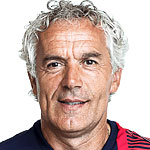 Roberto Donadoni
 Johan Cruijff
 Fabio Capello
 Giovanni Trapattoni
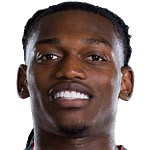 Rafael Leão
 Gonçalo Ramos
Todos os comentários (1)