Ahead of Liverpool's first Premier League match of the new season, club captain Van Dijk was interviewed by "Men in Blazers" presenter Roger Bennett at the club's training ground. He discussed Liverpool's new season, leadership, the departures of Salah and Robertson, and his thoughts on playing under new manager Andoni Iraola. Below is the first part of the interview.

Presenter: Great to have Virgil van Dijk back.
Van Dijk: How are you?
I'm doing great. Virgil, I have to say, the last time I was here, I shook your hand, and in the days that followed, everyone I greeted told me I smelled incredibly good. It was your cologne.
Well, I just try to be my best.
The new season is about to begin. This is your tenth season at Liverpool and your first under new manager Andoni Iraola. If you had to sum up Iraola's training sessions in one word, what would you say?
Football. High-intensity football. Yes, it's great. There's a lot of training content, many training sessions, tactical sessions, and small-sided games. Yes, it feels good.
What is his core philosophy? What themes does he emphasize in bringing this aggressive style of football?
His intention is very clear, and it's to win matches. Not just on weekends, but obviously in training as well, to bring high intensity, maintain fitness, keep running, and also have fun.
I want to talk about next season. But I need to mention last season. Last season didn't go the way you expected, facing some challenges beyond football itself. Now that you've had enough time to process it, what did you learn from it? What did it teach you?
I think the main point is that we went through a very difficult season to accept. It didn't meet the standards of a Liverpool player, nor the standards of Liverpool as a club. Obviously, in life, you're not always perfect, you're not always at the top. But the key is how you respond, and that's on us. It's up to us to work hard every day now. We're starting fresh. Everything is open, four competitions await us, which is exciting. So that's what we'll be fully focused on, and we have to do much better than last year.
It's hard to believe this is your thirteenth season in the Premier League. So much experience. Do you still learn as much each season now as when you started? Or does it start to feel like a few raindrops in a vast ocean?
That's a great analogy. But no, I'm absolutely learning constantly. Each year is different, football is constantly evolving. You play alongside different players and against different opponents. You're always learning and adapting. But ultimately, the key is to consistently demonstrate your ability. It's been a fantastic journey so far.
Now, the entire league is going through incredible changes, especially here. This is your first season without the legendary Mohamed Salah. Mo's impact on the pitch is unique, and his departure off the pitch is equally significant. Since returning this summer, have you felt Mo's absence? Or does football move so quickly and relentlessly that you can only focus on the present and constantly look forward?
Nothing is permanent. Obviously, you mentioned Mo, and he deserves it, because I don't think we can ever replace a player in the way he contributed to the club. In my opinion, that's something positive. But the same goes for Andy Robertson. Obviously, we used to have some very important players who formed the foundation of our success, and that's life. You have to move forward, adapt, and others have to step up.
You mentioned Andy Robertson, Mo... Ibrahima Konate also left. That camaraderie, connection, and leadership in the dressing room. As you start the new season, do you feel an added burden of leadership? Or do you see others in the squad stepping up to fill that void?
It's very early in the season, but the fact is that you have to take responsibility. You can't shy away from it, and you can't not want to take it on. So it depends on whether others can step up.
Who do you think will step up?
I think it's not good to name names. I think you'll see it gradually throughout the season. Let's see as the season unfolds. It's up to the players who clearly know they need to step up.
I want to talk about the defence. Ibrahima Konate, your partner for most of the last five years, has left, and you're building new chemistry. Jarell Quansah, twenty-one years old, Ronald Araujo. You've mentioned how chemistry between centre-backs takes time, training, and needs to develop. You mentioned that Jarell's English is better, but you and both players are working instinctively on defensive coordination. Can you talk about how you're getting on with these two partners and the differences you're noticing between them so far?
By coincidence, I've only had about five days of proper training with them. But in any job or profession, when you work with new colleagues, it takes time. It takes time to get to know each other, especially on the pitch, to understand each other's strengths and the weaknesses we need to cover for each other. Ultimately, the objective is to win matches, and we hope to do that by keeping clean sheets. Obviously, as the last line of defence with the goalkeeper, we play a crucial role in that. But I've said for years that it's not just about our defensive line—it's about how we defend as a team. The better we do from the front, the easier it ultimately is for the defence. So yes, we'll keep working.
How long does it take to build that chemistry?
Hopefully next week. But that's not how it works; it requires consistency and stability. The two players you mentioned just need to stay fit, stay healthy, keep improving, and keep learning what it takes to play a match every three or four days, especially from late September onwards. You have to embrace that, embrace the challenge—that's my advice to them. Embrace the pressure, because we all face pressure, and that's good. And they've shown very positive signs in the last 45 minutes, which is great. But now we need to do that consistently over the next 10 to 15 matches and beyond.
I want to talk about you. You're thirty-five years old, still young, still sitting here completely winding me up. But you entered the Premier League at twenty-four. LeBron James has talked about a growth mindset—how as he ages, each season he studies how to evolve his strengths as his body changes, improve his weaknesses, and he's started to rely more on his emotional intelligence and experience rather than the explosiveness of his early career. Do you feel you've changed your style of play in this league as you've aged?
Yes, I'd say that as a centre-back, my personal opinion and feeling is that you improve with time and experience. In our position, once you make a mistake, you face the penalty of conceding a goal or giving the opponent a big chance. So you simply have to try to learn from those moments, and also learn from good moments—how to win honours, how to handle the team, how to deal with losses, unfortunately, whether it's losing a final or suffering injuries, and so on. So you have to absorb all of that. Over the years, I think my style of play has changed considerably. It's something I really enjoy.
Traduzido por IA.
O site do AF já está online! Acesse notícias completas, comentários, detalhes de partidas e estatísticas no seu computador. Acesse: www.allfootballapp.com
 Liverpool
 Tottenham Hotspur
 Trabzonspor
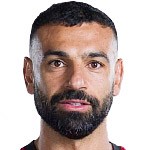 Mohamed Salah
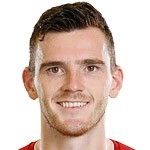 Andrew Robertson
 Virgil van Dijk
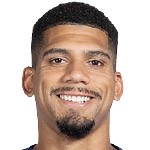 Ronald Araujo
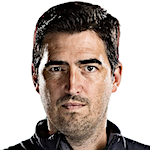 Andoni Iraola
 Jérémy Jacquet
Todos os comentários