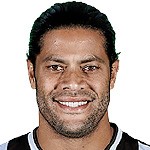
Brazilian striker Hulk visited Romário's show and had a lengthy conversation with him. In the interview, Hulk recalled his experiences playing in Japan, Porto, Zenit, China, and Atlético Mineiro. This is the first part of the exclusive interview.
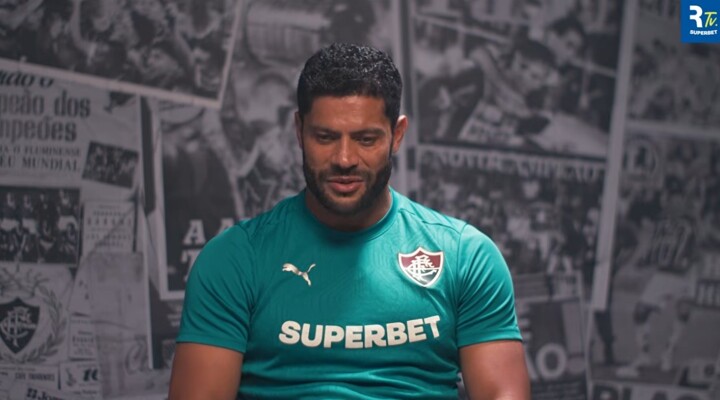
Brother, it's great to have you on our show. First, let me ask you, you left Brazil very young to play in Japan. How did you adapt back then?
For me, it was something that worried me a lot at the time. Because my career had just started, and I didn't even speak Portuguese very well yet, and I was already heading to Japan. But when I got there, I had a very positive feeling. That country gave me everything I needed, and I adapted quickly. For me, at that time, that experience was very good.
Is Japanese football more similar to European football or Brazilian football?
I think Brazilian football is very technical now. It wasn't like that before; back then, we had more space to play, so there were many transitions between attack and defense. When I first arrived in Japan, there were also many transitions in their games. So, compared to European football, there are still some differences.
Did your experience in Japan help you handle the pressure of playing in Europe better? Were you more relaxed and calm when you actually arrived in Europe?
I think when we arrive in Europe, we tend to be calmer. I think it's different from our own country; playing in Brazil comes with greater pressure. Especially when you go to Europe very young, I usually say that once you're there, you'll receive full support from the coaching staff and they'll help you adapt. I joined Porto in 2008, and the head coach at the time was Jesualdo Ferreira. He really helped me a lot and made many things easier for me.
You won 11 trophies in 5 years at Porto. In your opinion, was that the best period of your career?
I think even if it wasn't the best period, it was definitely one of the best. We won the Europa League and the Primeira Liga undefeated. I was also called up to the Brazilian national team for the first time in 2009. So it was a very special moment. I think it was probably one of the best periods of my career.
You must have worked with many Portuguese coaches. Now, these Portuguese coaches have indeed entered in large numbers into our football scene, especially in Brazilian football. And there's Mourinho, one of the most famous coaches among them. Do you think there's something different about Portuguese coaches compared to ours?
I don't think so. I think each one has their own way of reading the game, and different philosophies and coaching schools of thought. I think it's more about the era.
There was a time when Brazilian coaches were very popular. Luxemburgo coached Real Madrid, and Scolari was also a very respected coach; he coached Chelsea and went to many places around the world. When Argentina won the World Cup, many Argentine coaches also started to emerge.
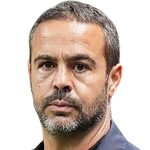
And now, I think Portuguese coaches are indeed very prominent, especially in Brazilian football. I think that's related to their achievements. For example, Abel won important titles after coming here. And the coach who is now coaching Cruzeiro, who previously coached Botafogo and won the Copa Libertadores, I can't remember his name right now.
Arthur Jorge.
Jorge, yes, Arthur Jorge. So these achievements give credibility to Portuguese coaches and increase their value. I think now is the time when Portuguese coaches are valued in Brazilian football.
They are indeed very sought after now.
Yes, very sought after. Very sought after, really very sought after.
After Mourinho went to manage in England, did he consider taking you there? Why didn't it happen in the end?
I stayed at Porto for 4 years, and almost every transfer window there was the possibility of me moving to England, but Porto always kept me. They didn't want to sell me, they simply didn't want to sell. In the 2010/11 season, we won the Europa League, we won the Primeira Liga undefeated, and we almost won everything. That year was really incredible.
After that, Porto sold Falcao to Atlético Madrid, and then they received an offer from Manchester City for me. At that time, if they were to sell me, the offer was 60 million euros. I only found out about it later.
But Porto said they wouldn't sell me. They wouldn't sell because they had just sold Falcao and didn't need more money by selling players.
The next year, I remember Villas-Boas went... he went to Chelsea from Porto, or to Tottenham?
Chelsea.
Yes, it was Chelsea. He wanted to take João Moutinho and James Rodríguez at the time, if I'm not mistaken.
No, it was João Moutinho and Álvaro Pereira.
Yes, I think that's right. Anyway, in the end, he couldn't sign them. So the European transfer window closed. And at that time, I was the only player who received an offer from Russian football. The European transfer window had already closed, but Russia still had about a week left.
I received an offer from Zenit. At the time, I considered it seriously because I had already agreed to a contract extension with Porto, and I also knew that the club had rejected an offer to let me go to England the year before.
So I thought: "Brother, I think it's time to leave." I could still play in the Champions League and go to a completely different league. Of course, I had the opportunity to play in England.
When you went to Russia, was that market very attractive in all aspects at the time? Not just financially. Was Russian football also starting to receive more attention in Europe back then?
I think so. Because they invested a lot of money at the time. For example, they also signed Belgian player Witsel, and many other famous players. Eto'o also went to Russia, so indeed many renowned players were going there at that time.
At the same time, we could also play in the Champions League, and Zenit was also a very strong team at the time. So these factors weighed a lot, and it wasn't just for financial reasons.
Did you experience racism in Russia? How did you deal with that situation at the time?
It was very difficult, really very difficult. Because when I arrived in Russia, some jealousy started to appear in the dressing room. The Russian players were a bit resistant to our arrival because of the salaries of Witsel and me, and our transfer values.
So that started to create an uncomfortable atmosphere in the dressing room. I even offered to leave, but the president wouldn't let me.
And in some games, opposing fans also targeted me and sang racist chants. That period was really difficult, and I suffered a lot. Later, I prayed to God, hoping he would give me enough discernment to know how to deal with the situation.
Then something happened that even surprised me a bit. Once I went to take a corner kick, and the fans started doing it again. For some reason, I suddenly started blowing kisses to the stands and laughing at them.
Did that happen again in other places later? Or did it never happen again after experiencing those racist incidents in Russia? That is, was it mainly during that period in Russia?
That time in Russia was the last time. I also encountered it once in Portugal, but I didn't hear it at the time; I only found out later when I saw the video. It seems it was even in a match where I scored. But after leaving Russia, it never happened again.
Traduzido por IA.
O site do AF já está online! Acesse notícias completas, comentários, detalhes de partidas e estatísticas no seu computador. Acesse: www.allfootballapp.com
 Cruzeiro
 Fluminense
 Manchester City
 Japão
Japão
 Porto
Porto
 Zenit São Petersburgo
 Hulk
Hulk
 Artur Jorge
Todos os comentários