According to Chengdu Ruileis, on September 13 local time, in Saarland in southwestern Germany, a particularly special match is coming for Elversberg.
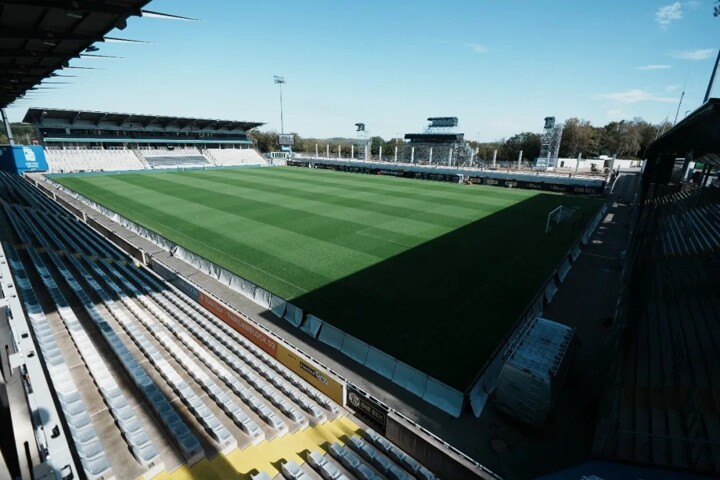
Before the match, a journalist brought "Paul" the panda from Chengdu, the birthplace of pandas, into the home stadium of this new Bundesliga team for a tour. The tunnel, player lounge, dressing room, sky box... The journalist explored step by step with club officials, walking through the areas that players and fans will pass through on match day.
The stadium is not large, and due to ongoing expansion, the player dressing room is still housed in a temporary prefabricated building. But it is here that this team from a small German town—which has climbed from Germany's lower leagues to the Bundesliga—will face FC Bayern Munich for the first time in official competition history.
About 8,000 kilometers away, Chengdu football fans had extended this invitation to the German city: "Welcome to the birthplace of pandas to see the giant panda." Now this invitation has reached Elversberg with the journalist. From Chengdu's Eastern Suburb Memory to the Bundesliga stadium in this small German town, the panda has created a remarkable connection between two places originally far apart.
The municipality of Spiesen-Elversberg, where Elversberg is located, has a population of only about 13,000 people, and the team's home stadium can accommodate approximately 10,000 spectators. Compared to the stadiums of European giants, which often hold tens of thousands, the scale here is particularly compact.
But inside, there are many details designed to meet Bundesliga match requirements. Club officials told the journalist that they invested approximately 200,000 euros just to improve the stadium pitch. Due to continuous expansion, the team dressing room is currently housed in a temporary prefabricated building. Walking further down the player tunnel, the journalist reached the point where players from both teams will enter on match day. "Today, Elversberg and Bayern players will walk onto the pitch from here," the club official said.
Next is the visiting team dressing room. "Kane or Olise might sit here," the club official said, reflecting how the club's expectations for facing this German football giant visiting their home stadium for the first time are written into every detail of their preparations.
This anticipation is also reflected in the ticket sales. "This is the first time in club history that we face Bayern," the venue official added, noting that the number of people hoping to buy tickets for this match is approximately 10 times the maximum stadium capacity. For a town with a population of just over 10,000, the atmosphere is far more intense than the club had anticipated, even before the match has begun.
This team's growth trajectory has exceeded many people's expectations. After promotion to 3. Liga in 2022, then to 2. Bundesliga in 2023, and then to the Bundesliga for the first time in the 2024/25 season as runners-up in 2. Bundesliga, 119 years after its founding, Elversberg finally reached Germany's top football league and became one of the smallest towns in Bundesliga history to host a club. Since the new season began, they have successively beaten Bayer Leverkusen and Borussia Mönchengladbach, becoming a "dark horse" attracting significant attention in the early season with two consecutive victories.
Tonight, they will face Bayern at this stadium. A special "twelfth man" is also busy here—the official told the journalist with a smile that Paul the panda is a "very important player" in this match.
Why does a team from a small German town use a panda as a mascot? At Elversberg, the answer to this question is quite straightforward.
During the interview, the journalist met Ralf Hasselberg, the team's 66-year-old staff photographer, and was invited to his home. Speaking about Paul, he said with a smile: "The team's colors are black and white, and the panda is black and white. It looks a bit clumsy, and while it might seem awkward at first, remember that the panda is still a bear and it is very strong. This matches our team's image perfectly."
The black and white color scheme was the most fitting coincidence. After climbing from a small town into the Bundesliga, the concept of being "easily underestimated but possessing inherent strength" has given this panda a personality that resonates even more with the team.
Today, Paul is no longer just a mascot standing by the sideline to create atmosphere. The journalist visited the merchandise shop, which stocks many panda plushies, clothing, and other merchandise, with fans occasionally coming in to browse. Officials told the journalist that adding panda elements has "significantly boosted team merchandise sales." Yannick Grieß, the club's head of marketing and brand partnerships, presented the journalist from Chengdu with a personalized match shirt and a Paul plushie: "Welcome to the panda family."
The phrase "panda family" gives this long journey a very specific meaning. Previously, at Chengdu's Eastern Suburb Memory, fans of the Chengdu Bayern Supporters Club had extended an invitation to German friends: "As football fans and residents of Chengdu, we invite German football fans and friends to visit Chengdu, travel around the birthplace of pandas, and see real giant pandas."
Now this message has been brought to Elversberg, 8,000 kilometers away. A local resident told the journalist that he had seen pandas in a zoo before, but often learns about them through television. "Now Paul is part of our team, and there's even a fan club organization named after 'panda.' If I get the chance, I would really like to go to Chengdu to see real giant pandas."
แปลโดย AI
เว็บไซต์ AF เปิดตัวแล้ว! ดูข่าว ความคิดเห็น รายละเอียดแมตช์ และสถิติครบถ้วนบนคอมพิวเตอร์ของคุณ เยี่ยมชม: www.allfootballapp.com
 Bayern München
 Elversberg
Todos os comentários