During the FIFA World Cup period, Kyle Walker served as a columnist for The Sun. On June 17th Beijing time (UTC+1), he published a new article sharing his views on Harry Kane.

I've played alongside Harry Kane many times at Tottenham and for the England national team, and I can say the effort he's invested to become the player he is today is extraordinary. People don't truly understand how hard he's worked to become one of the world's best strikers.
I joined Tottenham at 19 and trained regularly with players Kane's age—Andros Townsend, Steven Caulker, Ryan Mason, and Tom Carroll. We had a good group, but Harry was slightly overweight and didn't stand out much. He'd be the first to admit that.
Then Harry went out on loan. But I wouldn't even say he came back a better player—because he was loaned out repeatedly to Leyton Orient, Millwall, Norwich, and Leicester City, mostly sitting on the bench with limited playing time.
Yet he was always diligent in training, constantly working on shooting and finishing. And I say this as someone who counts Harry as a good friend: he's not the quickest player. So he had to sharpen his technical skills when operating in and around the penalty area.
He needed composure, and he'd often drill one-touch and zero-touch finishes with Jermaine Defoe. He developed an incredibly precise sense of shooting angles and perfected the technique of placing the ball into the far corner—a finish that makes it nearly impossible for goalkeepers to save.
Today, he faces enormous pressure, but the way he handles it is remarkable. Throughout his career—at Tottenham, England, and now Bayern Munich—the scoring burden has fallen squarely on his shoulders. When Kane doesn't play, the team typically struggles to score.
The aura he projects doesn't come from his personality off the pitch, but from his character on it. He speaks through his football, consistently delivering goals and exceptional performances, setting an example through his work on matchdays in front of 95,000 fans, but also in training and the gym.
I like to compare it to performing in darkness. It seems easy to perform well when 95,000 spectators are cheering and praising you. But true success comes from effort no one sees. That's what makes a truly great player.
I remember after he scored against Aston Villa thinking, "It's just one match—can he sustain this?" Harry was incredibly grateful to Sherwood for bringing him into the team, but it was probably an easy decision since Roberto Soldado wasn't scoring at the time.
Sherwood also brought in Adebayor, who had been abandoned by former manager Villas-Boas, and paired him with Harry. Suddenly, they had fantastic chemistry, Kane started scoring, and the rest is history.
He broke his nose, wore a mask against Arsenal, and scored. Then he removed it, started running, and I thought: "Your future is limitless. Because you love scoring, nothing will stop you."
We often joked that a defender could play brilliantly for 90 minutes, but if someone slots it through his legs into the top corner in the 91st minute, suddenly he's had the worst match of his life and gets a 4 out of 10. Meanwhile, Harry Kane could have a terrible 90 minutes, score the winner, run off the field, and everyone says, "Harry Kane has done it again, helping England reach the final or win the World Cup." That's the difference in our jobs.
But he's grown tremendously as a man and as a captain. I'm genuinely amazed at how brilliantly he's handled the captaincy. He used to be quiet, a bit shy, didn't talk much, but now he's completely transformed.
He could become one of England's greatest captains, perhaps alongside Bobby Moore. It comes with immense responsibility—maintaining a certain image seven days a week, 24 hours a day—but Harry Kane is a shining example of what an England captain should be.
I was fortunate enough to serve as vice-captain under him with England, and it was a wonderful experience. He's extremely frank, very sharp, and highly intelligent. His approach with individual players differs from when he addresses the whole team.
When addressing the team, he emphasizes that we're England and delivers his message with tremendous clarity and directness. He doesn't shout or berate like a hair dryer, but when there's something to convey, he makes it crystal clear.
Kane's biggest challenge in recent years has been ankle injuries, but he's overcome that and put in considerable strength and conditioning work to manage his injury situation. He's now playing 40–50 matches per season, which may not have been possible during our Tottenham days. Now he's reaping the rewards of that effort—and that's excellent news for England.
AI翻訳。
 Тоттенхэм Хотспур
 Бернли
 Уокинг
 Бавария Мюнхен
 Emmanuel Adebayor
 Джермейн Дефо
 К. Уокер
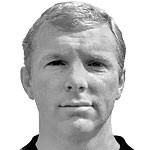 Bobby Moore
 H. Kane
 Tim Sherwood
 FIFA World Cup
Все комментарии (6)