According to Sky Sports, in England's two matches against Croatia and Ghana, the expected goals against (xGA) was just 0.87. However, the team repeatedly showed defensive vulnerabilities in both games. With Reece James sidelined by injury, likely for the rest of the tournament, England's defence still has time to develop cohesion.
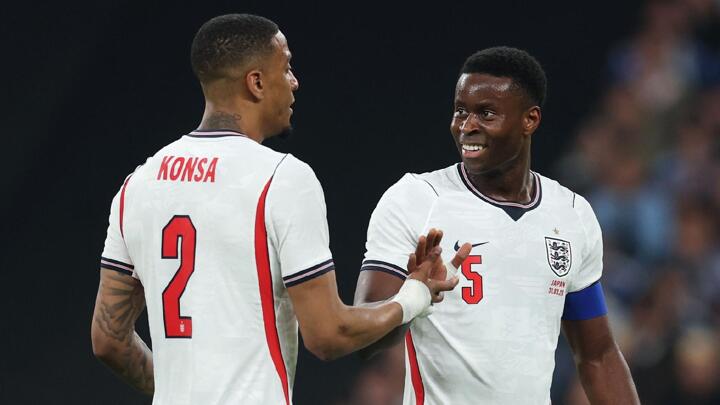
According to reports, England demonstrated defensive problems in both opening group stage matches of the World Cup. The attack was subdued against Ghana, and the "Three Lions'" second-group-game curse struck again, making this performance particularly disappointing. However, Thomas Tuchel's biggest headache may lie elsewhere on the pitch.
Against Ghana, England allowed the opposition just one shot on target throughout the match, and the combined xGA across both group stage matches was only 0.87.
However, a reckless challenge by Ezri Konsa on Prince Adu, which should have been a penalty, was missed by the referee. The overlooked call sparked serious controversy, and Ghana manager Carlos Queiroz even sarcastically questioned whether the VAR system was working properly.
In the previous match against Croatia, England struggled throughout the first 45 minutes against an ageing team. Only after an inspiring halftime talk from Tuchel did the team gradually stabilise, though defensive issues remained. Had Harry Kane not scored in added time, their upcoming Dallas fixture would have been nerve-wracking.
England conceded no goals in World Cup qualifying, but now, facing two teams considered to have limited competitiveness at this tournament, their defence looks vulnerable. With stronger opponents to come, time for adaptation is running short.
Reece James's injury compounds the problem further: the right-back is likely to miss all remaining World Cup matches due to a hamstring injury.
The saying "Defence wins championships" is equally applicable in football at any knockout stage. Looking back at the first 32-team World Cup format in 1998, five of the seven champions since then kept clean sheets in all group stage matches or conceded just one goal. Spain's 2010 side is the classic example; they won all four knockout matches 1-0, scoring just 8 goals in the entire tournament, completely at odds with prevailing perceptions of that team at the time.
Of course, there are exceptions. The 2022 champions, Argentina, conceded 8 goals throughout the tournament, making them the World Cup champions with the most goals conceded since West Germany in 1954. However, they had a player many consider the greatest in football history, who could compensate for defensive shortcomings.
Even before this World Cup, defence was a serious issue for England. Most of the Three Lions' elite talent is concentrated in attack, and while each defender possesses decent individual ability, inevitable collective weaknesses exist.
Tuchel is aware of his defensive line's limitations. Against Ghana, he made two substitutions, both in defence, despite England being expected to dominate possession for most of the match.
The manager explained: "Jed Spence and Marc Guéhi earned the right to play. They add pace to our defence, and their profiles better suit our needs."
Marc Guéhi played consistently all 90 minutes, but Jed Spence failed to deliver the attacking contribution Tuchel expected. In the 66th minute, Spence was replaced by Nico O'Neill. While O'Neill could provide attacking thrust, his pace and defensive instincts were inferior to Spence's, creating counter-attacking opportunities for the opposition. Konsa's contentious foul stemmed from this substitution's chain reaction. Most of Tuchel's defenders face such compromises.
More concerning is that Ezri Konsa and Reece James were the only two defenders to start both group stage matches, and they are England's stable key players. Nevertheless, Konsa demonstrated multiple instances of defensive instability in both games.
If England later faces stronger opponents, they will naturally adjust their defensive tactics. However, in the first half against Croatia, the team was forced to sit deep in defence for extended periods, something Tuchel did not want to see, and the entire defensive line and midfield connection were full of gaps.
From an attacking perspective, defending without the ball actually suits England. The team can rely on quick transitions and through balls to attack opponents, best demonstrated in their second-half performance against Croatia.
But this approach also exposes the team's defensive weaknesses. Sky Sports pundit Gary Neville said after England's first group match: "Declan Rice and Elliott Anderson must play their best to protect our defence."
Tuchel constantly rotates defensive players, seeking the right balance between attacking power and defensive stability. However, frequent lineup changes and defensive instability make it difficult for defenders to develop long-term cohesion, which naturally harms the construction of a mature and stable defensive system.
Yet for England and manager Tuchel, there remain many objective reasons for optimism. Of the seven World Cup champions since the 32-team format began in 1998, none kept clean sheets in all group stage matches; each conceded at least one goal. Notably, these winning teams gradually integrated their squads during the relatively less demanding group stage schedule, slowly finding their rhythm and progressively solving various coordination issues.
Since the group stage remains incomplete, this is a critical period for the team to refine defensive details, eliminate integration problems, and repeatedly hone communication between defenders. England still has a chance to correct the defensive issues exposed at this stage.
If England beats Panama and tops their group, they will face only third-place finishers from other groups in the Round of 16, whose collective strength is relatively limited. The team can then use that knockout round to further improve defensive coordination.
However, if England advances to the Round of 16 and subsequently faces a powerhouse like Brazil, with world-class attacking prowess in the quarter-finals, the opposition's strength will increase significantly. The margin for error will shrink, and Tuchel's opportunity for defensive fine-tuning and adjustments will vanish entirely.
Currently, there remain clear doubts about England's defensive pairing combinations, and overall defensive stability is not guaranteed. As the tournament progresses and they face powerful teams with world-class attacking talent, England's overall defensive resilience will face an extremely serious test. Resolving this array of defensive vulnerabilities will become Tuchel's primary task, demanding careful consideration and effective solutions.
Переведено ИИ.
Сайт AF теперь доступен! Читайте полные новости, комментарии, детали матчей и статистику на компьютере. Посетите: www.allfootballapp.com
 Челси
Челси
 Астон Вилла
 Тоттенхэм Хотспур
 Манчестер Сити
 Англия
 Эзри Конса
 Рис Джеймс
 Марк Гехи
 Джед Спенс
 FIFA World Cup
Все комментарии (5)
Сегодня 00:42
Сегодня 00:41
Сегодня 00:37