Recently, various media outlets have confirmed that Todd Boehly, one of Chelsea's owners, will be selling his stake. The British media outlet The Daily Telegraph has published a column discussing Boehly's four years at Chelsea. Below is the full translation of that column.
Telegraph Column: 'Todd Boehly's departure from Chelsea will mark the end of one of elite football's strangest ownership stories'
Todd-Boehly, the chairman who became the public face of the club following the 2022 takeover, will soon depart, leaving behind a trail of bewildering decisions and nouveau riche antics.
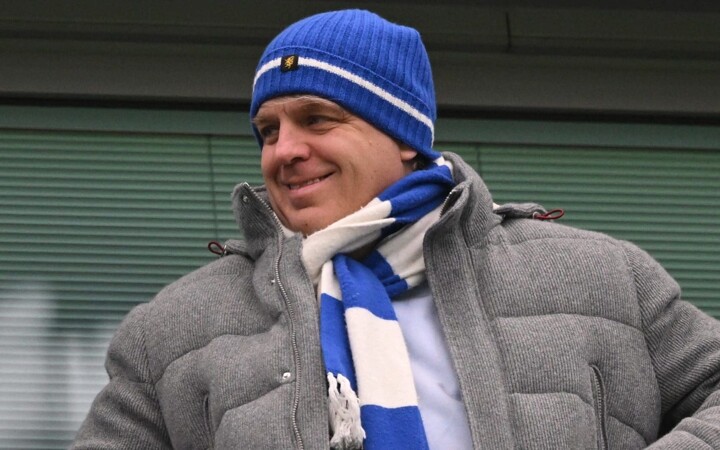
Boehly's era at Chelsea will be remembered for its turbulence and the strong influence of the primacy effect. As the spokesman for a loose consortium of billionaires, Boehly stepped into the spotlight, and the English football public never allowed him to "fade into the background". The primacy effect, simply put, means that once a first impression is formed, it is difficult to change later. The first impression Boehly left on Chelsea fans was complex and certainly memorable. This complexity stemmed from his reckless spending in the transfer market and his occasional amateurish comments.
It appears to be only a matter of time before Boehly and fellow investor Mark-Walter each sell their 12.83% stakes in Chelsea to Clearlake Capital, the consortium's largest shareholder. According to confirmation from various media sources, the deal has been struck, and what remains appears to be merely procedural. The third party in the consortium is 90-year-old Swiss billionaire Hansjörg-Wyss, and the fate of his 12.83% stake remains unclear. Wyss could casually stroll down Fulham Road with his senior bus pass, entirely unconcerned about being recognized, but Boehly does not have that luxury.
However, Boehly was never actually Chelsea's hands-on operator, at least not the key decision-maker—though, of course, following the disastrous summer 2022 transfer window, most people mistakenly believed he was the key decision-maker. Some might argue that his performance in that summer window alone was enough to cement his place in public perception. In 2022, newly involved in football, he served as interim chairman and director of sport. During that time, he signed Raheem-Sterling for £50 million, offering him a 5-year contract worth £325,000 per week. The deal has been repeatedly scrutinized since, not just because of the fee and wages, but because it became emblematic of Boehly's early decision-making style.
Had the contract been structured normally, it would not yet have expired, but Sterling has essentially retired from his career as a professional footballer. If his legal case this week does not go smoothly, it may not be the worst outcome. In other words, the contract remains valid, but the player's career at the highest level has effectively ended prematurely. Such disparities became one of the most striking images of Boehly's early tenure.
Back to Boehly—he once openly wondered why the Premier League does not hold an All-Star Game, acting precisely like an "outsider" new to football. Although his public statements were often deemed inappropriate, it was believed that he handled matters efficiently behind the scenes, for instance, Chelsea's core dilemma—whether to rebuild Stamford Bridge or seek a new location, which he placed on the agenda. Yet four years have passed, and nothing has changed. The stadium issue remains unresolved, and no clear direction has been set.
Among American executives who made high-profile entries early and were responsible for tackling various issues, including the Stamford Bridge relocation, only Jason-Gannon remains, currently serving as the club's "president". Casper-Stylesvik, as well as Chris-Jurasek and Janet-Marie-Smith, who were brought over from Boehly's Los Angeles Dodgers, have all departed. Whether Chelsea will acquire Earl's Court (the most viable new stadium site in West London) remains undecided, and no substantive progress has been made on related matters.
The stadium issue and team performance—these are not entirely Boehly's responsibility and must be borne by the entire consortium. However, following the summer 2022 transfer window, Boehly's role in Chelsea's day-to-day operations has been significantly sidelined, replaced by Behdad-Eghbali, senior partner at Clearlake Capital with a 61.5% stake, who now controls the overall situation. All parties will emphasize that every major decision requires the signature and approval of all consortium members, including Boehly, Walter, Wyss, and Eghbali's partner at Clearlake, José-Feliciano (whose involvement is more limited). Everyone states that strategic decisions, including managerial appointments, transfer strategy, and subsequent changes, require consensus.
For much of the past four years, Chelsea has effectively been Eghbali's domain. Before last year's Club World Cup final, Boehly appeared at the stadium alongside US President Donald-Trump, which is one of the perks of being chairman, but by then, relations between Eghbali and Boehly had already fractured, and the entire consortium was rife with tension.
Clearlake Capital's full acquisition will end one of elite football's strangest ownership models. So many tycoons inherently struggle to work collaboratively. According to Walter's statement, Boehly will make a modest profit from the sale of his stake, which no one has disputed. But no one will believe that Boehly originally acquired Chelsea merely for this modest gain. If he simply wanted quick returns, he would not have put himself at the forefront of the most visible Premier League stage.
Last month, Walter sold his NBA team, the Los Angeles Lakers, for £9.2 billion, while he is currently under investigation by the US Department of Justice for alleged financial impropriety, the scope of which remains unclear. Walter has expressed interest in continuing to invest in sports, but how many opportunities exist to acquire elite clubs like Chelsea? It was Boehly who brokered the deal in 2022, inviting Clearlake Capital to join the acquisition; even back in 2013, he nearly led another consortium to acquire Tottenham Hotspur.
Boehly has always coveted Premier League giants and knew that top clubs rarely become available for purchase, so he needed to leverage Clearlake Capital's private equity funds and invite them to join. However, private equity capital rarely sits idle when assets are mismanaged, and Clearlake was dissatisfied with operational performance in the first six months after the acquisition. Some even believe this was a predetermined strategy: let Boehly draw the initial criticism, then take control themselves.
Currently, well-informed Chelsea supporters largely know who runs BlueCo—the holding company established by the consortium, responsible for managing Chelsea and French club Strasbourg. BlueCo's player trading scale has been unprecedented in football, and to meet financial control requirements, it has also sold assets such as the Stamford Bridge hotel and the women's team through inter-group transactions, even incurring UEFA sanctions as a result.
The club claims that Boehly is the signatory on all decisions, which we will provisionally accept, but whether he is the architect behind the scenes is questionable. Signing off is one thing; making the final decision is another. Now he is departing, seemingly more like the best choice in current circumstances than part of his original ambitious plan.
Diterjemahkan oleh AI.
Situs web AF kini hadir! Lihat berita lengkap, komentar, detail pertandingan, dan statistik di komputer Anda. Kunjungi: www.allfootballapp.com
 Челси
Челси
 Тодд Боули
Все комментарии