The Premier League's VAR system is facing increased scrutiny following a controversial goal by Erling Haaland in the Manchester Derby. ProRef, the organization responsible for refereeing in the Premier League, acknowledged "incorrect application of discretion" and promised to review the incident, according to The Athletic. The core issue is that Premier League officials rely on two separate technology partners simultaneously, unlike major competitions such as the World Cup and Champions League, which use a single provider.
The Premier League's VAR system is under increased scrutiny following the controversial goal by Erling Haaland in Sunday's match between Manchester City FC and Manchester United FC.
The incident prompted ProRef, the organization responsible for match officials in the Premier League and other English professional competitions, to acknowledge "incorrect application of discretion" and promise to "review" the incident.
One problem is whether Premier League officials rely on two separate technology partners.
Unlike other major competitions, including the World Cup and Champions League, the Premier League's VAR and semi-automated offside technology do not rely on a single provider.
England's top league has separate contracts with Genius Sports for semi-automated offside technology operations and Hawk-Eye for goal-line technology, as well as an operator positioned next to the VAR official to control the video display of clips and angles.
Genius Sports employees also work at the VAR Hub in Stockley Park, but they sit in a separate room and communicate with VAR officials via radio.
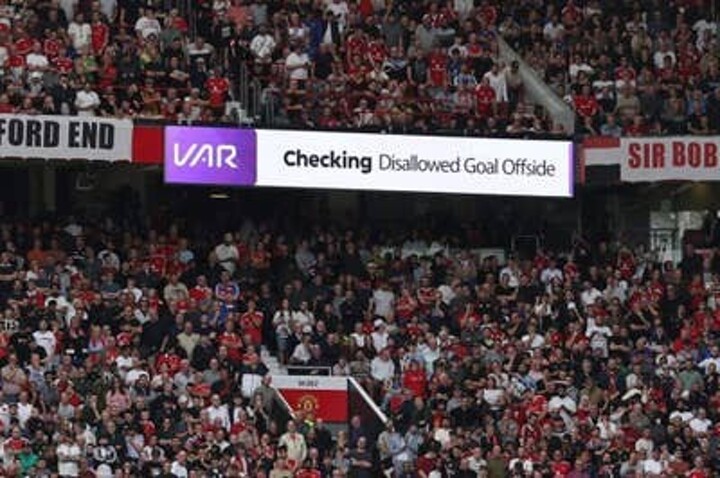
Following Sunday's failure, The Athletic answered key questions about the technology the Premier League uses, what went wrong, and why the controversy occurred.
A Critical and Costly Error
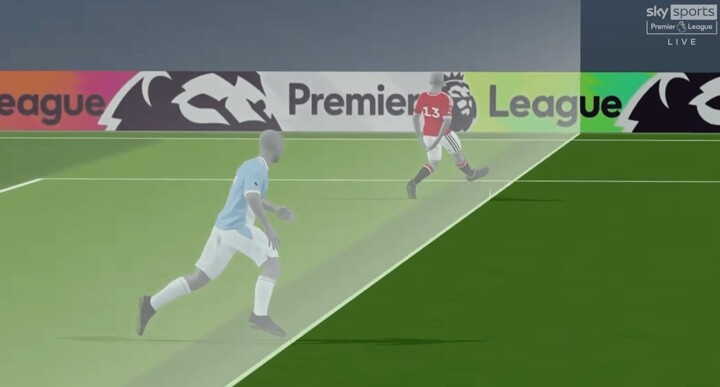
At Old Trafford, referee Michael Oliver initially disallowed Erling Haaland's goal for offside—at first glance, the striker appeared to be ahead of Manchester United FC defender Diogo Dalot as Enzo Fernández, Manchester City FC's midfielder, rushed in to meet the cross from an offside position.
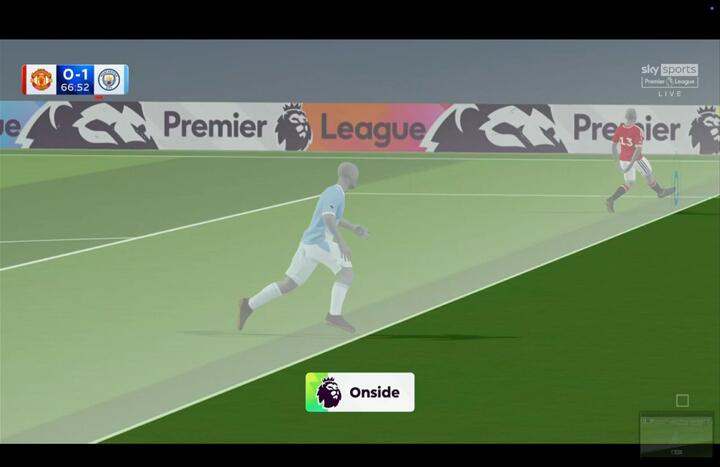
VAR official Matt Donoghue overturned Oliver's decision. As shown below, Diogo Dalot's foot kept Erling Haaland in an onside position.
However, this decision failed to account for the position of Enzo Fernández, who was ahead of Manchester United FC defender Lisandro Martínez at that moment.
Manchester United FC manager Michael Carrick called the decision to allow the goal "concerning."
On Sunday night, a ProRef spokesperson said the VAR official "failed to recognize the potential impact of [Enzo Fernández's] position and should have recommended an on-field review."
The statement read: "The on-field decision was that Erling Haaland was in an offside position—VAR reviewed and determined he was in an onside position. During that same phase of play, it was determined that Enzo Fernández did not touch the ball, so any offside by him would be irrelevant—however, VAR failed to recognize the potential impact of his position and should have recommended an on-field review."
The spokesperson added that ProRef had contacted Manchester United FC, "acknowledging that we believe this to be an incorrect application of discretion," and noted that "the incident will be reviewed."

Why Does the Premier League Use Two VAR Systems?
Before appointing Genius Sports to operate semi-automated offside technology for the 2024-25 season, the Premier League conducted a bidding process that allowed multiple companies to bid for the contract.
A Premier League source, who spoke on condition of anonymity to protect relationships, said having two different providers was not intentional.
This was because the Premier League chose Genius Sports over Hawk-Eye to provide semi-automated offside technology following the bidding process.
In a press release announcing the partnership in August 2024, Tony Schofield, the Premier League's former Chief Football Officer, said the league would use "the latest and most accurate technology available," adding that it would achieve "consistent application of offside lines."
Does This Make Decisions More Difficult?
"Whenever you're reviewing any incident, you're always aware of time, because from the numerous complaints about VAR, the time taken often stands out," said Graham Scott, a former Premier League referee and The Athletic columnist.
"But the problem with two systems is you start with one system. You have to check the incident first with regular full-speed replay footage, then you might start looking at a couple of slow-motion images."
Scott explained that this person is a Genius Sports employee who sits in an adjacent separate room.
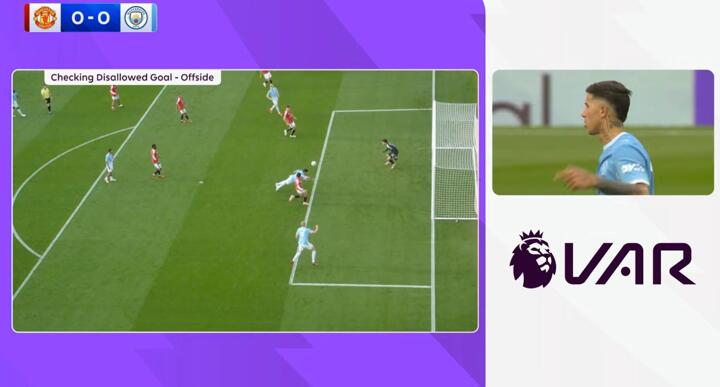
"You're hearing only their unseen voice, and then you have to start looking at another screen with lots of data you need to interpret in real time," Scott continued.
The former Premier League official further explained that if it's "a very straightforward offside," the system operates "smoothly, quickly, and intelligently."
But if the offside decision is marginal, the process takes "slightly longer." Scott argued that using two systems is "unnecessarily complicated."
Are There Plans to Consolidate Into a Single System?
No. Although it remains unclear when the Premier League's contracts with Hawk-Eye and Genius Sports will expire, it's possible the Premier League will continue using two providers, at least until one of the contracts ends.
Are Similar Situations Present in Other Competitions?
The use of two technology providers in the VAR process sets the Premier League apart from other major leagues and tournaments worldwide. FIFA and UEFA competitions rely entirely on Hawk-Eye.
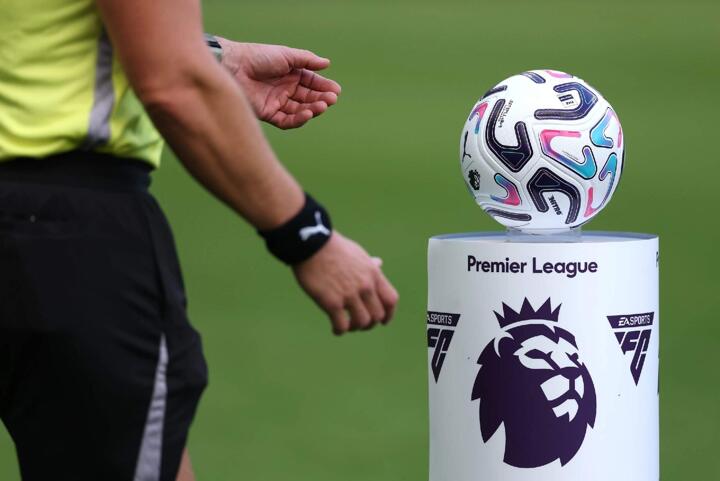
Additionally, there is no embedded chip in the ball for Premier League matches. Adidas holds the patent for Connected Ball technology, which feeds real-time touch data into the VAR room, enabling officials to make faster and more accurate decisions. Puma replaced Nike as the Premier League's official ball supplier for the 2025-26 season but does not have similar technology.
Did Using a Single System Succeed During the World Cup?
Apart from a controversial incident during the group stage match between Switzerland and Qatar on June 13 regarding whether Remo Freuler was in an offside position before being fouled by Qatar goalkeeper Mahmoud Abu Nada, the implementation of semi-automated offside technology went smoothly.
All players participating in the competition were scanned to create realistic avatars, which helped ensure the accuracy of offside decisions.
"The World Cup was a dream for offside decisions," Scott added. "Apart from the Switzerland match, all offside decisions were made within seconds."
แปลโดย AI
เว็บไซต์ AF เปิดตัวแล้ว! ดูข่าว ความคิดเห็น รายละเอียดแมตช์ และสถิติครบถ้วนบนคอมพิวเตอร์ของคุณ เยี่ยมชม: www.allfootballapp.com
 Манчестер Юнайтед
 Манчестер Сити
 Эрлинг Холанд
 Энцо Фернандес
 Патрик Доргу
Все комментарии