On June 18, Cape Verde goalkeeper Vozinha declared in an exclusive interview with TNT Sports Brazil that Messi is his role model, and he greatly hopes to face Messi in competition and exchange jerseys with him.
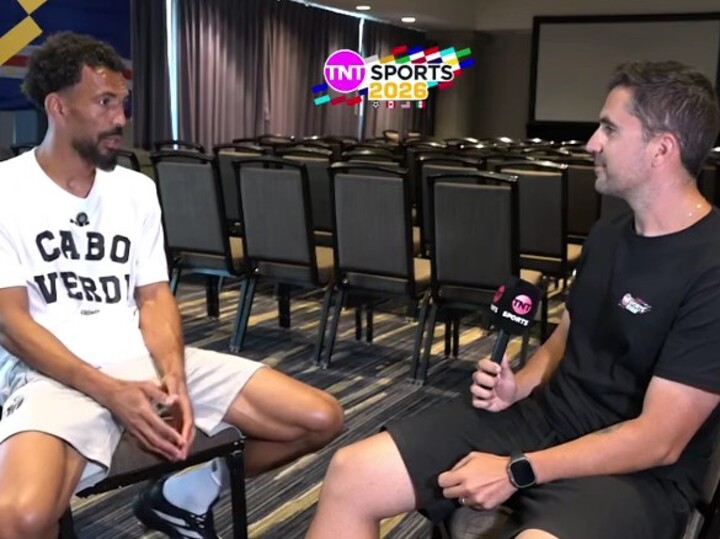
In the interview, Vozinha said, "I would love to face Messi and have the opportunity to get his jersey."
The reporter then asked, "Can you imagine this scenario? Cape Verde is leading 1-0. In the final minutes of the match, the opposing team is awarded a penalty—your specialty. The player taking the penalty is Messi, and you, Vozinha, successfully save it—you push the ball away. That would be an amazing achievement, even a dream come true."
Vozinha replied, "Yes, but if I actually save it, Messi probably won't exchange jerseys with me then (laughs). Yes, that could happen, but that's football. We're here to compete, to make things difficult for our opponents."
Regarding Cape Verde's draw with Spain, Vozinha said he has moved past those emotions. He believes it was a match the team prepared very well for. Although the outside world generally views Cape Verde's draw as an "unexpected surprise," internally, they always believed they could compete. "We knew the match would be difficult, but we also knew that as long as we stayed united and committed, we would have a chance to achieve the result we hoped for." He emphasized that the team's confidence never wavered.
Reflecting on his childhood, Vozinha spoke about the profound influence his grandfather had on his football career. He recalled that during his teenage years, his grandfather was ridiculed and doubted by others because he wasn't particularly talented and made frequent mistakes. But his grandfather always stood by him, constantly telling people on the street and at the sidelines, "My grandson is the best, and one day you'll see him in the national team." This statement became a crucial pillar of strength in his life, helping him stay focused on his goals.
However, family life was far from easy. He shared that his grandfather later developed chronic alcoholism, and his health gradually deteriorated—sometimes he would even collapse drunk on the street and be unable to get up, requiring him and his grandmother to care for him. Due to financial hardship, his grandmother once had to pawn her earrings and gold ring to cover daily expenses, and later redeemed them when conditions improved, just to ensure the family's basic livelihood and so he could eat and attend school normally.
Because of this, he doesn't drink alcohol. He admitted that he loves his grandfather deeply, the man who was always by his side throughout his upbringing, accompanying him through the most difficult years. "I cried after the match against Spain, largely because I was thinking about my grandparents," he said, emotions he keeps deep in his heart.
On starting his career, Vozinha felt he began relatively late as a goalkeeper. He recalled that he wasn't tall during his teenage years, and people generally believed he would have no future if he didn't grow taller. It wasn't until he was 17 or 18 that he experienced significant growth, and at that time, the football environment in Cape Verde was still largely amateur or semi-professional. Although he had the opportunity to develop in Portugal, the practical conditions weren't ideal, and he was also concerned about being unable to continue supporting his grandmother, so he chose to return home to continue his studies, even planning to study architecture as a backup career.
However, a year later, he became the starting goalkeeper for the national champions and was named Cape Verde's best goalkeeper. Reflecting on this experience, he acknowledged that he started his professional career quite late; it wasn't until around 2012 that he truly established himself on a stable professional stage, at which point he was 25 or 26 years old.
Regarding the attention from over 12 million social media followers, Vozinha said it completely exceeded his expectations. "To say I foresaw this scale would be a lie," he admitted, explaining that although he occasionally uses social media, he doesn't post regularly. Now, suddenly facing such massive attention, he finds it difficult to adapt, and can't even respond to every message—everything feels somewhat unreal.
He also clarified rumors related to his mother's visa. He said his mother never left the country and doesn't even have a passport; the farthest she's ever been is the beach. Initially, his mother said she wouldn't go, but when visa fees became an issue, she even suggested, "If we have to pay, why not pay for her?" because there are five people in the family, and the financial pressure was enormous. Later, even though related fee policies were adjusted, his mother never applied for a passport. It wasn't until his father was preparing to apply for a US visa that she reconsidered, but ultimately, she never completed the necessary procedures.
He used this to express his concerns, believing that economic barriers are genuinely unfair to ordinary people. "Many Cape Verdeans want to come to the World Cup but cannot because the costs and deposits are too heavy for them." He emphasized that this is not just a personal issue but a real difficulty that many ordinary families face. "The World Cup shouldn't only be for the wealthy."
Finally, when discussing his World Cup dreams, Vozinha said the team showed no fear of any opponent from their first day at the stadium. He believes that whether facing Uruguay or Saudi Arabia, the team will fight to win with the same belief. "For us, there is no burden; the pressure lies more with our opponents. The bigger the challenge, the more we can show Cape Verde's true face."
When asked to imagine meeting Argentina in the knockout stage, he said that would be an incredible scenario. In his heart, Messi is the embodiment of a player, and he very much hopes to compete on the same pitch with him, and even to exchange jerseys.
 อาร์เจนตินา
 เคปเวิร์ด
 เชฟ
เชฟ
 แอล. เมสซี
 โวซินญ่า
 อินเตอร์ ไมอามี
ความคิดเห็นทั้งหมด (9)