According to AS, two months after his right knee injury, De Jong's recovery is still not making significant progress. Barcelona believes surgery is the most suitable solution, but De Jong insists on trying all possibilities of conservative treatment first. If he eventually undergoes surgery, he may not return until April next year.
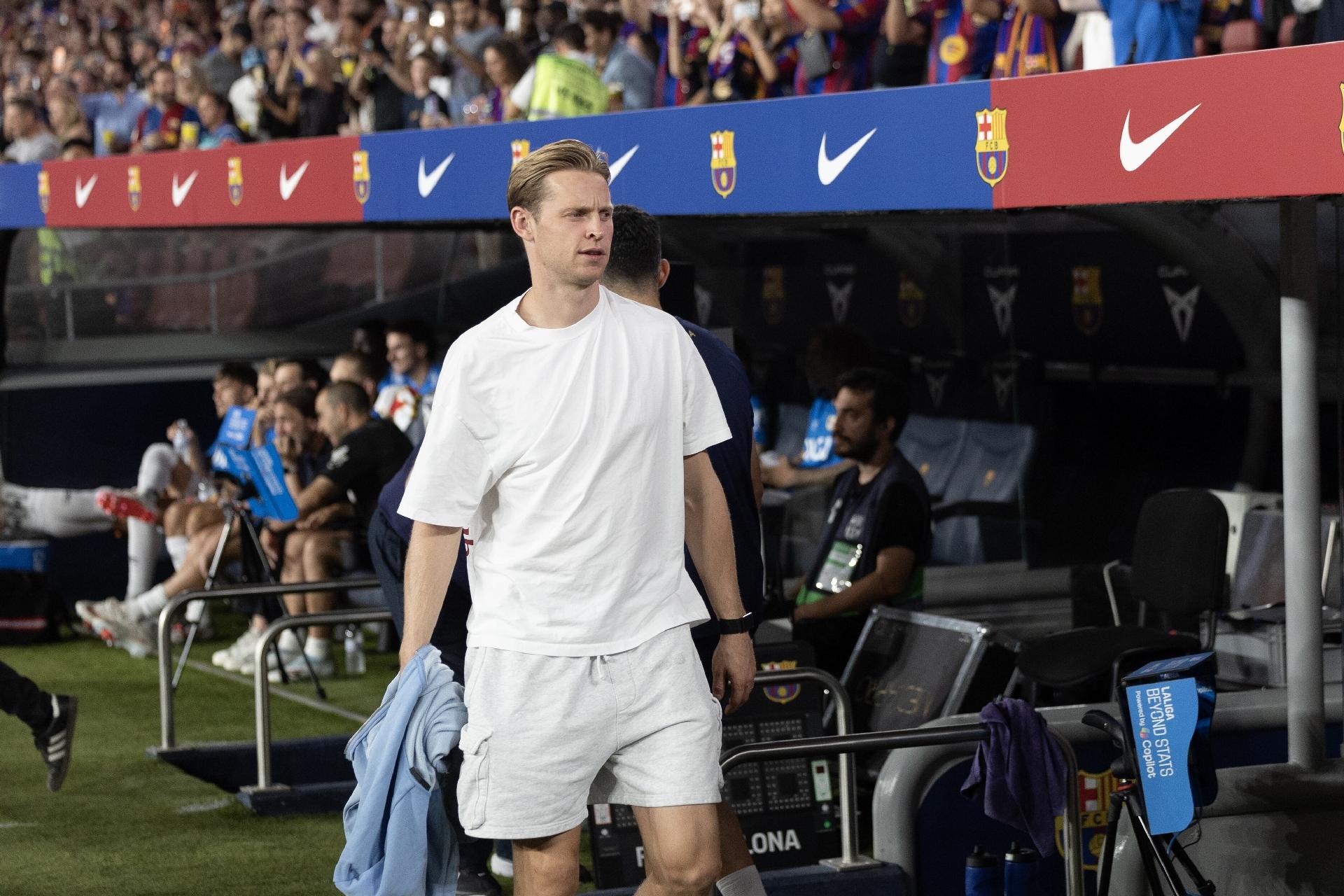
De Jong is currently at a critical crossroads. Since his World Cup journey ended due to injury on June 30, several decisions he made regarding his injury have caused controversy. The first and most significant was his insistence on playing the final three World Cup matches despite right knee pain. As the tournament progressed, his knee discomfort worsened, and he was visibly affected by the injury against Morocco.
De Jong explained that the doctors' previous diagnosis was incorrect and underestimated the severity of his knee discomfort. After the Netherlands was eliminated by Morocco, De Jong took a few weeks off and returned to Ciutat Esportiva Joan Gamper on July 13. His concerns were already evident then, as the knee pain had not subsided and swelling was very noticeable.
Subsequent examinations in Barcelona confirmed that De Jong had suffered a tear in his right medial collateral ligament. From that point, he had two treatment options.
The first was to undergo surgery, which would likely mean an absence of 5 to 6 months, but this method would best guarantee recovery of his right knee to nearly 100% condition.
The other option was conservative treatment. If recovery went smoothly, De Jong could potentially play again in about 3 months, but the risk was that it could not fully guarantee sufficient stability for the knee joint.
Faced with these two choices, De Jong did not follow Barcelona's medical team's advice but decided to pursue conservative treatment first, while also accepting the risk that he might not fully recover. After a month and a half of rehabilitation, De Jong returned to the field on August 25, hoping to test the stability of his right knee and his own physical condition. However, the result of this attempt was not ideal, and he ultimately had to stop the test, leaving the field visibly disheartened.
After the first setback in his rehabilitation, Barcelona again advised De Jong to reconsider his treatment plan. Surgeon Juan Carlos Monllau also met with the Dutch midfielder and suggested that surgery was currently the best solution.
However, De Jong still adheres to his decision, hoping to exhaust all possibilities that conservative treatment can offer. Currently, there are clear disagreements between the club and the player regarding the next course of action.
Barcelona insists that, to avoid situations similar to those experienced by Umtiti and Ansu Fati, undergoing surgery is currently the only truly viable path. But De Jong remains unwilling to choose surgery because he is also very aware that once he undergoes surgical treatment, he will miss approximately three-quarters of the season.
Meanwhile, some recent decisions by Barcelona have already reflected that the club does not have high expectations for De Jong's return in the short to medium term. The signing of Rodri and the promotion of Brian Farinas to the first team are considered very clear signals.
Currently, when discussing De Jong's recovery, Barcelona internally prefers to emphasize "daily observation" rather than provide a clear return date or specific predictions. The club understands that this injury is very complex, and its potential long-term impact is unpredictable.
For De Jong, the biggest problem is that time continues to slip away. Initially, all parties planned to spend 4 weeks evaluating the effectiveness of conservative treatment, but more than 6 weeks have passed with no significant progress and no signs of a quick resolution. New Dutch head coach Xavi was also asked about De Jong's situation at his inaugural press conference. Xavi stated that for De Jong, the most important thing right now is a full recovery. He also knows that De Jong will not be available for the Netherlands' match against Germany on September 24, when Xavi makes his national team coaching debut.
As it stands, the international break at the end of September is likely to be a crucial turning point in deciding De Jong's next treatment plan. If surgery is ultimately decided upon then, De Jong is expected to return to the field no earlier than April next year, which also means his season will essentially end prematurely.
If De Jong still insists on continuing conservative treatment, his specific return date will remain uncertain. Even in the most ideal scenario, he may not be able to attempt a comeback until November, and at that point, the extent to which his right knee can recover is also uncertain.
AF's PC site is now live! Browse full news, comments, match details and stats on your computer. Visit: www.allfootballapp.com
 เนเธอร์แลนด์
 เอฟซี บาร์เซโลน่า
 เฟรงกี้ เดอ ยอง
ความคิดเห็นทั้งหมด (15)