According to Sky Sports, England's matches against Croatia and Ghana combined saw only 0.87 expected goals against (xGA), yet the team has repeatedly exposed defensive vulnerabilities in both matches. With Reece James sidelined by injury and unlikely to feature for the remainder of the tournament, England's defence still needs time to gel.
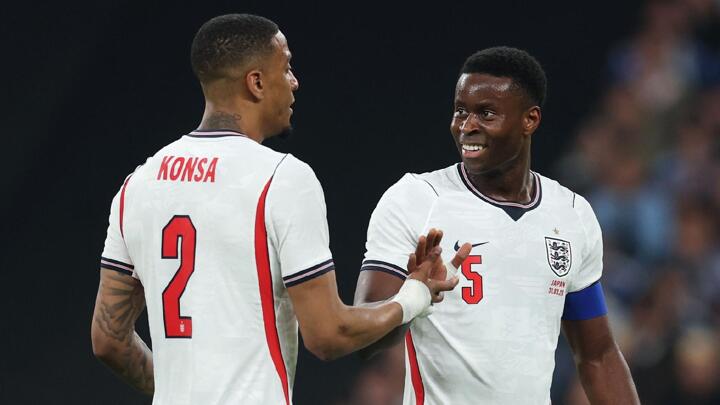
The report notes that England has shown defensive issues in both of their opening group stage matches at the FIFA World Cup. England's attack was restricted against Ghana, and the Three Lions' familiar second-match curse resurfaced with a particularly disappointing performance—but Thomas Tuchel's biggest headache may lie at the other end of the pitch.
Against Ghana, England allowed just one shot on target all match, with a combined xGA of only 0.87 across both group stage games.
However, during the match, Ezri Ngoyo made a reckless challenge on Prince Adu that should have been a penalty, yet the referee did not award it. This controversial decision sparked significant outcry, with Ghana coach Carlos Queiroz even questioning whether the VAR system was functioning properly.
In the earlier match against Croatia, England struggled throughout the opening 45 minutes against an ageing squad. Only after Tuchel's inspiring half-time speech did the team stabilize, and even then, defensive lapses remained. Had Harry Kane not delivered in extra time, England would have faced serious concerns about their Dallas fixture.
England conceded no goals during World Cup qualifying, but now, facing two teams generally considered to have limited competitive strength in this tournament, their defence has appeared fragile. Against stronger opponents looming ahead, there is little time to make adjustments.
Reece James's injury compounds these concerns, as the right-back is likely to miss the remainder of the FIFA World Cup due to an Achilles injury.
The saying "Offence sells tickets, defence wins championships" originates from American football, and in the context of football in the host nation of this FIFA World Cup, it applies equally to any knockout stage match.
Looking back at the first 32-team FIFA World Cup in 1998, of the seven champions since then, five kept clean sheets in five matches and conceded only one goal across the remaining two matches. Spain in 2010 exemplifies this perfectly; they won all four knockout matches 1-0, scoring just eight goals throughout the entire tournament—quite different from the prevailing perception of that team at the time.
Of course, there are exceptions. The 2022 champions, Argentina, conceded eight goals throughout the tournament, the most by any World Cup champion since West Germany in 1954. However, they arguably had the greatest player in football history, who could compensate for defensive shortcomings up the pitch.
Even before this FIFA World Cup began, defence was a major concern for England. Most of the Three Lions' top talent is concentrated in attack, and while individual defenders possess strong abilities, inevitable overall weaknesses remain.
Tuchel is aware of these defensive limitations. Against Ghana, he made two personnel changes, both in defence, despite England being expected to control possession for most of the match.
The manager explained: "Spence and Marc Guehi deserve to play; they add pace to our defence, and their playing style better suits our needs."
Marc Guehi performed solidly throughout 90 minutes, but Spence failed to meet Tuchel's attacking expectations. In the 66th minute, Spence was replaced by Nico O'Reilly, who, despite providing an attacking spark, lacked the pace and defensive awareness of his predecessor. As a result, the team faced a counter-attack, and Ngoyo's controversial foul stemmed from this substitution cascade. This type of offensive-defensive trade-off exists for most of Tuchel's defenders.
More concerning is that Ngoyo and Reece James are the only two defenders to start both group stage matches and are England's key defensive anchors, yet Ngoyo has shown defensive inconsistency across both matches.
Should they later face stronger opponents, England will naturally adjust their defensive tactics, but in the first half against Croatia, the team was forced into prolonged deep defensive blocks—something Tuchel does not want to see. The entire defence and midfield link were riddled with gaps.
From an attacking perspective, a defensive, possession-based approach doesn't truly suit England. The team can trouble opponents through quick transitions and through-ball opportunities, as most clearly demonstrated in their second-half performance against Croatia.
However, this style also exposes the team's defensive weaknesses. Sky Sports pundit Gary Neville stated after England's opening group match: "Declan Rice and Elliot Anderson must perform at their best to protect our defence."
Manager Tuchel has constantly rotated defensive players, determined to find the right balance between attacking capability and defensive stability. However, frequent defensive changes and inability to settle on a consistent lineup makes it difficult for defenders to develop long-term understanding, which naturally hampers the establishment of a stable and well-coordinated defensive system.
That said, both the entire England team and manager Tuchel have good reasons to remain optimistic. Of the seven champions since the FIFA World Cup expanded to 32 teams in 1998, not one kept a clean sheet throughout the group stage; each conceded at least one goal during a group match.
Without exception, these champions have leveraged the relatively low-intensity and seemingly easier group stage schedule to gradually integrate their squad, slowly find their rhythm, and progressively resolve various coordination issues.
With the group stage not yet complete, this is the critical period for the team to refine defensive details, address squad integration issues early, and continuously practise defensive coordination. England still has the opportunity to correct the defensive problems exposed at this stage.
As long as England defeats Panama and finishes top of their group, they will only face third-place teams from other groups in the Round of 32, teams with relatively limited overall strength. At that point, the team can use this knockout round to continue honing coordination among their defenders.
However, if England advances through the Round of 16 in Mexico and later faces a powerhouse like Brazil with world-class attacking firepower in the quarter-finals, the strength of their successive opponents will increase significantly, and margins for error will shrink considerably. Then Tuchel will have virtually no opportunity to fix defensive issues and make trial-and-error adjustments.
Currently, there remain clear questions about personnel combinations at every position in England's defence, and overall defensive stability remains uncertain. As the tournament progresses and they face a succession of strong teams with world-class strikers, England's overall defensive resilience will face an extremely serious test. How to address the current series of defensive weaknesses will become the core challenge for Tuchel, demanding careful thought and effective solutions.
Website AF đã ra mắt! Xem tin tức đầy đủ, bình luận, chi tiết trận đấu và thống kê trên máy tính. Truy cập: www.allfootballapp.com
 Chelsea
 Aston Villa
 Tottenham
 Man City
 Anh
Anh
 Ezri Konsa
 Reece James
 Marc Guéhi
 Djed Spence
 FIFA World Cup
Tất cả bình luận (5)
Hôm nay 00:42
Hôm nay 00:41
Hôm nay 00:37