The combined market value of the five leading European leagues eclipses the rest.
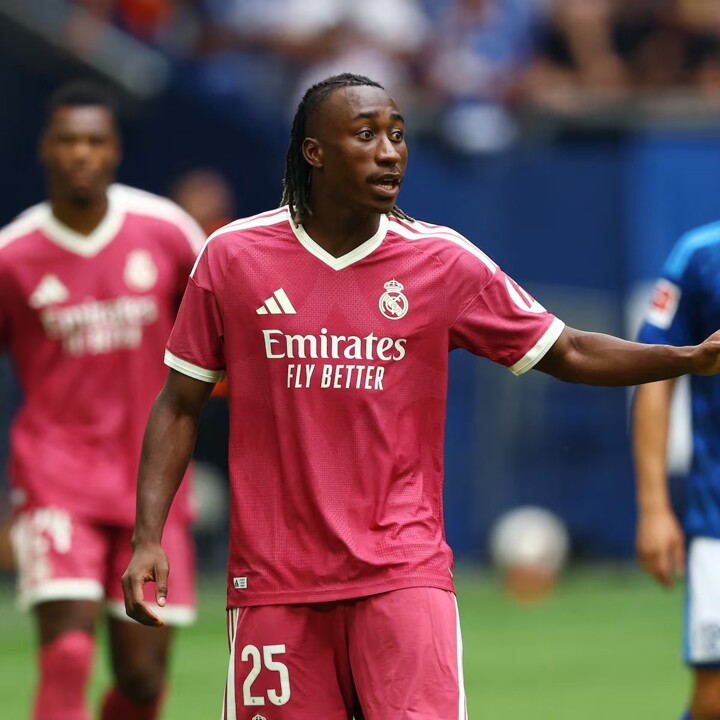
The world’s leading leagues, collectively known as the ‘Big Five’, are about to begin the 2026–27 season or have already done so, as is the case with Spain’s LaLiga, albeit imperfectly. The Premier League (England), Serie A (Italy) and Ligue 1 (France) will begin on August 21, while the Bundesliga (Germany) will kick off on August 28. The combined market value of Europe’s top five leagues stands at $37.2 billion (€32 billion). The figure underlines European football’s financial dominance, driven overwhelmingly by the Premier League, which alone accounts for almost 40% of the group’s total market valuation. England’s top flight has a market valuation of $14.6 billion (€12.56 billion) and generates more than $9.4 billion (€8 billion) in annual revenue. The figures come from the latest global economic studies of football published in 2026, notably Deloitte’s prestigious Annual Review of Football Finance, alongside market valuation reports from Winsports and Football Benchmark. “Breaking down” the numbers makes it increasingly clear that the future direction of the football business will be determined by a single league: the English one, with Real Madrid and Barcelona retaining secondary but significant influence. “Not even Bayern, which can challenge them, will have enough global influence to shape new practices. Even over the next decade, the major Italian clubs will be closer to the big Turkish clubs than to the English ones,” says Thiago Freitas, COO of Roc Nation Sports. Below the Premier League is LaLiga, with an estimated market value of $6.3 billion (€5.45 billion), followed by Serie A at $6.2 billion (€5.36 billion), the Bundesliga at $5.6 billion (€4.8 billion) and Ligue 1 at $4.4 billion (€3.8 billion). In terms of total annual revenue, the Premier League leads with an average of $9.4 billion (€8.1 billion), followed by LaLiga with $4.8 billion (€4.1 billion), the Bundesliga with $4.6 billion (€4 billion), Serie A with $3.6 billion (€3.1 billion) and Ligue 1 with $2.7 billion (€2.3 billion). LaLiga and Ligue 1, however, have particular characteristics, with club-generated income playing a particularly important role. In Spain, commercial activity surrounding Real Madrid and Barcelona stands out, while in France, PSG’s commercial revenues and matchday ticket sales are prominent. “The central point is that the major European leagues are increasingly focused on diversifying their revenue streams, alongside conventional efforts to expand and deepen existing sources. Broadcast rights remain fundamental, but sponsorship and matchday income have gained importance because they allow clubs to capture more value directly from their relationships with fans and brands. “From a financial perspective, this diversification reduces exposure to downturns or stagnation in media contracts and creates a larger, more stable, predictable and sustainable long-term revenue structure,” explains Moises Assayag, managing partner at Channel Associados. In the Premier League, for example, a large proportion of revenue comes from international television rights, while in the Bundesliga, ticket sales and local partnerships play a more prominent role. In Italy’s Serie A, commercial partnerships and brand revenues stand out. As the Big Five begin their respective seasons, the financial gap between England and the rest of the continent continues to widen, even as the total European football market surpasses, for the first time in history, the $46.5 billion (€40 billion) annual revenue threshold. According to market data and official UEFA reports, the growth in English clubs’ broadcast revenues over the past decade has nearly matched that of the rest of European football combined. The English top flight earns more than $4.1 billion (€3.5 billion) per season from broadcast rights, driven heavily by its global reach and international appeal. “The next big match for the European leagues is being played off the pitch. The competition now is to discover who can convert attention into revenue without becoming increasingly dependent on broadcast rights. “A sold-out stadium no longer means just ticket sales. It means hospitality, concessions, tourism, content, data and new commercial opportunities. In that respect, clubs that view the stadium and their fan base as business platforms will have an increasing advantage in the years ahead,” says Wagner Leitzke, head of business development at agency End to End. Conversely, continental leagues face a scenario of stagnation. LaLiga remains firmly in second place, but at a considerable distance from England. The situation is more concerning in Italy and France: Serie A suffered an estimated 3% decline in its latest domestic rights cycle, while Ligue 1 recorded an approximate 20% devaluation in television contracts, prompting the French league to pursue an experimental direct-to-consumer (D2C) streaming model in an attempt to limit medium-term losses. Despite the difficulties surrounding broadcast revenues, the commercial sector has experienced strong growth. A joint study by the European Sponsorship Association (ESA) and Ampere Analysis revealed that sponsorship generated a record $5.4 billion for the Big Five at the start of this season. Around 76% of that investment comes from international brands, led by companies from the United States, the Middle East and Asia. The Premier League and LaLiga have the world’s most valuable sponsorship and kit-supplier deals, with adidas the brand investing the most in European football, accounting for 11% of the total market. At the top of the individual commercial-revenue rankings are Spanish giants such as Real Madrid, whose sponsorship income and stadium modernisation generate more than $685 million (€590 million) a year, closely followed by Bayern Munich and Paris Saint-Germain. The Bundesliga stands out as the only major league in which most sponsors remain local and German in origin. Regarding matchday revenue, which includes ticket sales, in-stadium spending and corporate boxes, the Bundesliga and Premier League compete for leadership in efficiency. The German league has historically recorded the highest average attendances per match worldwide, thanks to more affordable ticket prices and a culture of full stadiums, with Dortmund and Munich leading the way. However, in gross monetary terms, the Premier League generates more because of higher ticket prices and its greater capacity to monetise corporate hospitality at modern venues. According to the Deloitte Football Money League, clubs that have modernised their sporting infrastructure have seen substantial increases in matchday revenue. Real Madrid and Barcelona have mitigated the decline in broadcast income through higher prices and the commercial capacity of their modernised stadium complexes, turning matchdays into genuine commercial and tourism goldmines. The transfer market in the world’s leading competitions continues to move at a rapid pace. In recent days, the market has been dominated by confirmation of major deals, including Yan Diomande, who became Real Madrid’s most expensive signing in history at $145.2 million (€125 million), placing the transfer among the five most expensive in the world. The move of Bruno Guimarães to Arsenal also boosted the figures, with the deal reaching $101 million (€87 million) and becoming the most expensive Brazilian signing of the season. Total spending currently stands at $7.6 billion (€6.5 billion). The top five spending leagues are led by England with $2.7 billion (€2.3 billion), followed by Italy with $947 million (€815.6 million), Spain with $703 million (€605 million), including Rodri’s arrival, Germany with $645 million (€555 million) and France with $445 million (€382.8 million), according to Transfermarkt data. The top 10 also includes England’s second division with $285 million (€245.3 million), Turkey with $284 million (€244.7 million), Saudi Arabia with $254 million (€219 million), Portugal with $242 million (€208.6 million) and Belgium with $139 million (€119.7 million). In Europe, the registration window for new players is open until September 1. Globally, seven of the 10 clubs that have invested the most so far are English. In addition to Chelsea, with $452 million (€389 million), the list includes Tottenham with $310 million (€267 million), Real Madrid with $261 million (€225 million), Manchester City with $203 million (€175 million), Arsenal with $195 million (€168 million), Newcastle with $187 million (€161.2 million), Juventus with $159 million (€137.2 million), Ipswich Town with $149 million (€127.9 million), Brighton with $146 million (€126.1 million) and Milan with $125 million (€107.4 million). Barcelona would join that group with approximately $174 million (€150 million) once Rodri’s signing is made official. “Reaching this amount demonstrates the strength and dynamism of the global football industry. While Europe is accelerating with large investments, the Brazilian market is adopting a more cautious and strategic stance. The challenge of modern football is precisely this: maintaining high-level competitiveness while ensuring the sport’s long-term financial sustainability,” says Alexandre Frota, CEO of FutPro Expo. “Historically, the mid-year transfer market in Brazilian football behaves differently from the start of the season. What we have observed so far, however, is an even more cautious approach from clubs. Moves have focused on targeted adjustments and specific replacements rather than wholesale squad overhauls, a direct reflection of the current financial climate and the search for greater budgetary responsibility in the country. “Still, activity is expected to intensify until the transfer window closes in September,” analyses Claudio Fiorito, CEO of P&P Sport Management. Get closer to the game! Whether you like your soccer of the European variety or that on this side of the pond, our AS USA app has it all. Dive into live coverage, expert insights, breaking news, exclusive videos, and more. Plus, stay updated on NFL, NBA and all other big sports stories as well as the latest in current affairs and entertainment. Download now for all-access coverage, right at your fingertips – anytime, anywhere. And there’s more: check out our TikTok and Instagram reels for bite-sized visual takes on all the biggest soccer news and insights.
 MU
MU
 Real Madrid
 Barcelona
Tất cả bình luận