Musiala recently spoke on social media about neurological issues he has been experiencing. The 23-year-old Bayern striker appeared affected by health problems during two warm-up matches. He subsequently stated that he has been diagnosed with "brief absence seizures that are treatable" caused by "neurological dysfunction."
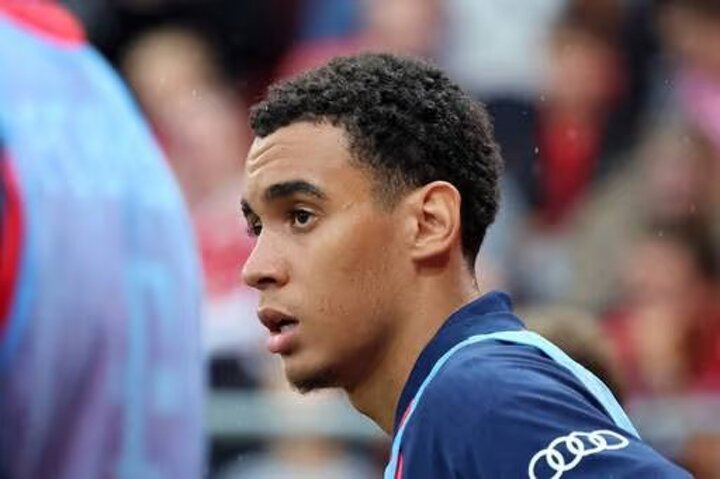
What exactly is happening? German SPORT1 interviewed Professor Andreas Schulze-Bonhage, Director of the Epilepsy Center at Freiburg University Hospital, to interpret the case from a medical perspective. The neurologist also discussed what such a diagnosis means for a professional player's career.
SPORT1: Professor Schulze-Bonhage, Musiala has been diagnosed with "absence seizures" and this is believed to be linked to "neurological dysfunction." It sounds concerning, but what does it actually mean from a medical standpoint?
Schulze-Bonhage: Absence seizures are a type of epileptic seizure. In layman's terms, an "absence" refers to a brief loss of consciousness, during which a person cannot react normally and their awareness is affected. Medically, a strict "absence seizure" is a specific type of seizure in generalized epilepsy. During a seizure, consciousness is impaired and lasts several seconds—often very subtle, but sometimes lasting 3, 5, 10, or 20 seconds.
SPORT1: What are the consequences?
Schulze-Bonhage: Typically, it causes the person to remain in a particular posture, or they may continue an action for a few more seconds. They generally do not fall but stand motionless. If the person is standing, they will suddenly stop. After an absence seizure ends, the patient immediately returns to normal awareness and continues the activity they were doing. Often, the situation goes unnoticed—for example, just a brief pause in conversation that is easily missed. If the person is moving, such as playing football, they may pause briefly and then continue. This is the hallmark characteristic of an absence seizure.
SPORT1: What is your assessment of Musiala's situation?
Schulze-Bonhage: I am not entirely convinced this is truly an absence seizure in the strict medical sense. There are roughly three reasons: First, this type of seizure is typically much shorter in duration. In the video, the seizure appears to last around one minute, which is uncommon. Second, absence seizures typically do not first appear at age 23. Of course, we don't know whether Musiala experienced similar seizures before, but if he did, they were well-controlled and therefore posed no problems. Actually, absence seizures typically emerge in childhood, not for the first time in people over 20. The third reason is that he still seemed somewhat confused when he was helped off the pitch. The hallmark of an absence seizure is that once it ends, the person immediately regains full consciousness and can resume activity right away. A more typical scenario would be a four or five-second pause, and then they could continue playing.
SPORT1: What other types exist?
Schulze-Bonhage: There are other types of epileptic seizures that the general public may also refer to as absence seizures. These also cause brief lapses in consciousness but last longer and are usually followed by a reorientation period. According to more detailed medical classification, these fall under consciousness disturbances caused by focal epileptic seizures. This means that, unlike generalized seizures where the entire brain's function is briefly affected, a small area of the brain is not functioning properly. This can also cause lapses in consciousness, pauses, and then a reorientation phase.
SPORT1: Of course, this is a very sensitive and personal topic for Musiala, and we don't want to make a remote diagnosis here.
Schulze-Bonhage: Yes, specific diagnostic testing is required. With EEG (electroencephalography), different types of epilepsy can be distinguished very accurately, and it can be determined whether it is an absence seizure or a seizure similar to absence seizures but not a classic absence seizure.
SPORT1: You mentioned that this type of absence seizure typically appears in childhood. Is this condition hereditary, or can it also be triggered later by other events?
Schulze-Bonhage: Strict absence seizures, which typically emerge in childhood, are indeed a form of what we call genetic epilepsy, meaning a broad genetic predisposition. However, it is not classical single-gene inheritance but rather results from multiple genes working together, which then increases the probability of occurrence within a family. For example, if a parent has absence epilepsy, the probability that their child will develop it is only 8%. Interestingly, this type of epilepsy is often age-related. The most common is childhood absence epilepsy, which typically appears between ages 4 and 8 and often resolves on its own. After treatment—for instance, medication can be discontinued after two years—and even without treatment, in most cases it resolves around age 10.
SPORT1: What about other types?
Schulze-Bonhage: There is also a type that appears slightly later, called juvenile absence epilepsy, which typically occurs between ages 8 and 15. Unfortunately, this type often persists, and therefore requires very long-term treatment, sometimes even lifelong medication.
SPORT1: How is this condition treated? How can this be reconciled with competitive sports, especially professional football like Musiala plays?
Schulze-Bonhage: Regardless of which type of epilepsy he ultimately has, we now have excellent medications that can treat both absence seizures and focal seizures. For absence epilepsy, with these medications, 85% of cases can achieve complete seizure control. This means that after taking medication, many patients will experience seizures rarely or not at all. For focal epilepsy, the success rate is slightly lower, but still around 70%. Both conditions can be controlled through long-term medication.
SPORT1: Will this affect daily life?
Schulze-Bonhage: The hallmark of epilepsy patients is that, despite these brief seizures, they are typically just as capable of working as anyone else. This means they can pursue their professions, from demanding management positions to competitive sports. This of course includes a football career. Brazilian legend Ronaldo also suffered from a type of epilepsy. Nevertheless, he became one of the greatest players of his era. Epilepsy does not mean someone cannot play football successfully.
SPORT1: Musiala himself wrote that he "hopes to continue pursuing his passion for football with the guidance of neurological experts," and that this will also aid his recovery. It seems the key is proper treatment; as long as it is well-controlled, he can continue playing football normally.
Schulze-Bonhage: Like many epilepsy patients, with today's well-tolerated medications, it is possible to completely control seizures and live a normal life. Therefore, we also hope that Musiala, like all our epilepsy patients, will ultimately succeed in doing so.
SPORT1: So the final decision to play is in Musiala's own hands? As for the club, Uli Hoeneß has stated they will consult with experts.
Schulze-Bonhage: Sports can certainly be pursued without restrictions; only very dangerous activities such as skydiving or swimming require extra caution. But playing football is perfectly fine; there is no medical reason not to play. If the club also supports him in doing so, which appears to be the case, then it is an ideal situation.
Diterjemahkan oleh AI.
Situs web AF kini hadir! Lihat berita lengkap, komentar, detail pertandingan, dan statistik di komputer Anda. Kunjungi: www.allfootballapp.com
 Bayern Munich
 Jamal Musiala
Tất cả bình luận