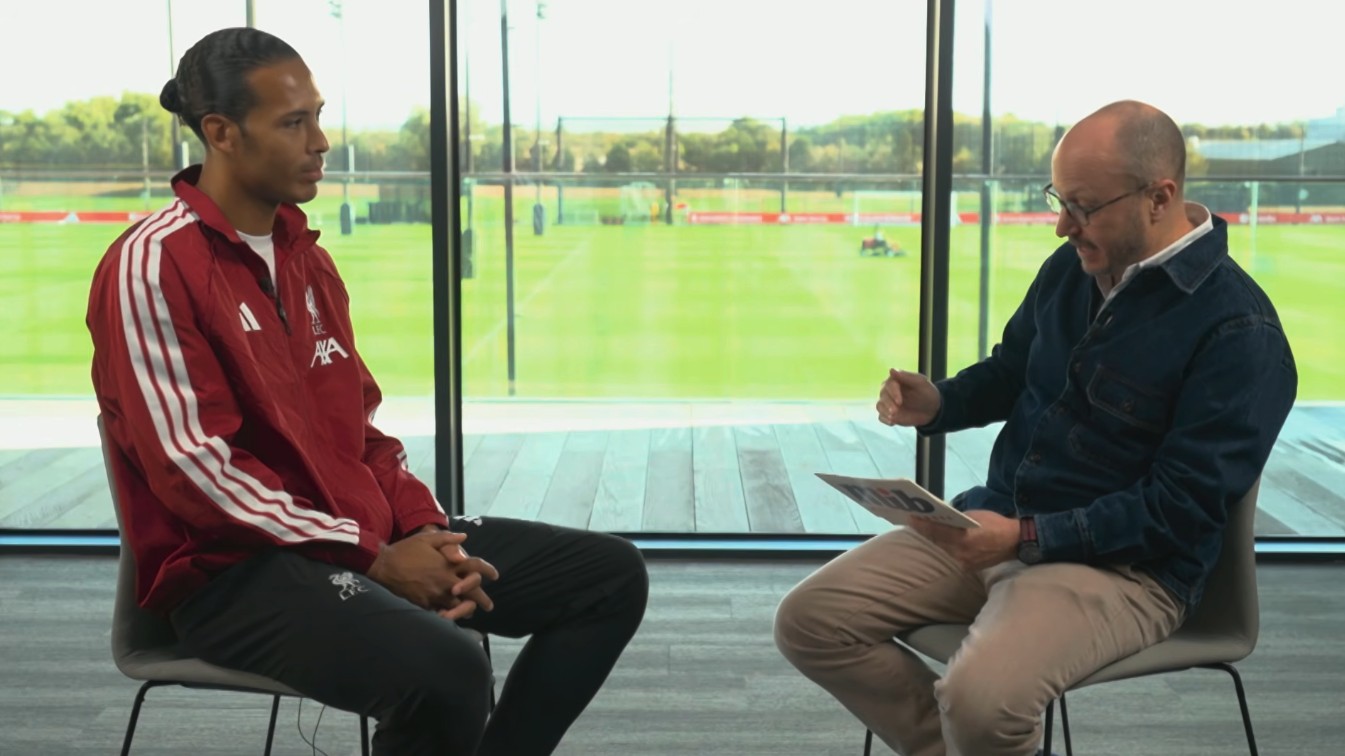
Ahead of Liverpool's first Premier League match of the new season, Reds captain Virgil Van Dijk sat down for an interview at the club's training ground with Roger Bennett, host of the "Men in Blazers" podcast. He discussed the upcoming campaign, his leadership responsibilities, Liverpool's departures of Salah and Robertson, and his impressions of new manager Andoni Iraola. Below is the first half of this exclusive interview.
Host: It's great to have Virgil Van Dijk back.
Van Dijk: How are you?
I'm doing well. Virgil, I want to say that the last time I was here, I shook your hand, and for the next few days, everyone who shook my hand thought I smelled incredibly good. It was your cologne.
Well, I just try to be the best version of myself.
The new season is about to begin. This is your tenth season at Liverpool and your first under new manager Andoni Iraola. If you had to sum up Iraola's training sessions in one word, what would you say?
Football. High-intensity football. Yes, it’s excellent. There is a lot of training content, including many sessions, tactical drills, and small-sided games. Yes, it feels good.
What is his core philosophy, and what are the key themes he emphasizes when implementing this aggressive style of football?
His intention is very clear: to win games—not just on match days, but in daily training as well—to maintain high intensity, stay fit, keep running, and enjoy it.
I want to talk about the upcoming season, but I do need to mention last season. It didn’t go as you expected, and you faced some challenges beyond football itself. Now that you’ve had time to process it, what have you learned? What did it teach you?
I think the main thing is that we had a very difficult season to accept. It didn’t meet the standards we set for ourselves as Liverpool players or as a club. Obviously, in life, you can’t always be perfect or at the top. But the key is how you respond, and that’s on us. It comes down to our daily efforts now, starting from scratch. Everything is open—four competitions await us, which is exciting. So that’s what we’re going to focus on completely, and we have to do much better than we did last year.
It’s hard to believe this is your 13th Premier League season. You have so much experience. Are you still learning as much each season as you did when you started, or does it begin to feel like drops of rain in a vast ocean?
That’s a great metaphor. But no, I’m definitely constantly learning. Every year is different; football is constantly evolving. You play alongside different players and against different opponents. You’re always learning and adapting. But ultimately, the key is to consistently demonstrate your abilities. So far, it’s been a great journey.
The entire league is undergoing significant changes, especially here at Liverpool. This is your first season without the legendary Mohamed Salah. Mo's impact on the pitch is unique, and his departure is equally significant. Since his exit this summer, have you felt his absence? Or is the pace of football so relentless that you can only focus on the present and keep looking forward?
Nothing lasts forever. Obviously, you mentioned Mo, and he deserves recognition, because I don't think we can ever replace a player like him or replicate his contribution to the club. In my opinion, that's actually a positive thing. The same applies to Andy Robertson. We had some very important players who formed the cornerstone of our success, but that's life. You have to move on and adapt, while others have to step up.
You mentioned Andy Robertson and Mo. Ibrahima Konate has also left. With that camaraderie, connection, and leadership in the dressing room changing as you approach the new season, do you feel an extra burden of leadership, or do you see others in the squad stepping up to fill that void?
It’s still very early in the season, but the fact is that you have to embrace it. You can’t escape responsibility, nor should you want to. It’s up to others to step up.
Who do you think will step up?
I don't think it's good to name names. I think you'll gradually see that throughout the season. It's up to those players, who clearly know they need to step up.
I want to talk about the defense. Ibrahima Konate, your partner for most of the last five years, has left, and you're building new partnerships. You now have Jérémie Freuler, 21, and Ronald Araujo—young defenders. You've talked about how developing chemistry between center-backs takes time, training, and a certain understanding. You mentioned that Jérémie's English is improving, but you and both players are also instinctively working on your defensive coordination. Can you talk about how you're getting along with these two partners and the differences you see between them?
Coincidentally, I’ve only been training systematically with them for about five days. But in any job or profession, when you work with new colleagues, it takes time to get to know one another—especially on the field, to understand each other’s strengths and the weaknesses we need to cover for one another. Ultimately, the key is to win games and, hopefully, do so by keeping more clean sheets. Obviously, as the last line of defence alongside the goalkeeper, we play a crucial role in that. But I’ve been saying for years that it’s not just up to our backline; it’s about how we defend as a team. The better we do from the front, the easier it will ultimately be for the back. So, yes, let’s keep working.
How long does it take to build that kind of chemistry?
Ideally, next week. But that’s not realistic; it requires time and stability. The two players you mentioned just need to stay fit, stay healthy, keep improving, and learn what it takes to play every three or four days, especially as we head into late September. You have to embrace it and enjoy it—that’s my advice to them. Enjoy the pressure, because we all face it, and that’s a good thing. They showed very positive signs in the last 45 minutes, which is great. But now we need to maintain that consistency over the next 10 to 15 games and beyond.
I want to talk about you. You’re 35, still young and still teasing me. But you entered the Premier League at 24. LeBron James talks about having a growth mindset—how, as he ages, he studies each season to understand how to evolve his strengths and improve his weaknesses as his body changes. He increasingly relies on his decision-making and experience rather than the athleticism of his early career. Do you feel you’ve changed your playing style as you’ve aged in this league?
Yes, I’d say that, as a center-back, you get better with time and experience. In our position, when you make a mistake, you face the consequences of conceding a goal or giving the opponent a great chance. So you learn from those moments, as well as from the good ones—winning trophies, managing the team, dealing with losses, experiencing injuries, and so on. You have to absorb all of that. I think my playing style has changed significantly over the years, and it’s something I really enjoy.
AF's PC site is now live! Browse the full news, comments, match details, and stats on your computer. Visit: www.allfootballapp.com
 Liverpool
 Tottenham
 Trabzonspor
 Salah
Salah
 Robertson
 Van Dijk
 Ronald Araujo
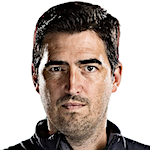 Andoni Iraola
 Jérémy Jacquet
Tất cả bình luận (3)