Almost an hour had passed after the final whistle on Saturday when Tottenham’s manager Roberto De Zerbi arrived to do his press conference. There is a temptation to think his side could have spent that time on the pitch and still wouldn’t have scored against a team of mannequins.
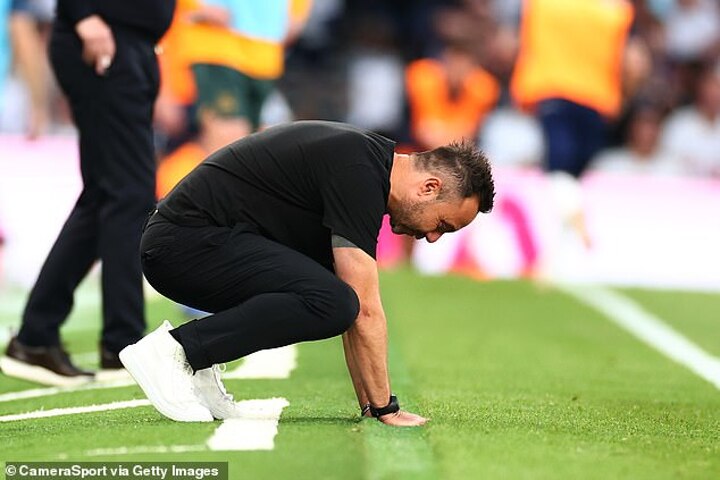
He would go on to tell us about ‘blockages’, which might have applied to the Everton backline in a 0-0 draw, but in this instance involved something else – it was a discussion about the mental hurdles his forward players are facing in front of goal.
In short, he said they lack confidence. Overthinking has crept in. The weight of recent history is pressing them down and, like a golfer with the yips, they find themselves unable to pull the trigger.
The wait for a Tottenham goal in the league now measures in excess of six hours, dating back to the 43rd minute of the final game of last season against Everton. Palhinha could be the answer to a quiz question at this point. That they have drawn blanks in all four Premier League fixtures this season is a club record and sits horrendously against the backdrop of summer spending to the tune of around £320million.
One bookmaker’s social media account had a little play with those figures of £320million and six hours and came up with a decent gag: ‘You could make and watch Titanic twice for that.’
De Zerbi and Spurs fans won’t necessarily appreciate their role in yet another punchline.
What are his options?
Therein lies the problem – De Zerbi doesn’t have many, or possibly any of top-half calibre, if that remains an aspiration.
During a record-breaking transfer window, Spurs brought in three wingers, a left back, three centre-backs, two midfielders and a back-up goalkeeper. With Richarlison tucked away in exile, that left Dominic Solanke as the only fully-designated senior striker.
Solanke, for some context, hasn’t scored in the league since March and was utterly anonymous on Saturday – 19 touches, no shots.
Tottenham’s recruitment has instead gambled on the versatility of men better suited to wide positions. One of those is Omar Marmoush, who started on left wing against Everton having played up front against Nottingham Forest, and the other is Mathys Tel. He replaced Solanke after an hour and clearly irritated De Zerbi by turning backwards too often rather than towards goal.
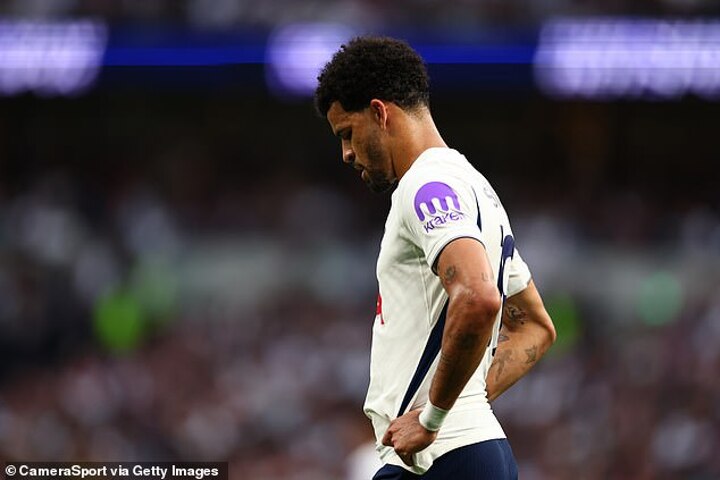
Is Marmoush the solution longer term?
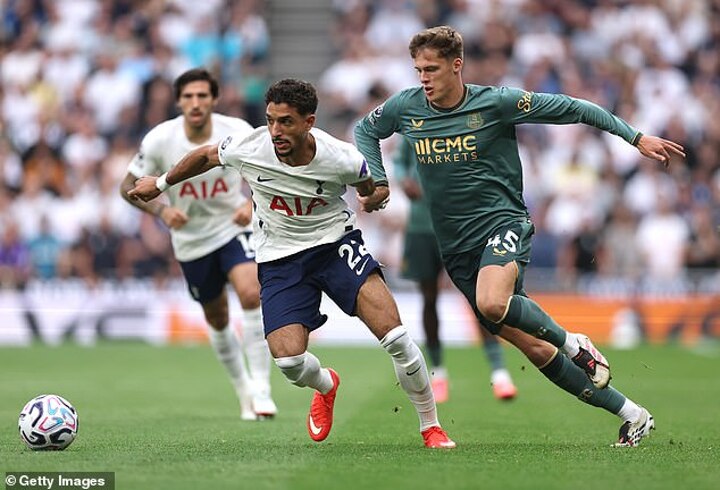
That feels like the best fit for the way De Zerbi wants to play, which is currently wedded to positional fluidity and fewer fixed points in the team. The notion is that his striker can wander to deeper spots, sucking in the marker and then attacking the space with a wide man or No10.
Those interchanges were a feature of Saturday’s game all over the pitch – Archie Gray and Savio occasionally swapped spots when Gray overlapped on the right, Andy Robertson and Marmoush would do likewise on the left, and Marmoush would often change with Solanke. At its best, it can work and its worst, it is a watery mess – at the weekend and against Nottingham Forest, it was the latter.
But Marmoush’s mobility lends itself to this brief. We saw in Germany that he can finish and his chances to replicate the numbers at Manchester City were stymied by the presence of Erling Haaland. Solanke has suffered injuries for the past 18 months, but he has not looked close to the reliable finisher he was at Bournemouth in the 2023-24 campaign.
More pertinently, Solanke also looks less comfortable than Marmoush when he is asked to drop into deeper positions to satisfy De Zerbi’s grand vision. With so many other left wingers in the squad, including Savio, who played off the right on Saturday, there would be no direct consequence to moving Marmoush forward.
The deeper problem…
Call it the Tottenham paradox. They have an assortment of attacking options but are creating very little – the issue runs deeper than finishing, because you can only finish what you create. In the past two games, Tottenham have had one meaningful shot on target, and that came close to the end against Everton when Jordan Pickford had to save from Lucas Bergvall.
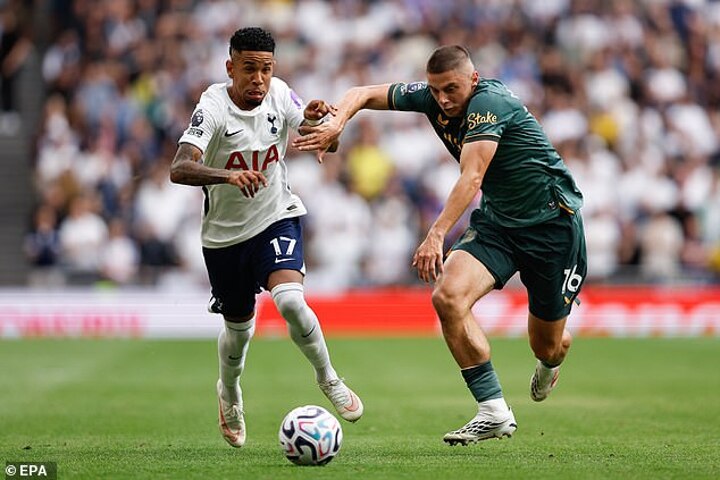
Savio can terrify defences with his acceleration, which he showed early against Vitalii Mykolenko, whom he skinned twice. But his deliveries and decision making with the final ball were poor and far below the expectation of a £75m signing. When Mykolenko found his bearings in that duel, Savio found no way to adapt and lost himself down blind alleys. He became irrelevant to the match.
Mateus Fernandes cost £10m more than Savio and has been slow to suggest it was well spent.
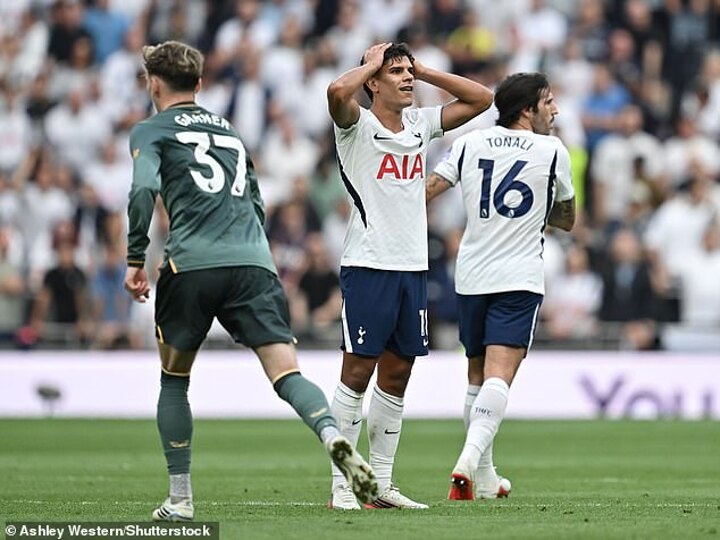
He is aggressively minded and can be fun to watch at full speed, but his four touches to control a ball when clean through in the first half was a calamitous waste of a good chance. It wasn’t isolated – he needs to be decisive, especially as the most expensive recruit of the bunch, Sandro Tonali, is drifting through games. Does Tonali even want to be there?
The Tel episode was interesting, because De Zerbi was right to question his striking instincts. The coach believes he can play up front, on the thin basis that he has played there before (albeit with two goals from his 15 games as a striker last season), but Tel is still thinking like a playmaker.
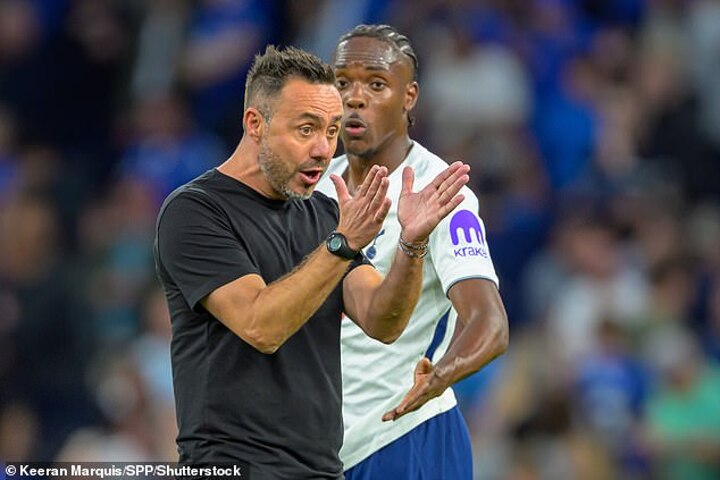
One problem related to Tel is that too many of Tottenham’s attackers do not see it as their responsibility to score the goals. Maybe that is an upshot of De Zerbi’s fluidity vision. But where is the wisdom in publicly berating a 21-year-old, as De Zerbi did on the pitch after the game?
Delusion or deficiency?
De Zerbi spoke passionately after the game and, predictably, believes it will all be okay in the long run. Having kept Tottenham up, he deserves some benefit of the doubt but their start to this campaign inspires little confidence. The small pockets of booing from the crowd at the whistle would suggest a crisis is not far away.
However, De Zerbi was right to highlight the first 30 minutes of the match, when his side were quick on the ball and occasionally dominant. His argument is that if they could sustain that level beyond an hour, they probably win the game. Maybe, but it’s moot – they couldn’t and didn’t.
It was also a thin excuse when he argued that he has had less than a fortnight with the group and legs are tired after the World Cup – these are conditions under which all teams are operating and only Fulham, Aston Villa and Coventry sit beneath Spurs. After they face Liverpool in the League Cup on Tuesday, Tottenham play Villa in the league on Saturday – if they lose there will be an escalating feeling of crisis and even fewer excuses.
 托特纳姆热刺
 德泽尔比
德泽尔比
 索兰克
索兰克
 马尔穆什
马尔穆什
 托纳利
托纳利
 马蒂斯-特尔
全部评论(1)