When discussing Japanese football's culture of self-analysis, many people immediately think of the masterpiece "The 14 Seconds of Rostov."
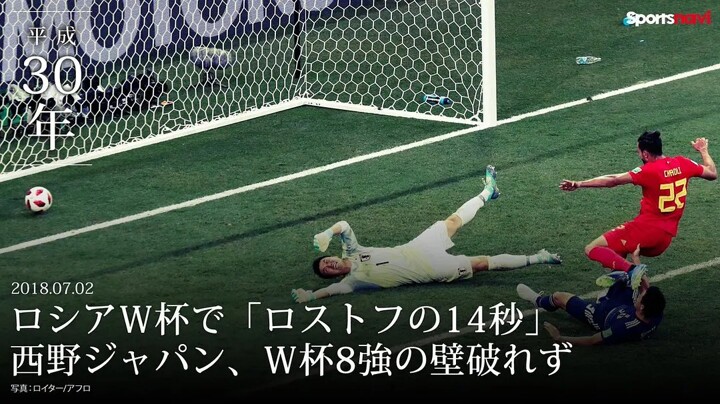
"The 14 Seconds of Rostov" is a documentary produced by Japan's NHK television in 2018. In the Round of 16 of the 2018 FIFA World Cup in Russia, Japan and Belgium were tied 2-2. During injury time, Japan's corner kick attack failed, and Belgium launched a quick counterattack, scoring the winning goal. The entire sequence took only 14 seconds.
The 50-minute film meticulously dissects the positioning of every player on both sides and every decision made during those 14 seconds. NHK obtained footage from all 28 cameras on the field, capturing Belgium's winning goal frame by frame. Beyond analyzing Japanese players, NHK also interviewed Belgian players and coaches, reconstructing the tactical logic of those 14 seconds from both offensive and defensive perspectives to understand how Japan lost.
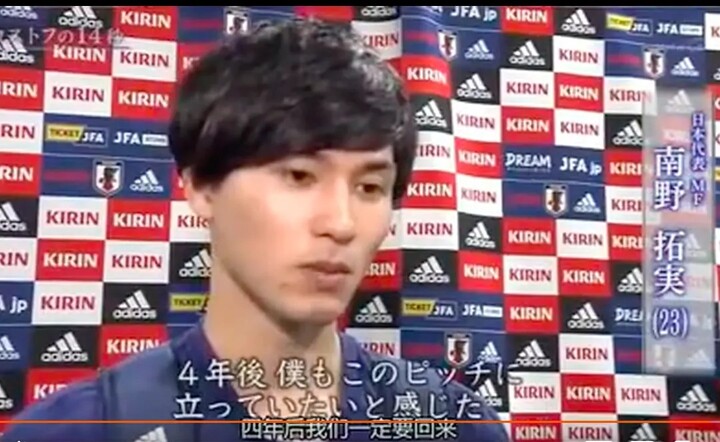
NHK's documentaries on Japanese football extend far beyond "The 14 Seconds of Rostov."
Around 2010, NHK produced a documentary series called "50 Years of Japanese Football," divided into four seasons with over 30 episodes total. Each episode focuses on a pivotal moment, spanning from the late Showa era through the Heisei era—from the "football desert" of the 1960s to the J.League's launch in 1993, and through Japan's first World Cup qualification in 1998. To create this series, NHK interviewed key figures such as Saburo Kawabuchi, Takeshi Okada, and Hidetoshi Nakata, and compiled valuable historical materials spanning five decades. The series stands as an essential resource for understanding modern Japanese football history.
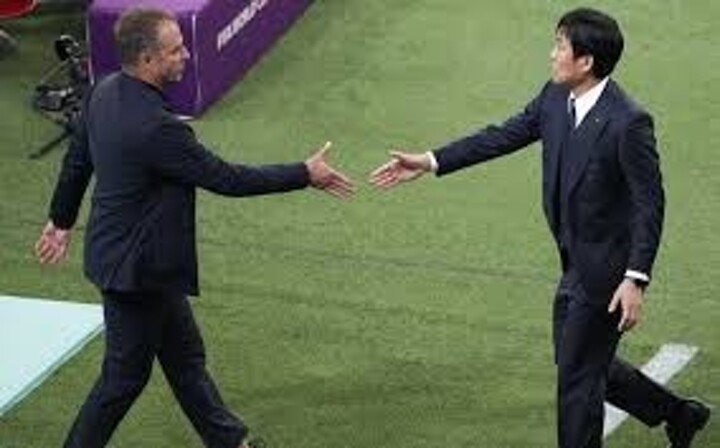
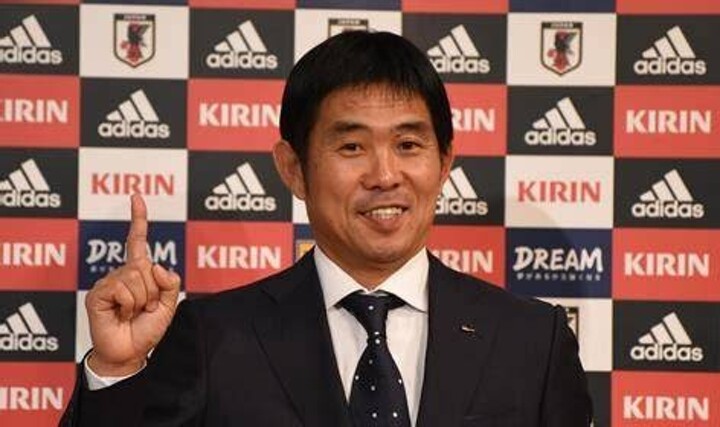
NHK has also produced numerous documentaries focusing on individual figures. "The Day We Dreamed of Catching Up with the World" documents Japan's head coach Hajime Moriyasu, released after the 2022 FIFA World Cup in Qatar. The film traces Moriyasu's journey from taking the coaching position in 2018 to leading Japan to victories over Germany and Spain at the Qatar World Cup, culminating in a quarterfinal appearance. It includes extensive footage from training sessions, locker rooms, and pre-match preparations. In 1993, the Japanese team drew with Iraq in Doha, missing their first-ever World Cup qualification—a tragedy in which Moriyasu directly participated. This documentary captures how he, 29 years later, personally overcame that regret on the same ground.
J.League Club Historical Records
While national team stories are documented, J.League clubs maintain their own video archives and historical chronicles.
During the 2020 season, Shonan Bellmare underwent a major squad restructuring and struggled after the pandemic restart, fighting relegation throughout the campaign. A documentary filmed from the club's internal perspective followed every training session and match during this difficult period.
The film authentically captures previously unseen locker room footage: coaches' post-match critiques, players' reactions to defeat, arguments and reconciliations, revealing how a J.League team grapples with adversity and failure.
Urawa Red Diamonds, one of J.League's strongest clubs with a passionate fan culture, produces an annual season review video titled "We are Diamonds," named after the club's iconic chant. Unlike Shonan Bellmare's internal documentary, this is an "annual report" for fans, featuring season highlights, exclusive player interviews, and fan-created TIFOs, condensing a year of glory and emotion into one video.

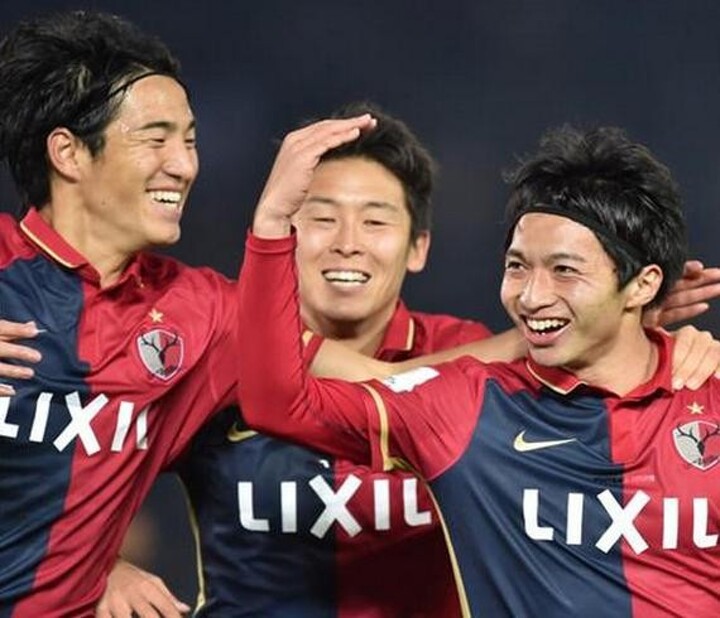
Kashima Antlers went even further. In 2000, the club released "Antlers History 90's FOOT," a 182-minute DVD documenting the team's achievements throughout the 1990s. The film includes all 514 goals from official J.League matches plus oral histories from former players. Over two decades later, in 2026, Kashima Antlers launched the feature documentary series "FOOTBALL DREAM: The Glory and Pains of Kashima Antlers," comprising 8 episodes with over 7 hours of content plus 60 minutes of unreleased footage, spanning from Zico's hat-trick in the J.League's inaugural match to behind-the-scenes moments surrounding Atsuto Uchida's retirement.
Autobiography as Methodology
Japanese teams love making documentaries; Japanese players love writing books. While club documentaries record "what happened to the team," player autobiographies answer "what players themselves are thinking."
Japanese defender Ko Itakura published an autobiography titled "I'll Do It Myself," described by readers as a "calm and honest growth record." Itakura recounts his lowest point during his time at Kawasaki Frontale's youth academy: he lost all desire to play football, deliberately arriving late to training, preferring McDonald's fries with friends to the training ground, eventually telling his coach he wanted to leave. Later, he experienced an awakening, reflected on his mistakes, and adjusted his approach, eventually becoming a key player for Japan's national team.
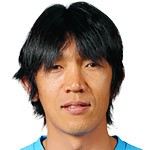
Veteran Shunsuke Nakamura took a more direct approach with his book "Perception," subtitled "Passing Experience to Japanese Football." He defines "perception" as observing opponents, teammates, coaches, and oneself; "knowledge" as organizing and analyzing that information; and "power" as converting these abilities into action during training and matches. Nakamura revealed he started keeping a "football notebook" in his second year of high school, recording all his thoughts, mistakes, and adjustments. As the youngest of four brothers, he learned early to observe his siblings and think strategically—the origin of his perceptiveness.
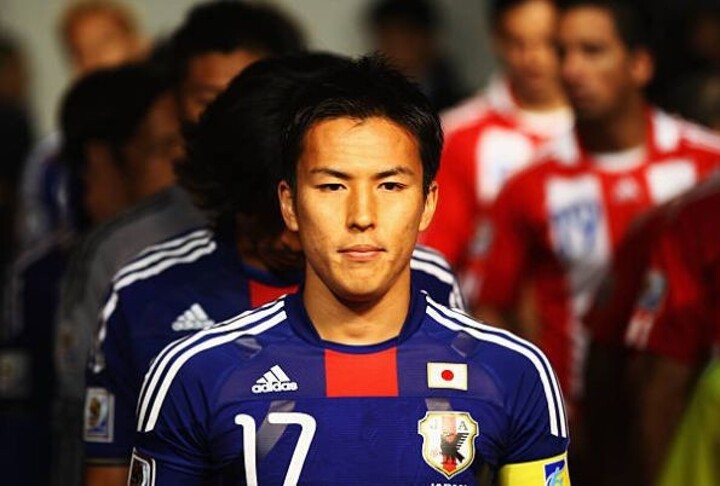
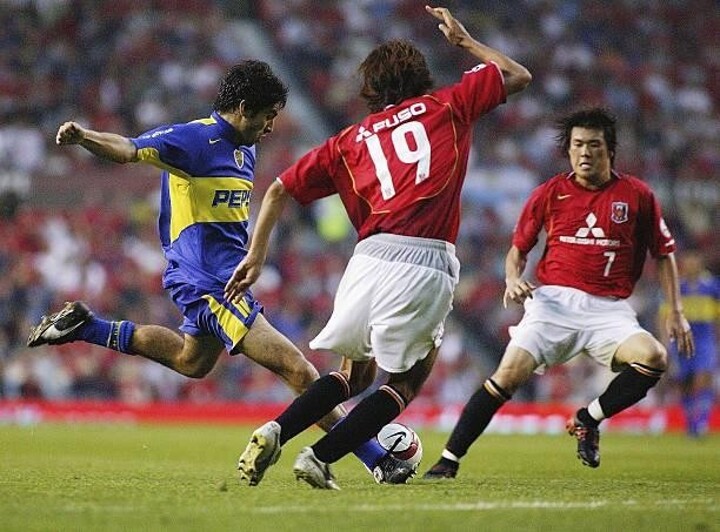
In his autobiography "Organizing the Mind," Hasebe recalled a 2004 friendly match between Urawa Red Diamonds and Boca Juniors. Facing fierce South American pressing, Urawa was overwhelmed in a 2-5 defeat. He wrote: "If you wait passively, no one will acknowledge you. You must seize your future with your own strength. I learned this lesson against Boca, and felt the mentality gap between Japanese and Argentine players—it made me, standing on that field with a casual attitude, feel deeply ashamed."
This principle defines Japanese football itself. From NHK's documentaries to club archives to players' autobiographies, Japanese football has never remained idle; instead, it has transformed every experience into educational material for future generations.
 Urawa Red Diamonds
 Kashima Antlers
 Shonan Bellmare
 Japan
Japan
 AFC Ajax
 Shunsuke Nakamura
 Hasebe
 Hajime Moriyasu
 Ko Itakura
 FIFA World Cup
All Comments (36)
6-21 22:31
6-22 06:01
6-22 05:59
6-22 05:58
6-22 05:57
6-22 05:55
6-22 05:49
6-22 05:48
6-22 01:19
6-22 01:14
6-22 01:13
6-22 01:13
6-22 01:13
6-22 01:13
6-22 01:13
6-22 01:13
6-22 01:11
6-22 01:10
6-22 01:08
6-22 01:08
6-22 01:07