Portugal and Colombia's 0-0 draw in the FIFA World Cup group stage became the most sought-after match of the tournament in terms of ticket demand and pricing, according to The Athletic.
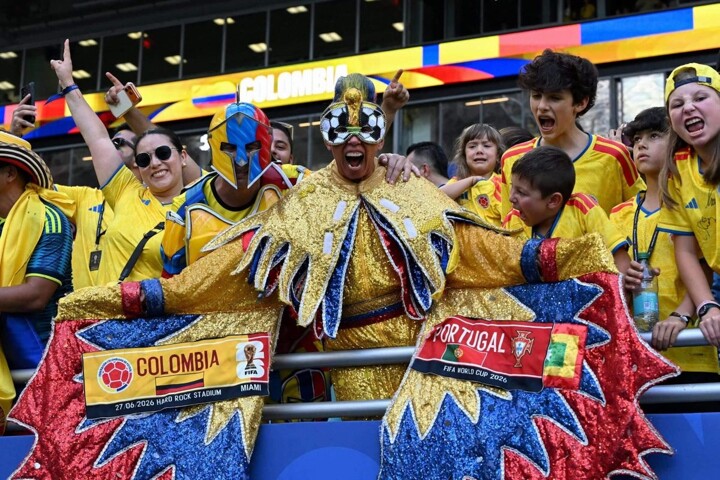
The match in Miami Gardens, Florida, was unlike any other. From well before kick-off through the final whistle, the goalless yet compelling draw between Portugal and Colombia felt special.
On the final day of the FIFA World Cup group stage, this fixture emerged as arguably the most anticipated match of the tournament, commanding the highest ticket prices and strongest demand for premium seating.
From the moment the matchup was confirmed in the group draw last December, this game captured global attention. Celebrities, athletes from other sports, and politicians made the journey to watch, including Gloria and Emilio Estefan, Golden State Warriors star Jimmy Butler, Secretary of State Marco Rubio, and FBI Director Kash Patel, among the 64,778 attendees.
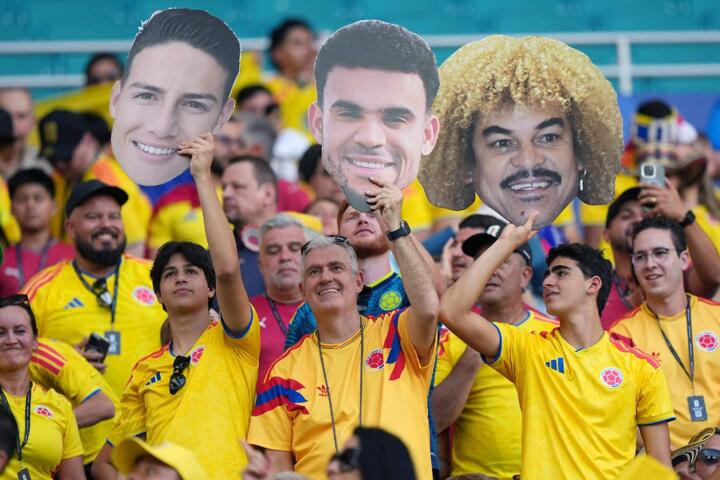
FIFA sources revealed that over 20 million ticket applications were received for this match. Ticket prices soared above $3,000 weeks before the game and remained at that level through match day. For comparison, the average Super Bowl ticket costs just over $2,000, yet this match saw tickets reaching five-figure amounts. One fan reported spending $16,000 on four hospitality tickets, describing the price as "reasonable."
Not all fans faced the same financial burden.
Santiago Forero, a Colombian fan who won his ticket through a FIFA lottery, said: "It was pure luck. I only entered once because that was all my budget allowed. I filled in my credit card details and, thank God, I won. I paid $60."
When asked whether he realized his ticket could have sold for thousands of dollars, his response was unequivocal.
He said: "You cannot put a price on your love for your team. I could have made $10,000, but watching Colombia play is more important than money."
Other fans in the stadium were less forthcoming about their spending. A Colombian couple who lived nearby admitted to purchasing tickets but refused to disclose the price, keeping it secret from friends and family.
The woman laughed as she departed, saying, "It was expensive, really expensive."
Another couple revealed they drove 20 hours from New York to attend, holding a sign claiming they had sold their house to be there. They stated they spent $3,700 on tickets.
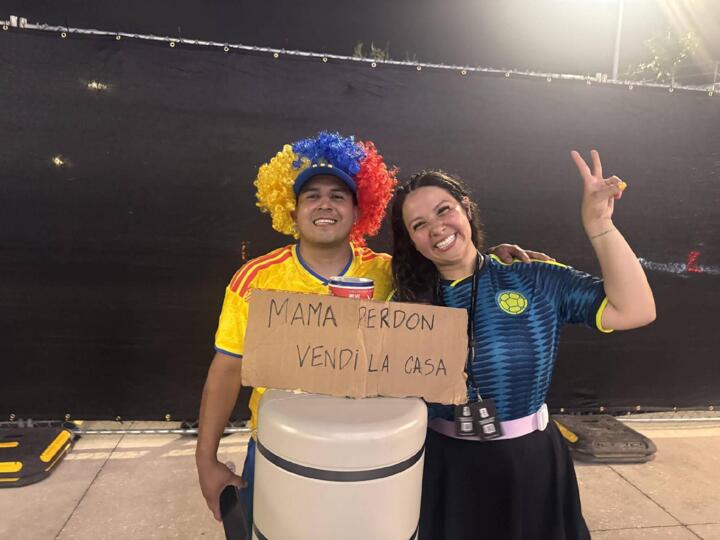
Shauna Fuentes said: "We didn't actually sell our house, but we're willing to do whatever it takes to support Colombia all the way to the final."
Among the Portuguese supporters, a smaller but vocal contingent had traveled internationally to follow their national team. Portuguese-Americans, particularly from communities in the Northeast such as New Jersey, also made the journey, many driving over 20 hours.
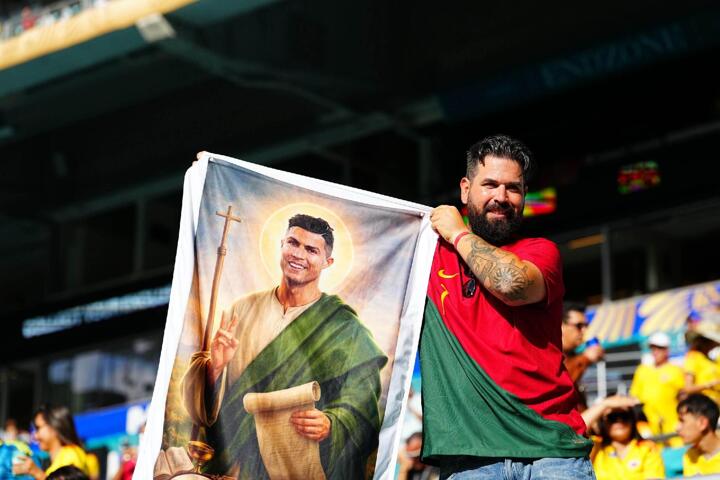
Yet the most striking sight in the stadium was the sea of fans wearing red jerseys with Ronaldo's number 7, representing diverse backgrounds and nationalities.
There were indeed many fans with Portuguese heritage and accents, but an even larger crowd came from beyond the Iberian Peninsula.
Andrew Feinman, a local from South Florida, said: "I wanted the chance to see the greatest player of all time, and this was my best opportunity." He spent "over $700" on his ticket.
Portugal's supporters included Americans and fans from other Latin American nations. Some traveled from countries that failed to qualify for this World Cup, such as Chile and Peru, while others represented Central American nations. Supporters from participating nations also made pilgrimages to witness the player they consider the greatest of all time, or simply to see one of the world's most famous athletes in action.
Even some Colombian fans wore yellow and red jerseys, pledging their allegiance to Colombia while also paying tribute to one of the sport's greatest legends.
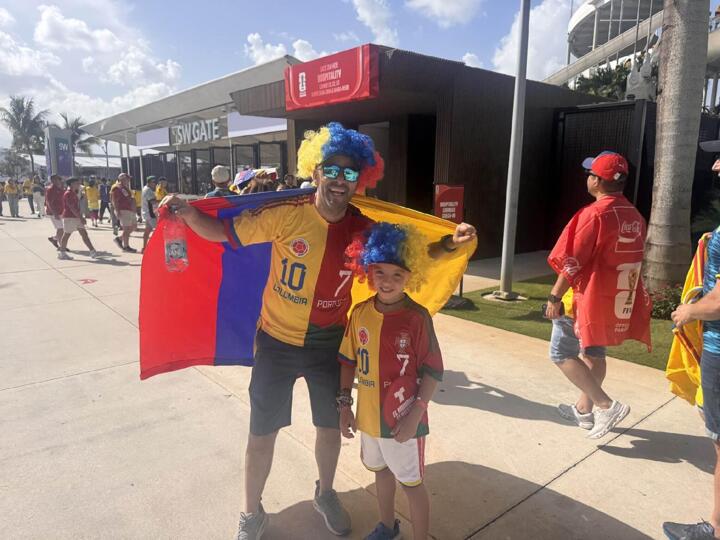
Ronaldo's admirers turned out in force, with some dressed in full kits resembling impersonators. Two hours before kick-off, they waited at the stadium hoping to catch his attention as he entered.
Approximately six hours before the match, before spectators were even permitted near Hard Rock Stadium's perimeter, traffic was already heavier than it had been for the three previous World Cup matches held there. This included Brazil's earlier fixture against Scotland, a tournament surprise. As the saying goes, "when Scotland leaves, so does the party"—except the festivities continued.
According to FIFA procedures, spectators were admitted about three hours before kick-off, but demand was so high that fans queued outside well before gates opened.
Yellow possesses remarkable visual impact at sporting events, dominating the visual landscape in ways other colors cannot. Whether the canary yellow of Brazil, Ecuador, or Colombia, this color flooded the teal seats of the Miami Dolphins' home stadium from the moment the gates opened.
Unlike other matches, Portuguese supporters were not concentrated in a single section; bright red was scattered throughout the stadium. Whenever red appeared, it was invariably surrounded by yellow.
When Portugal took the field and Ronaldo's name was announced in the starting XI, Colombian boos clearly outnumbered cheers, though they mingled with the iconic "Sii!" celebration cry for Ronaldo—a sound that follows the world's most famous number 7 everywhere.
Colombia's last major match at this stadium was the 2024 Copa América final against Argentina, which descended into chaos when thousands of ticketless fans breached security. The organizers clearly learned from that disaster this time.
A Miami-Dade Police Department source, speaking on condition of anonymity, noted that FIFA's organization of this World Cup represented a significant improvement over CONMEBOL's Copa América.
Access to the stadium perimeter was strictly controlled. Pre-match tailgate parties in parking lots were substantially reduced. Fans entering the stadium area from the highway exit were required to present proof of pre-booked parking or take shuttle buses. Appropriately, these shuttles were yellow school buses that transported fans to a nearby casino, where they encountered the first of several security checkpoints.
These checkpoints resembled those at major events like the Super Bowl. As a result, there were virtually no casual visitors or unauthorized individuals attempting to sneak in at the last minute.
Entry and exit processes proved efficient, though queues were longer and required patience. Staff directed crowds to specific areas with minimal freedom to wander, so comfort with close proximity to others was essential.
Regarding the match itself, with both Colombia and Portugal already qualified for the Round of 32, the pressure was reduced, which may have diminished some intensity. However, both teams delivered commendable performances.
The game remained goalless but was open and entertaining, with both teams enjoying attacking periods and creating genuine scoring opportunities that alternately excited and anxious fans in the stands and on screens worldwide.
In the 90th minute, Colombian supporters erupted as their team appeared to score a header for a 1-0 lead. However, as celebrations erupted, the linesman raised his flag for offside. VAR confirmed the decision, with the margin impossibly tight—barely a toenail.
Was it worth spending hundreds or thousands of dollars to watch a 0-0 draw? As fans exited the stadium, we conducted an informal survey. The overwhelming consensus among respondents was: Yes, absolutely.
AF's PC site is now live! Browse full news, comments, match details and stats on your computer. Visit: www.allfootballapp.com
 Colombia
 Portugal
 FIFA World Cup
All Comments (12)
Today 21:07
Today 22:16
Today 22:09
Today 21:27
Today 21:08
Today 21:06
Today 21:04
Today 21:01
Today 20:53
Today 20:39
Today 20:35
Today 20:23