The Netherlands-Morocco Round of 16 clash at the 2026 FIFA World Cup has drawn considerable attention, with the match scheduled for Monday night to Tuesday morning at 3 AM. The two countries share deep cultural ties, and ongoing debates surrounding dual-nationality players have intensified ahead of the fixture.
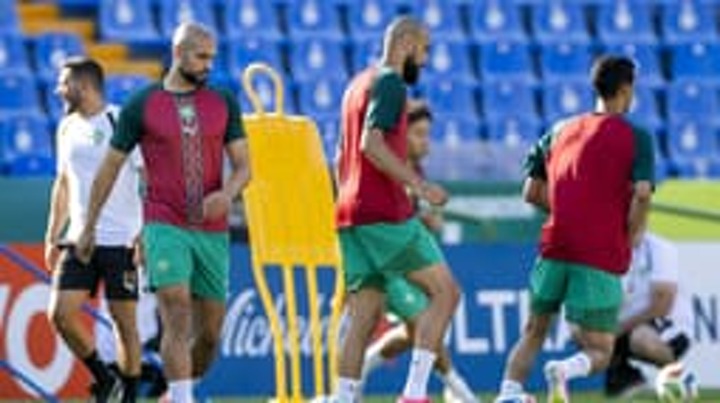
The clash between the Netherlands and Morocco once again brings the issue of dual football nationality to the forefront. Among Morocco's squad, several overseas-born players have Dutch connections. Three players were born in the Netherlands, a country home to approximately 400,000 residents of Moroccan descent: Mazraoui, Salah-Eddine, and Amrabat. The latter two both represented Dutch youth teams before switching to Morocco.
This trend has strengthened in recent years and could expand further if Robin van Persie's son, Shaqeel van Persie, represents his mother's home country—a possibility several media outlets have predicted. While some observers emphasize the close ties between the nations, such as 16 Moroccan players competing in the Eredivisie, others continue to fuel controversy, a situation that has persisted for months.
In March, former player Van der Vaart sparked significant reaction when discussing young Dutch players choosing to represent Morocco. He sarcastically remarked, "I'm not trying to be funny, but all Moroccans who aren't good enough here go play for Morocco."
An increasingly attractive national team
However, FIFA rankings and recent results favour Morocco. The Atlas Lions are ranked 6th, just ahead of the Netherlands, reached the 2022 FIFA World Cup semifinals, and won the 2025 Africa Cup of Nations. For many players, the decision transcends competitive considerations; they choose their parents' homeland over their country of birth.
Despite earning 53 caps for the Netherlands, Afellay will support Morocco from Monday night onwards. He explained on Dutch television, "For this match, my heart is with Morocco. My roots are there. My parents are Moroccan, and my whole family lives there."
Adil Ramzi, a former Moroccan international with 41 caps who now coaches the Netherlands U19 team, said he cannot choose whom to support. He told De Telegraaf, "I am Moroccan and proud of it, but the Netherlands is also my country. I've spent most of my life here, I coach the Netherlands U19 team, and I've always had every opportunity. So I wish both countries success. This isn't a political answer—it's simply how I feel."
This topic has been politicized
When asked about the Dutch roots of Mazraoui, Salah-Eddine, and Amrabat, Morocco head coach Mohamed Wahbi emphasized that these players are "first and foremost Moroccans" and will fight to win for their country, not to trouble the Netherlands.
Wahbi, born in Belgium, understands the emotions of Netherlands-born players representing Morocco. At the press conference, he stated, "This feeling is very special because we face a country that has given us much."
In the Netherlands, however, the match has been exploited by political forces. Far-right politician Geert Wilders posted a controversial social media message after the Round of 16 draw was announced. The post featured an AI-generated image depicting the 62-year-old politician—known for xenophobic remarks—as a referee showing a red card to a Moroccan player, captioned: "It will be fine."
Participants in the De Telegraaf podcast 'Kick-off' called for the Royal Dutch Football Association (KNVB) to respond. The KNVB issued an indirect statement on Sunday through a press release. KNVB Secretary-General Gijs de Jong stated, "From international players to Eredivisie stars to amateur pitches, the connection between the Netherlands and Morocco runs deep." He added, "Both nations currently rank highly in the FIFA standings. This match will be thrilling and demonstrate fair play, respect, and solidarity."
AF's PC site is now live! Browse full news, comments, match details and stats on your computer. Visit: www.allfootballapp.com
 Morocco
 Netherlands
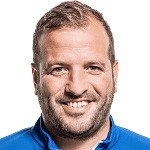 Rafael van der Vaart
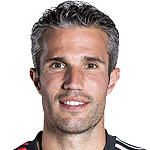 Robin van Persie
 Adil Ramzi
 Afellay
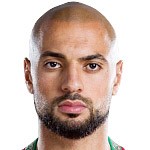 Amrabat
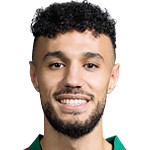 Mazraoui
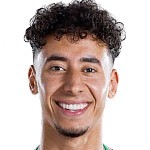 Anass Salah-Eddine
 Shaqueel van Persie
 Mohamed Ouahbi
 FIFA World Cup
All Comments (8)
Today 01:07
Today 00:18
Today 00:58
Today 00:57
Today 00:08
Today 00:02
Today 00:00