Scotland are home from the World Cup and searching for a new head coach.
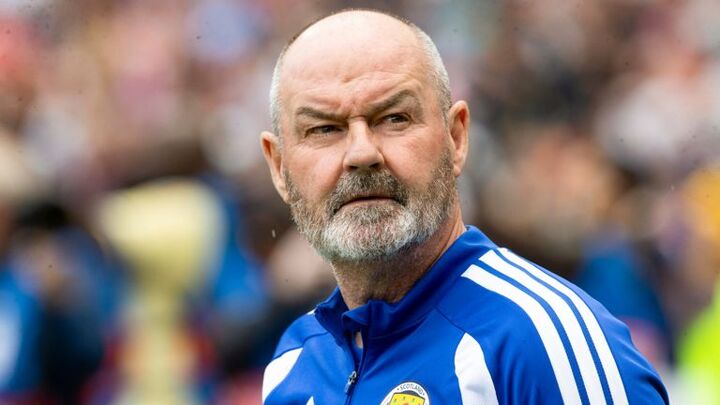
Steve Clarke's decision to step down minutes after their exit from the tournament came as a surprise to many - after all he had just signed a new four-year deal one month ago.
However, football moves fast, and attention now turns to who could be next in the hot seat.
Whoever it is will have big shoes to fill. Replacing Scotland's longest-serving boss, who was the first to get them to three major finals in seven years - including a first World Cup since 1998 - will be no easy task.
Here we look at all the key questions as the Scottish FA search for a new head coach...
Was Clarke's exit a shock?
For most of us, yes. For Steve Clarke, no.
His announcement came exactly a month after signing a new four-year deal. Were Scotland to have progressed past the group stages for the first time at a major finals, then he would have stayed on. However, in an interview with the SFA, he revealed he had always planned to depart if the World Cup didn't go to plan.
He added: "Signing the contract before was a case of trying to give a little bit of comfort to the players knowing that we could continue the journey.
"I always had in my head that if we didn't come out of the group, which is something that we've tried to do across three tournaments now, I always had in my head that if that didn't happen then it was probably the right time to step away.
"Obviously if we'd managed to get that extra point and got out of the group then I'd probably have stayed on and tried to do another tournament."
Is the search for a new boss under way?
Very much so. In fact, hours after Clarke's announcement, Scottish FA CEO Ian Maxwell had already received messages from potential applicants for the job.
He got the last appointment in 2019 correct by hiring Clarke, who went on to become the most successful national team boss ever.
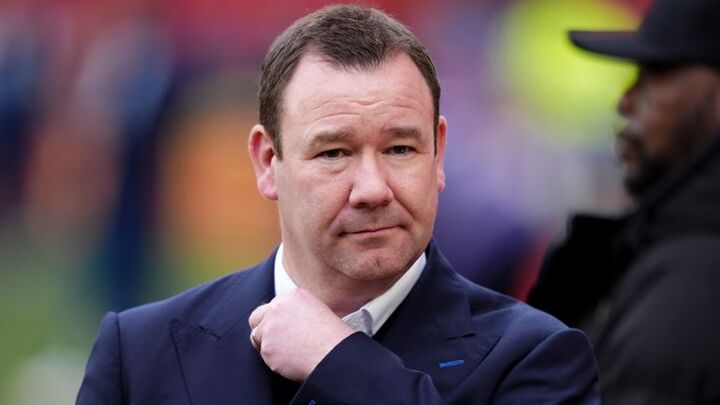
Can he do it again? Time will tell. This time around, he will be aided by new chief football officer Craig Mulholland, who will play a key role in the hiring of the new boss.
Will the new boss be Scottish?
With a limited number of Scottish managers to pick from, the Scottish FA will cast the net far and wide in the search for Clarke's replacement.
Scotland last appointed a foreign boss in 2002 when Berti Vogts got the job. It wasn't a success, but that hasn't put the SFA off doing so again.
When asked if the new boss had to be Scottish, Maxwell said: "Nothing is off the table. We need to cast the net as wide as we can. It is about getting the right coach, it is not about necessarily where they come from."
Who could be in the mix for the job?
Replacing the most successful manager in Scotland's history, who qualified for a record three major finals, is no easy task.
However, the SFA admit they need to hire "someone who can improve on that and continue to drive us forward".
While some will throw their hat in the ring, others will be linked to the job - and that started hours after Clarke had departed.
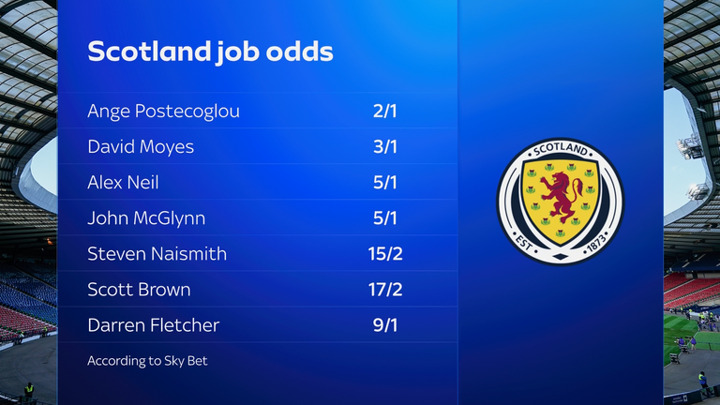
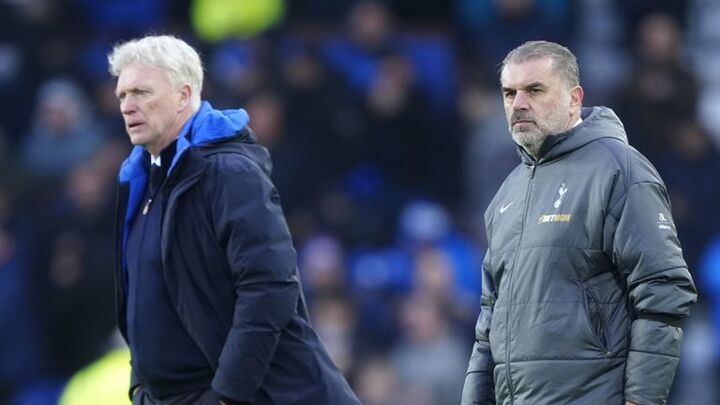
Ange Postecoglou spent time in Scotland when managing Celtic, plus has been in charge of the Australia national team, so it is no surprise the out-of-work boss is the bookmakers' early favourite.
Everton boss David Moyes is up there too, and the Scotsman has one year left on his deal at the Premier League club.
Millwall manager Alex Neil and Falkirk boss John McGlynn are also high in the bookmakers' lists.
Sky Sports Kris Boyd believes Moyes will be a Scotland manager in the future but added that the salary he and the likes of Postecoglou have been used to could hamper the SFA's plans.
When will a new head coach be appointed?
Scotland are back in action in September as their Nations League campaign begins.
While SFA CEO Maxwell hopes to appoint someone "as soon as we can", he added it is key "we get the right coach".
With those games a few months away, if no permanent successor is found, another option could be an interim appointment.
It is a route that has been done before, and with someone like Clarke's assistant Steven Naismith in the building already, that could be a road the SFA goes down.
When do Scotland play again?
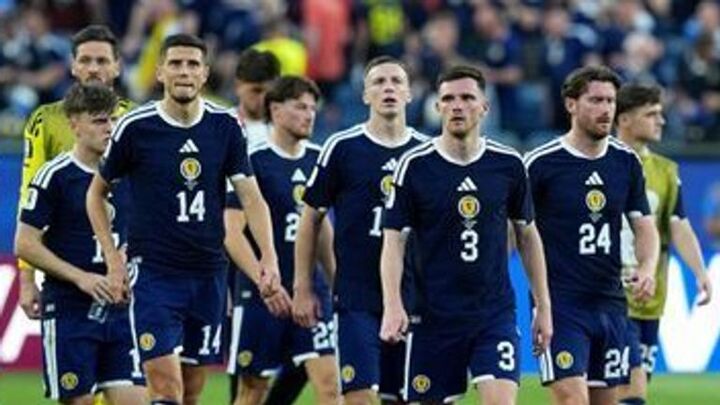
Whoever replaces Clarke will find themselves in action less than three months, when attention turns to that Nations League campaign.
The first tie is away to Slovenia on September 26, with their first four games played in a two-week period.
The six group games are played in a three-month window, concluding with a trip to take on Switzerland on November 16.
Scotland were demoted from League A after a play-off defeat by Greece last year and return to the second tier for this year's competition.
The new boss will then hope to lead Scotland to the UK and Ireland co-hosted Euros in 2028, and then the World Cup in four years.
Change of the guard?
The new boss will not only have to win matches, but they will need to do so while evolving the squad.
Clarke built a squad with lots of caps and had a core of experienced players.
Captain Andy Robertson, 32, has 97 caps and is chasing Kenny Dalglish's record of 102, so he will be here for the Nations League.
However, Craig Gordon (43), Grant Hanley (34) and Kenny McLean (34) may have played in their last major finals.
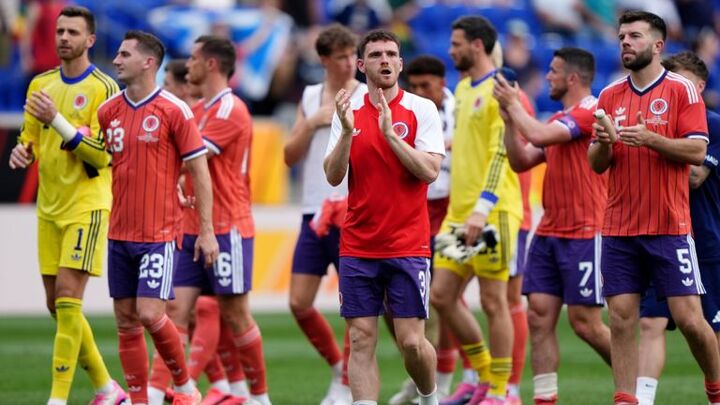
There are a group of outfield players who are 30 and above too, such as Jack Hendry, Dom Hyam, Lyndon Dykes, John McGinn, Ryan Christie and Lawrence Shankland.
Goalkeepers are an issue too. Aside from Gordon at 43, both number one Angus Gunn and third keeper Liam Kelly are 30. Although that is not old for a goalkeeper, it highlights that the new head coach will need to find some up-and-coming keepers.
Hearts youngster Liam McFarlane, 21, who was out on loan with Alloa last season, was taken to the USA as a training goalkeeper but it remains to be seen if he will have a head start. There does not seem to be a barrowload of options.
The squad needs an infusion of fresh blood. Ben Gannon-Doak, Findlay Curtis, Tyler Fletcher, Lennon Miller are the future, along with James Wilson of Hearts and Dundee defender Luke Graham, who trained with Scotland in preparation for the World Cup.

However, Scotland need a wider choice of quality youngsters. Cue the regular calls for root and branch reform of the game.
 PAOK
PAOK
 Scotland
 Ange Postecoglou
 Steve Clarke
 J.Kenny
All Comments