On July 6th, in the FIFA World Cup Round of 16, England will travel to Mexico City to face co-hosts Mexico. Ahead of the match, former England football star Michael Owen published a column in the Daily Mail, previewing the game.
Column Article
As England travels to Mexico City, much of the public attention is focused on altitude sickness and its physical effects. But as a player, I'm more concerned about how the altitude changes the ball's trajectory—it completely disrupts the instinctive anticipation that we've spent a lifetime refining.
Everyone knows that England will have to deal with humid weather and reduced oxygen levels on Sunday. But these effects won't just make it harder for players to breathe; they'll also demand more mental processing on the pitch.
Golfers often say that in high-altitude areas, where the air is thinner, the ball travels farther. England will face a similar situation at the Estadio Azteca: the ball's trajectory will change, either moving faster or flying longer distances. What's even trickier is that most England players will experience this for the first time in an official match.
Suddenly, those instinctive anticipations that were vital throughout their careers become inaccurate. It might not sound like a big deal, but believe me, the impact is enormous.
Top-level football matches often come down to fine margins. The brain performs rapid calculations subconsciously—but you're completely unaware of this process.
Where will the cross land? How fast is the ball traveling? How high do I need to jump? Where should the header be directed? We've repeated these judgments hundreds of thousands of times since childhood, and eventually, these reactions become second nature.
Sometimes people mock players for obsessing over football's minutiae, but these details are everything. When David Beckham crossed with his right foot to me, I wouldn't aim my header at the corner of the goal, but rather a yard outside it.
Why? Because I knew how Beckham's cross, with its topspin and sidespin, would deviate after hitting my forehead. If I aimed directly at the corner, the ball would most likely deflect inside the post and be saved by the goalkeeper.
The same principle applies to trapping the ball. Everyone admires the beautifully mowed, striped pitch at the Estadio Azteca, but players absolutely hate it! When the ball rolls on grass in different directions, its trajectory changes, and even a slight deviation can result in a poor first touch.
But the biggest problem right now is, of course, the altitude—or what scientists call changes in air resistance. For example, if our defender attempts a header to clear the ball but only grazes the top of it, turning it into a flick-on rather than a clearance, this subtle difference could result from the altitude.
This can happen if they jump a fraction too early or their contact with the ball is slightly off. Fans might not notice these details, but players will immediately sense something is wrong.
Experts say players need 10 to 14 days to acclimatize to high-altitude playing conditions. Pickford has only 48 hours after arriving in Mexico City, and he'll need to make as many saves as possible to adapt to the ball's flight path. But we also need to try turning disadvantages into advantages.
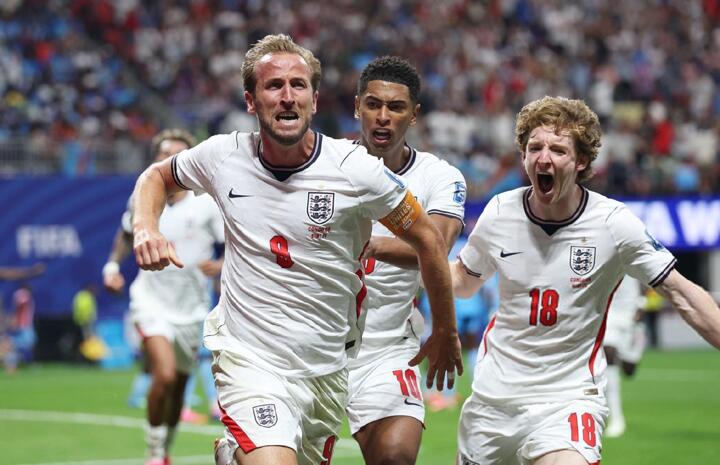
Kane's winning goal against DR Congo reached 94 kilometers per hour. No matter the circumstances, the Mexican goalkeeper wouldn't want to face him, let alone at altitude where the ball will travel even faster. The entire team should attempt long-range shots to pressure the opposition, just as they'll try to trouble us.
I noticed the weather forecast shows slightly lower temperatures than usual on match day, but humidity remains high—another challenge. The most intense heat I experienced at the FIFA World Cup was the quarter-final against Brazil in Japan in 2002.
At half-time, we were practically naked, wrapped in towels soaked in ice water, all to lower our core body temperature. Then it was constant hydration before we could return to the pitch.
Look at our second-half performance in that match: facing 10-man Brazil, we lost 2-1 and didn't create a single real chance. But this doesn't mean England can't beat Mexico; we just need to play smarter and adjust our anticipation as we go.
I also won't read too much into the DR Congo match. We pushed everyone forward and gave it our all, and if we'd converted our chances earlier, the assessment would be completely different. But as the tournament progresses, I'm concerned about our wingers' output.
Before the tournament started, I mentioned that Saka, Gordon, Madueke, and Rashford could rotate to bring fresh legs against tired defenses. But in reality, their contribution has fallen short.
Gordon's assist for Kane's goal after coming on as a substitute is commendable, but wingers must eventually develop into match-winners. They need more goals, more assists, and more decisive moments. Look at Olise for France; what impact does he have?
This Mexico match will be England's toughest challenge so far, and possibly the most difficult game this England team has ever faced.
As top players, they will be tested comprehensively—psychologically, physically, and technically. This time, Kane cannot be the only one shouldering the burden.
AF's PC site is now live! Browse full news, comments, match details and stats on your computer. Visit: www.allfootballapp.com
 England
 Bayern Munich
 Michael Owen
 Kane
Kane
 FIFA World Cup
 Mexico/England
All Comments (5)
Today 17:31
Today 17:31
Today 17:13
Today 17:00
Today 16:41